
The automotive industry is undergoing rapid technological transformation. Modern vehicles increasingly rely on electronic systems for power management, safety, connectivity, driver assistance, infotainment, and vehicle control.
As the number and complexity of automotive electronic systems increase, manufacturers need reliable and highly controlled automotive PCB assembly processes.
Surface Mount Technology (SMT) is one of the most important manufacturing technologies used to produce automotive PCBs. Compared with traditional through-hole assembly, SMT supports compact component placement, high assembly density, automated production, and repeatable manufacturing.
However, an automotive SMT line requires more than standard placement equipment. SPI, AOI, reflow soldering, process control, traceability, equipment reliability, and production consistency all play important roles.
This guide explains how to configure an SMT solution for automotive PCB assembly and what manufacturers should consider when building or upgrading an automotive electronics production line.
SMT Solution for Automotive PCB Assembly
Modern automotive electronic systems require PCBs that can accommodate increasing numbers of components within limited physical space.
SMT provides several advantages for automotive electronics manufacturing:
- High component density
- Compact PCB designs
- Automated component placement
- High production repeatability
- Efficient high-volume manufacturing
- Compatibility with advanced inspection systems
- Support for increasingly complex electronic assemblies
Typical automotive applications may include PCBs used in:
- Body control systems
- Infotainment systems
- Instrument clusters
- Lighting systems
- Power management
- Battery management systems
- Sensors
- Motor control
- Charging systems
- Advanced driver assistance systems
Different applications have different reliability and process requirements, so the SMT line should be configured according to the specific product.
What Is an Automotive SMT Production Line?
An automotive SMT production line is an integrated manufacturing system used to place and solder surface-mounted components onto PCBs.
A typical process flow is:
PCB Loading → Solder Paste Printing → SPI → SMT Pick and Place → Reflow Soldering → AOI → Testing → Traceability → Downstream Assembly
Depending on the product, additional processes may include:
- PCB cleaning
- X-ray inspection
- THT/DIP assembly
- Selective soldering
- Conformal coating
- Programming
- Functional testing
The appropriate process should be determined by the PCB design, component types, quality requirements, and production volume.
Key Equipment for Automotive SMT Assembly
PCB Loader
The PCB loader introduces PCBs into the SMT production line.
For automotive applications, stable and repeatable PCB handling is important because mechanical handling errors can affect downstream processes.
The loader should be compatible with:
- PCB dimensions
- PCB thickness
- Panel configuration
- Magazine specifications
- Conveyor system
- Production requirements
Automatic Solder Paste Printer
Solder paste printing is one of the most critical steps in SMT assembly.
The printer deposits solder paste onto PCB pads through a stencil.
Important process parameters include:
- Solder paste type
- Stencil thickness
- Aperture design
- Printing pressure
- Printing speed
- Separation speed
- PCB support
- Paste condition
Poor solder paste printing can lead to insufficient solder, excessive solder, bridging, and other downstream defects.
For automotive PCB assembly, stable solder paste printing is particularly important because printing quality directly influences placement and reflow results.
SPI — Solder Paste Inspection
SPI systems inspect solder paste deposits after printing.
An SPI system can measure parameters such as:
- Paste volume
- Paste height
- Paste area
- Position
- Shape
SPI allows manufacturers to identify printing problems before component placement and reflow.
This is valuable for automotive SMT production because early defect detection can help reduce the risk of producing a larger quantity of defective boards.
SMT Pick and Place Machine
The pick-and-place machine places components onto the printed solder paste.
For automotive applications, manufacturers may need to handle a wide range of components, including:
- Small passive components
- ICs
- Connectors
- Power components
- Sensors
- Modules
- Fine-pitch components
Important machine selection criteria include:
- Placement accuracy
- Placement speed
- Component range
- Feeder capacity
- PCB size
- Changeover requirements
- Production volume
- Software capabilities
The optimal machine should be selected according to the actual component mix rather than theoretical placement speed alone.
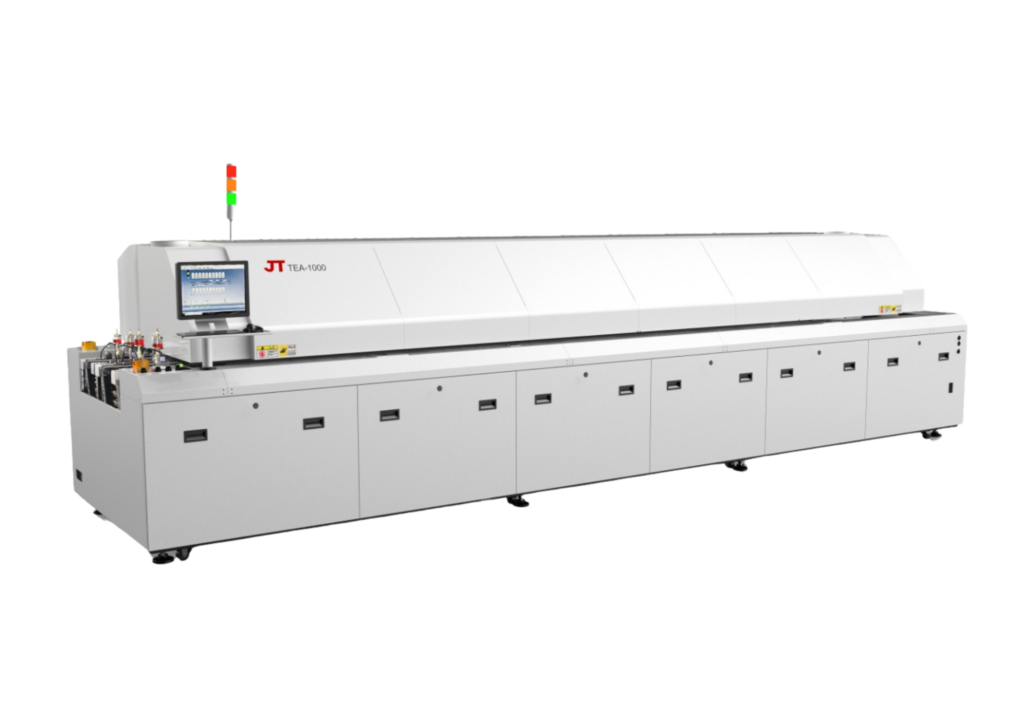
After component placement, the PCB passes through the reflow oven.
Controlled heating melts the solder paste and forms solder joints between components and PCB pads.
The reflow profile depends on:
- Solder paste
- PCB thickness
- Component thermal characteristics
- PCB copper distribution
- Component sensitivity
- Required process window
A stable reflow profile is essential for consistent solder joint quality.
Fuliu Electronics supplies ERSA reflow ovens from Germany, which can be considered for SMT production line configurations based on the customer’s PCB and process requirements.
AOI — Automated Optical Inspection
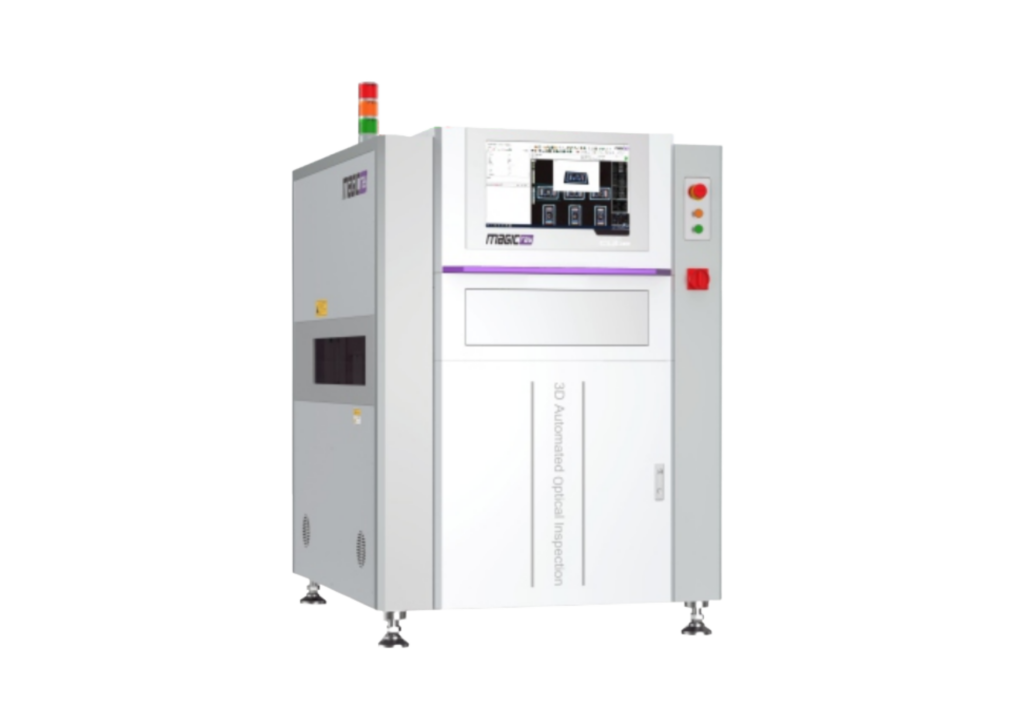
AOI is commonly used after SMT reflow to inspect assembled PCBs.
It can help identify:
- Missing components
- Wrong components
- Component displacement
- Polarity errors
- Solder bridging
- Solder-related visual defects
- Component orientation problems
For automotive PCB assembly, AOI can form an important part of the process-control system.
Fuliu Electronics provides MagicRay SPI/AOI inspection systems for SMT production applications.
Certain automotive PCB assemblies may require X-ray inspection when solder joints or component structures cannot be adequately evaluated using optical inspection.
X-ray can be useful for selected applications involving:
- Hidden solder joints
- BGA packages
- QFN packages
- Complex component structures
- Internal solder connections
X-ray should be selected based on actual inspection requirements rather than automatically applied to every PCB.
Automotive SMT Process Flow
A typical automotive SMT assembly process can be summarized as follows:
Step 1: PCB Loading
PCBs enter the SMT line through the loader.
Step 2: Solder Paste Printing
Solder paste is deposited onto the PCB pads.
Step 3: SPI
The solder paste deposits are inspected for volume, height, area, and position.
Step 4: Component Placement
The SMT placement machines install components onto the PCB.
Step 5: Reflow Soldering
The PCB passes through a controlled thermal profile to form solder joints.
Step 6: AOI
The assembled PCB is optically inspected.
Step 7: X-Ray or Additional Inspection
Selected boards or components may undergo additional inspection.
Step 8: Testing
Electrical or functional testing is performed according to product requirements.
Step 9: Downstream Processes
Depending on the application, the PCB may proceed to THT assembly, conformal coating, programming, final assembly, or packaging.
How to Configure an SMT Line for Automotive Electronics
There is no universal automotive SMT line configuration.
The line should be designed according to several key factors.
PCB Specifications
Manufacturers should provide:
- PCB length and width
- PCB thickness
- Panel dimensions
- PCB material
- Component density
- Board weight
- Number of SMT components
These parameters determine equipment compatibility.
BOM Analysis
The BOM should be reviewed before selecting placement equipment.
Consider:
- Component package types
- Component sizes
- Fine-pitch devices
- IC packages
- BGA/QFN requirements
- Component quantity
- Feeder requirements
BOM analysis helps determine placement capacity and feeder configuration.
Production Volume
The target output should be defined in terms of:
- Boards per hour
- Boards per shift
- Boards per day
- Monthly production
Theoretical machine speed should not be treated as actual factory output.
Changeover time, material replenishment, maintenance, inspection, and downtime should also be considered.

High-Mix vs High-Volume Automotive SMT Production
High-Volume Production
High-volume automotive electronics manufacturing may prioritize:
- High placement capacity
- Automated material handling
- Large feeder capacity
- Fast changeovers
- Automated inspection
- Production traceability
High-Mix Production
High-mix manufacturers may prioritize:
- Flexible placement equipment
- Quick product changeover
- Flexible feeder configurations
- Broad component compatibility
- Process recipe management
The right SMT line should balance productivity, flexibility, and investment.
How to Improve Automotive SMT Quality
Automotive PCB assembly requires consistent process control.
Control Solder Paste Printing
Printing should be monitored through SPI and appropriate stencil/process parameters.
Control Component Placement
Placement accuracy and machine calibration should be maintained according to equipment requirements.
Control Reflow Profiles
Reflow profiles should be developed for the actual PCB and solder paste.
Use Process Inspection
SPI and AOI can help identify process problems earlier.
Maintain Equipment
Preventive maintenance helps keep equipment performance stable.
Manage Materials
Component and solder paste storage conditions should follow the relevant manufacturer requirements.
Maintain Traceability
Production data can be associated with PCB, machine, component, and process information where required.
For automotive products, traceability requirements may be more demanding depending on the customer and application.
Why Traceability Matters in Automotive PCBA
Traceability allows manufacturers to understand the production history of a PCB.
Depending on the manufacturing system, traceability may include:
- PCB identification
- Production date and time
- Machine information
- Component information
- Solder paste information
- Inspection results
- Reflow profile
- Operator information
- Test results
A well-designed traceability system can support quality analysis, process improvement, and manufacturing accountability.
SMT + THT for Automotive PCB Assembly
Not every automotive PCB can be manufactured using SMT alone.
Some products contain through-hole components such as:
- Large connectors
- Terminals
- Relays
- Transformers
- High-power components
In such cases, SMT and THT processes may be combined.
A typical production flow could be:
Solder Paste Printing → SPI → SMT Placement → Reflow → AOI → THT/DIP Insertion → Wave/Selective Soldering → Inspection → Testing
This makes the SMT line part of a larger complete PCBA manufacturing solution.
How to Choose SMT Equipment for Automotive PCB Production
When evaluating SMT equipment, manufacturers should look beyond machine speed.
Placement Accuracy
Important for fine-pitch and high-density components.
Component Range
The machine should support the actual component mix.
Feeder Capacity
Sufficient feeder capacity can reduce material changes and production interruptions.
PCB Compatibility
The machine should support the actual PCB dimensions and panel configuration.
Changeover
Quick and reliable changeover can improve production flexibility.
Inspection Integration
The SMT line should support appropriate SPI, AOI, and other inspection systems.
Maintenance and Spare Parts
Long-term equipment support is an important consideration for continuous production.
New vs Pre-Owned SMT Equipment for Automotive Production
Manufacturers may consider either new or professionally prepared pre-owned SMT equipment depending on project requirements.
New SMT Equipment
Potential advantages include:
- Latest-generation technology
- New equipment condition
- Manufacturer warranty options
- Long-term standardization
Pre-Owned SMT Equipment
Potential advantages may include:
- Lower initial investment
- Faster production expansion
- Access to established equipment platforms
- Reduced capital expenditure
For automotive applications, equipment condition, process capability, maintenance history, spare parts availability, and technical support should be carefully evaluated before selecting pre-owned equipment.
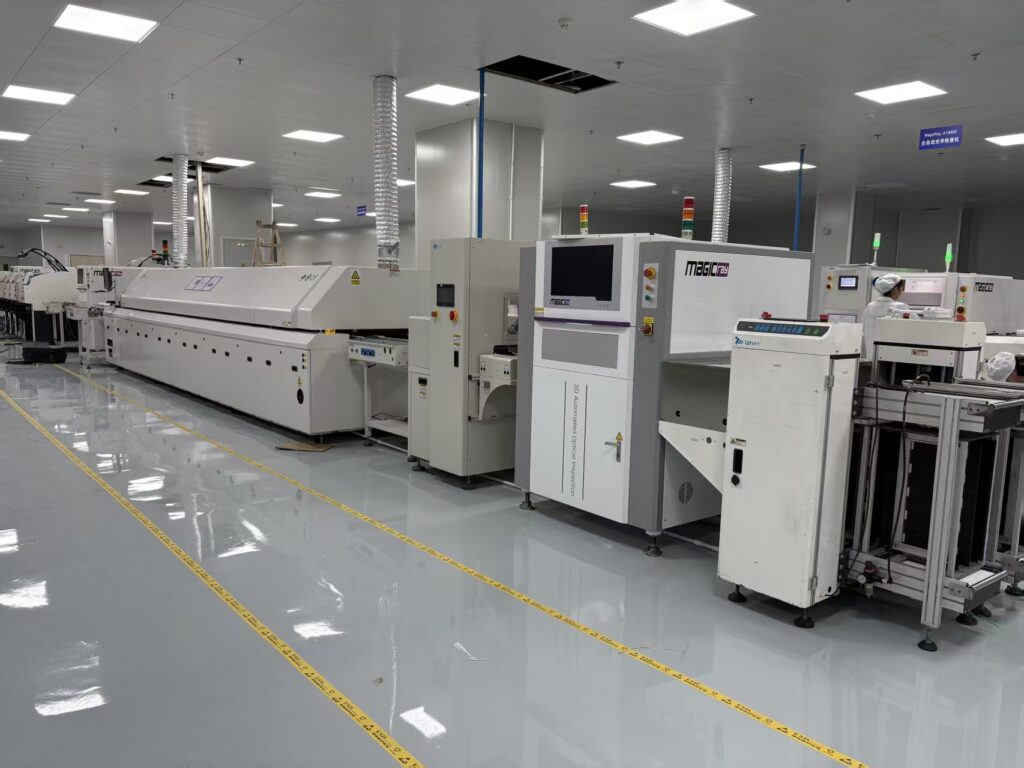
Fuliu Electronics provides pre-owned SMT equipment as part of its broader PCBA equipment services.
Common Challenges in Automotive SMT Assembly
Solder Paste Defects
Poor printing can result in insufficient or excessive solder deposits.
Component Placement Errors
Incorrect placement, polarity, or component selection can affect assembly quality.
Reflow Problems
An unsuitable thermal profile can affect solder joint formation or sensitive components.
Inspection Gaps
Relying on only one inspection method may not detect every possible defect.
Equipment Downtime
Insufficient maintenance can affect production stability.
High Product Complexity
Automotive PCBs can contain a wide range of component types and process requirements.
These challenges should be addressed through equipment selection, process engineering, inspection, maintenance, and manufacturing control.
SMT Solution from Fuliu Electronics
Established in 2014, Fuliu Electronics is dedicated to providing customers with high-quality PCBA intelligent manufacturing solutions and services.
With extensive experience in the SMT industry, we specialize in dependable equipment, professional technical support, and complete solutions for SMT production lines.
Our product portfolio includes SMT pick and place machines from Fuji, Panasonic, ASM, Yamaha, JUKI, and Hanwha, as well as ERSA reflow ovens from Germany, MagicRay SPI/AOI inspection systems, automatic solder paste printers, machine leasing and maintenance services, pre-owned SMT equipment, SMT spare parts, and supporting equipment.
For automotive electronics manufacturers, Fuliu Electronics can help evaluate:
- PCB specifications
- BOM and component mix
- Target production volume
- Placement requirements
- SPI/AOI inspection needs
- Reflow requirements
- Factory layout
- Automation level
- Existing equipment
- New or pre-owned equipment options
- Maintenance and spare parts requirements
Rather than simply supplying individual machines, the goal is to develop an SMT configuration that matches the customer’s actual manufacturing requirements.
For products containing both SMT and THT components, the SMT process can also be integrated with a DIP/THT production line to create a more complete PCBA manufacturing solution.
As part of our global growth strategy, Fuliu Electronics is actively expanding into international markets, with key focus areas including India, Vietnam, the Philippines, Indonesia, the Middle East, South Africa, and Europe.
Conclusion
A reliable SMT solution for automotive PCB assembly requires coordinated control of equipment, materials, processes, inspection, and production data.
The key elements include:
- Solder paste printing
- SPI inspection
- Accurate SMT placement
- Controlled reflow soldering
- AOI inspection
- Testing
- Traceability
- Preventive maintenance
- Flexible production capacity
For automotive electronics manufacturers, the SMT line should be configured around the actual PCB, BOM, production volume, product mix, and quality requirements.
Fuliu Electronics combines SMT equipment resources, inspection solutions, technical support, maintenance services, and pre-owned equipment options to help customers develop practical PCBA intelligent manufacturing solutions.
If you are planning a new automotive SMT production line, upgrading an existing PCB assembly factory, or integrating SMT with DIP/THT processes, provide your PCB specifications, BOM, target production capacity, component information, and existing equipment details to begin evaluating a suitable SMT solution.
Frequently Asked Questions
Automotive SMT assembly is the process of manufacturing automotive electronic PCBs using Surface Mount Technology. It typically involves solder paste printing, SPI, component placement, reflow soldering, AOI, and testing.
A typical SMT line includes a PCB loader, solder paste printer, SPI, pick-and-place machines, reflow oven, AOI, PCB handling equipment, and testing systems.
Additional equipment such as X-ray, THT insertion, selective soldering, or conformal coating may be required depending on the product.
SPI verifies solder paste deposits before component placement and reflow. It can help detect printing problems early and reduce the risk of downstream defects.
AOI can provide valuable post-reflow inspection of component placement and visible soldering conditions.
Whether AOI is required and where it should be placed depends on the product and quality-control strategy.
Reflow soldering melts solder paste under a controlled thermal profile to form solder joints between surface-mounted components and PCB pads.
Potentially, yes. The suitability depends on equipment condition, placement accuracy, process capability, software, maintenance history, spare parts availability, and customer requirements.
A technical evaluation should be completed before purchase.