
When building or upgrading an SMT production line, one of the most important purchasing decisions is whether to invest in new or used SMT equipment.
New machines can provide current technology, manufacturer support, and new-machine condition.
Used or pre-owned SMT equipment can reduce initial capital requirements and provide access to established international-brand platforms at a different investment level.
But the lowest purchase price does not automatically mean the lowest production cost.
The right decision depends on:
PCB + BOM + Production Capacity + Product Mix + Equipment Condition + Support + Spare Parts + Budget + Total Cost of Ownership
This guide explains how PCB assembly manufacturers can evaluate new and used SMT equipment systematically before making an investment.
New vs Used SMT Equipment: Quick Comparison
This comparison is only a starting point.
A well-maintained used machine can be more suitable than a new machine that does not match the production requirement.
Start with Production Requirements, Not Equipment Price
Before deciding between new and used equipment, define what the factory actually needs to produce.
Collect:
- PCB dimensions
- PCB thickness
- BOM
- Component packages
- Smallest component
- Largest component
- Number of placements per PCB
- Target boards per hour
- Daily production quantity
- Product mix
- Batch size
- Changeover frequency
- Inspection requirements
This prevents a common procurement mistake:
Buying an attractive machine first and trying to fit the production process around it later.
What SMT Equipment Can Be Purchased Used?
A complete SMT line can include:
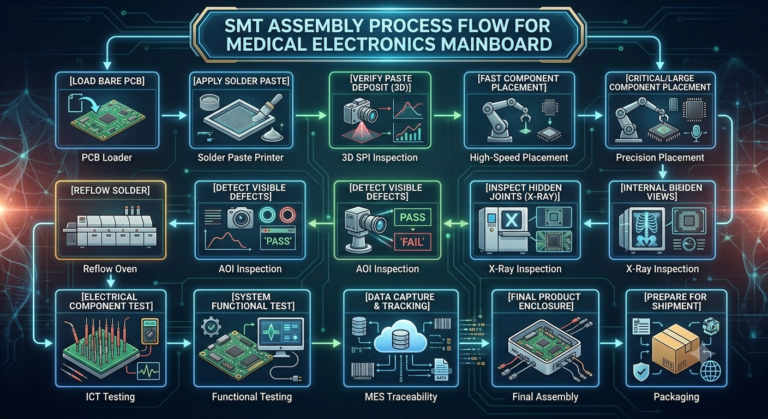
PCB Loader → Solder Paste Printer → SPI → Pick and Place Machine → Reflow Oven → AOI → PCB Unloader
Pre-owned equipment may be available for almost every section, including:
- Pick and place machines
- Solder paste printers
- SPI systems
- Reflow ovens
- AOI systems
- PCB loaders/unloaders
- Conveyors
- Buffers
- X-ray systems
- Supporting equipment
However, the evaluation criteria differ by equipment type.
When Does New SMT Equipment Make Sense?
New equipment can be attractive when manufacturers prioritize:
- Latest machine generation
- Current automation functions
- New-machine condition
- Manufacturer warranty
- Current software ecosystem
- Long planned service life
- Factory standardization
- Advanced traceability
- Smart-factory integration
It can also make sense when the production process requires capabilities that older equipment generations cannot provide efficiently.
When Does Used SMT Equipment Make Sense?
Used equipment can be attractive when manufacturers prioritize:
- Lower initial capital investment
- Faster factory expansion
- Additional production capacity
- Familiar equipment platforms
- Existing feeder compatibility
- Spare production lines
- High-mix/medium-volume manufacturing
- A phased investment strategy
For example, a factory already operating a particular generation of placement machine may find that adding another compatible pre-owned machine simplifies:
- Feeder sharing
- Spare-parts inventory
- Operator training
- Programming
- Maintenance
In this situation, the older platform may still provide practical production value.
Used Is Not the Same as Refurbished
These terms should not automatically be treated as identical.
Used Equipment
A used machine has previously operated in production and is being resold.
Its condition can vary significantly.
Refurbished Equipment
Refurbished equipment has typically undergone some level of inspection, repair, maintenance, replacement, or restoration before resale.
However, the word “refurbished” does not define a universal technical standard.
Always ask the supplier exactly what work was performed.
For example:
- Was the placement head serviced?
- Were worn belts replaced?
- Were feeders maintained?
- Was placement accuracy checked?
- Was the conveyor inspected?
- Was the oven cleaned?
- Were defective sensors replaced?
The refurbishment scope matters more than the label.
Compare Equipment Capability
First determine whether both the new and used machines can produce the target PCB.
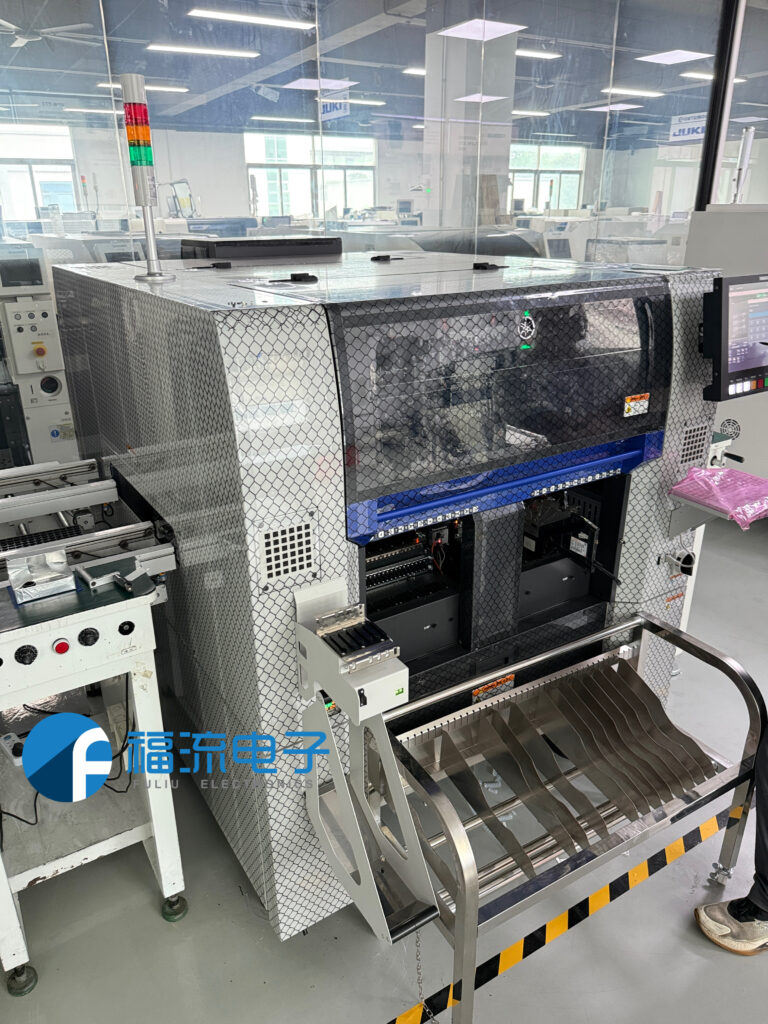
For a pick and place machine, check:
- Minimum component size
- Maximum component size
- Component height
- Component weight
- Placement accuracy
- Placement force
- PCB dimensions
- Feeder capacity
- Tray capability
- Head configuration
A cheaper used machine is not economical if it cannot process critical components in the BOM.
Compare Real Production Capacity
Do not compare only catalog CPH.
Suppose: PCB = 500 placements
Target = 100 boards/hour
The theoretical requirement is:
500 × 100 = 50,000 placements/hour
But actual throughput is affected by:
- Component mix
- Feeder location
- Recognition
- PCB transfer
- Large components
- Tray components
- Head travel
- Changeover
- Machine efficiency
Both new and used equipment should be evaluated using the actual PCB program or realistic production simulation where possible.
Inspect the Mechanical Condition
Mechanical condition is one of the most important factors when purchasing used SMT equipment.
For placement machines, inspect:
- Placement heads
- Nozzles
- Feeder interfaces
- Conveyor
- Motors
- Bearings
- Belts
- Linear motion systems
- Vacuum systems
Abnormal noise, excessive wear, unstable motion, or repeated errors can indicate maintenance requirements.
Check Cameras and Vision Systems
Modern SMT placement depends heavily on vision.
Inspect:
- Fiducial cameras
- Component recognition cameras
- Lighting
- Image quality
- Calibration condition
- Camera communication
A mechanically functional machine can still experience placement problems if the vision system is unstable.
Check Sensors and Electronics
Used machines may contain many sensors and electronic control components.
Inspect:
- PCB sensors
- Feeder sensors
- Vacuum sensors
- Limit sensors
- Controllers
- Drives
- Industrial computers
- Communication boards
Some electronic parts can become more difficult to source as equipment generations age.
Review Software Version
Software is frequently overlooked during used-equipment procurement.
Check:
- Machine software version
- Operating system
- Program compatibility
- Offline programming support
- Network capability
- Barcode support
- Traceability compatibility
- License requirements
An older machine may still perform placement well but be difficult to integrate into a newer factory information system.
Evaluate Spare-Parts Availability
This is one of the most important questions for older SMT equipment.
Before purchasing, identify critical parts such as:
- Motors
- Drives
- Cameras
- Sensors
- Controllers
- Industrial computers
- Placement head parts
- Vacuum components
- Conveyor parts
Ask:
- If this part fails tomorrow, how long will it take to obtain a replacement?
- Purchase price matters once.
- Spare-parts availability matters throughout the machine’s operating life.
- Evaluate Feeder Availability
- For pick and place machines, feeders can represent a significant additional investment.
Check:
- Included feeder quantity
- Feeder sizes
- Feeder condition
- Feeder compatibility
- Smart feeder functions
- Spare feeder availability
- Feeder maintenance capability
A low-priced placement machine with almost no feeders may become expensive once a complete production feeder package is purchased.
Example: Machine Price vs Complete Placement Investment
Consider two simplified offers:
Machine A
Used placement machine: $50,000
Required feeders and accessories: $30,000
Total initial placement investment:
$80,000
Machine B
Used placement machine: $65,000
Most required feeders included: $10,000 additional accessories
Total:
$75,000
The lower machine price does not necessarily create the lower project cost.
Review Maintenance History
Where available, request:
- Maintenance records
- Repair history
- Head service records
- Major component replacement
- Error history
- Previous operating environment
- Machine operating hours
Not every used machine will have complete historical records.
When records are incomplete, physical inspection and machine testing become even more important.
Machine Age Is Not Enough
Do not evaluate used SMT equipment by manufacturing year alone.
Two machines of the same age can have very different conditions.
Machine A may have operated:
- Three shifts per day
- High-volume production
- Limited maintenance
Machine B may have operated:
- One shift
- Lower utilization
- Regular preventive maintenance
Age is useful information, but it does not independently determine remaining production value.
Test the Machine Before Purchase
Whenever practical, perform a functional test.
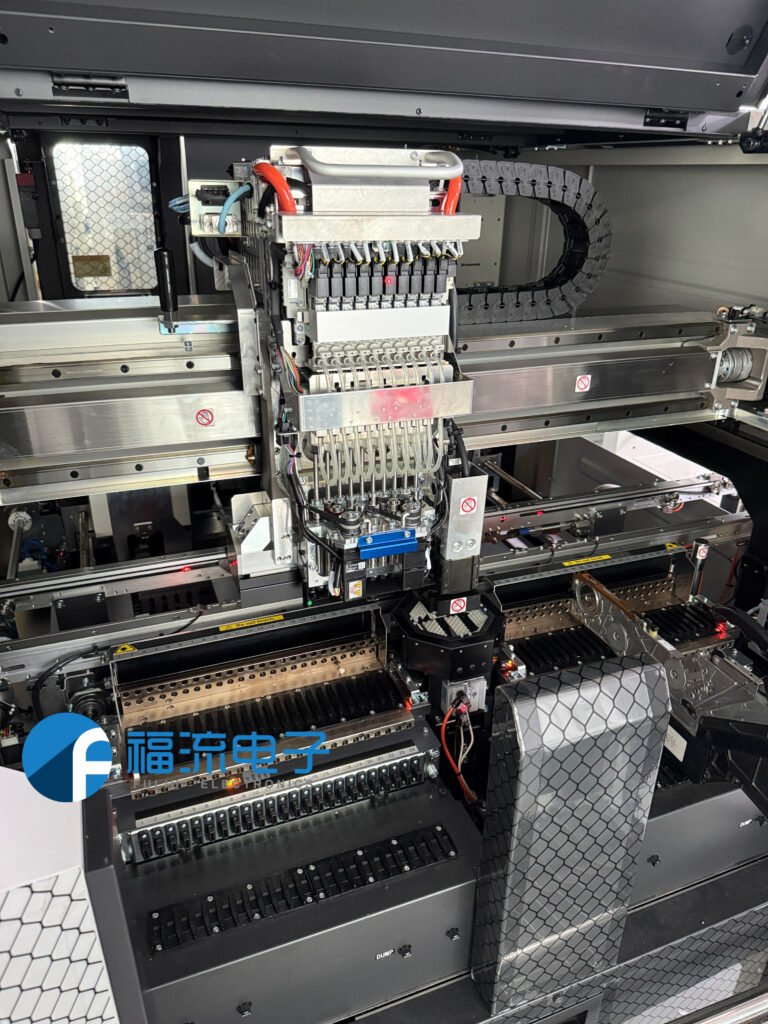
For a pick and place machine, check:
- Startup
- Homing
- Conveyor operation
- Feeder loading
- Component pickup
- Vision recognition
- Placement
- Nozzle changing
- Alarm history
- Repeatability
If possible, test with actual or representative components.
A powered-off visual inspection alone provides limited information about machine performance.
For a pre-owned printer, inspect:
- Vision system
- Squeegee system
- Stencil clamping
- PCB clamping
- Conveyor
- Support system
- Cleaning system
- Motors
- Sensors
- Software
Check whether the machine supports your PCB dimensions and required printing process.
Used Reflow Oven Inspection
For a pre-owned reflow oven, inspect:
- Heating zones
- Heaters
- Fans
- Motors
- Conveyor
- Chain/mesh system
- Cooling section
- Flux management
- Exhaust
- Temperature control
- Software
Also review:
- Maximum PCB width
- Nitrogen capability if required
- Spare-parts availability
- Power requirements
A reflow oven should be evaluated based on thermal-process capability, not appearance alone.
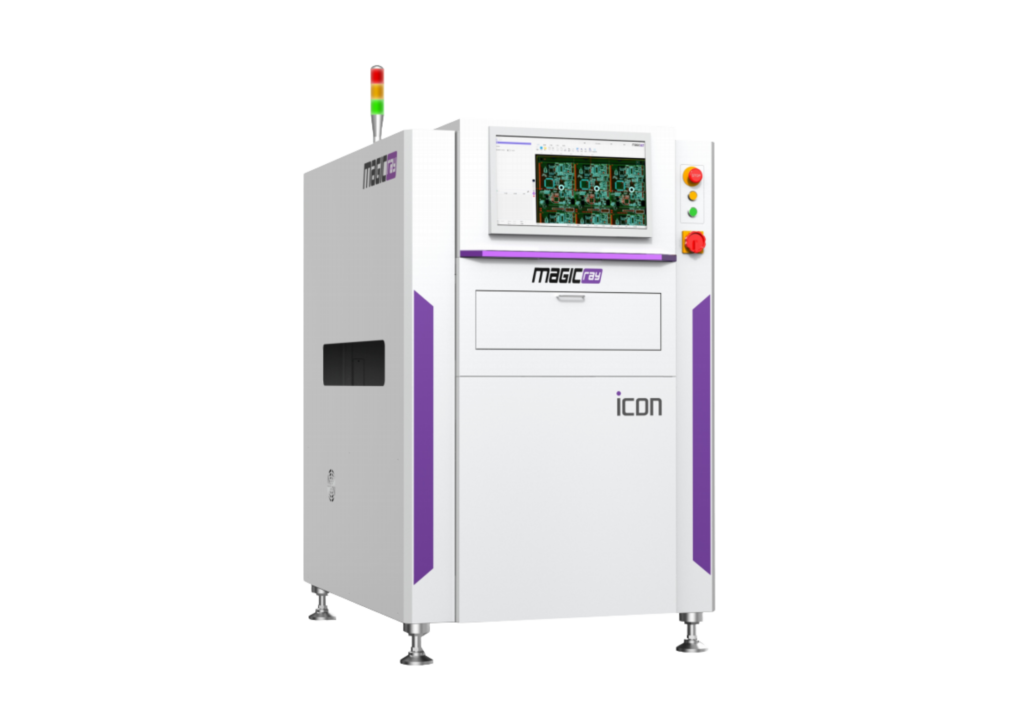
For pre-owned inspection systems, check:
- Cameras
- Optics
- Lighting
- Motion system
- Conveyor
- Sensors
- Computer
- Software
- Algorithm generation
- Programming capability
- Data export
- Traceability compatibility
Software support can be especially important for older inspection equipment.
Consider Factory Compatibility
A used machine can be in excellent condition but still be the wrong choice for your factory.
Check compatibility with:
- Existing conveyors
- Conveyor height
- PCB flow direction
- Communication interface
- Factory power
- Compressed air
- Exhaust
- Network
- Line control
Also evaluate whether the machine fits physically into the planned layout.
Compare Changeover Performance
For high-mix manufacturing, changeover can have a major effect on effective production capacity.
Evaluate:
- Feeder carts
- Offline setup
- Recipe loading
- Width adjustment
- Component verification
- Tray changeover
- Program conversion
A newer machine may offer more automated changeover functions.
But an older machine with a large existing feeder inventory may still be economical for a particular factory.
Evaluate Energy and Utility Requirements
Older and newer machines can differ in:
- Electrical consumption
- Compressed-air demand
- Nitrogen requirements
- Exhaust requirements
- Heat generation
This is especially relevant for:
- Reflow ovens
- Wave soldering machines
- Selective soldering machines
- Large production equipment
Operating cost should be included in the purchasing decision.
Compare Maintenance Requirements
A used machine may require more immediate maintenance.
Potential costs include:
- Head service
- Feeder repair
- Belt replacement
- Sensor replacement
- Fan/motor replacement
- Computer replacement
- Conveyor maintenance
New equipment also requires preventive maintenance, but early-life repair risk is generally different.
Ask the supplier for a recommended maintenance and spare-parts plan.
Consider Downtime Risk
Downtime can be more expensive than the failed component.
Suppose a line produces: 80 PCBAs/hour
A machine failure stops production for: 10 hours
Affected planned output: 80 × 10 = 800 PCBAs
Even if production is recovered later, the disruption can affect:
- Scheduling
- Labor
- Downstream operations
- Delivery
This is why technical support and spare-parts availability should be included in the equipment decision.
Calculate Total Cost of Ownership
Do not compare:
New Machine Price vs Used Machine Price
Compare:
Total Cost of Ownership
A simplified model is:
TCO = Purchase + Feeders + Accessories + Installation + Training + Spare Parts + Maintenance + Energy + Software + Downtime + Process Losses
For used equipment, also consider potential initial refurbishment.
Example TCO Comparison
Consider a simplified five-year comparison.
The table intentionally does not assign universal dollar amounts.
Real TCO should be calculated using the actual machine and production plan.
When Can Used Equipment Deliver Strong ROI?
Used equipment can be attractive when:
- Production volume does not justify new-machine capital
- Equipment capability still matches the PCB
- Machine condition is good
- Spare parts remain available
- Technical support is available
- Feeders are included or already owned
- Factory utilization is moderate
- Payback period is important
It can also be useful for:
- Backup capacity
- Factory expansion
- New product introduction
- High-mix manufacturing
- New market entry
When Can New Equipment Be the Better Investment?
New equipment may be more suitable when:
- Very high utilization is expected
- Downtime cost is extremely high
- Latest component capability is required
- Advanced automation is needed
- Smart-factory integration is important
- Current software is required
Long planned production life justifies higher capital investment
The decision should be based on expected production economics.
Consider a Hybrid New + Used SMT Line
The choice does not need to be entirely new or entirely used.
A factory may configure:
New Printer → Pre-Owned Pick and Place → New Reflow Oven → New SPI/AOI
or:
New Printer + SPI → New Placement Machine → Pre-Owned Reflow → New AOI
The correct combination depends on:
- Product risk
- Process requirements
- Budget
- Existing equipment
- Equipment condition
A hybrid strategy can allocate investment to the processes where newer technology provides the greatest value.
Example Hybrid Strategy
Suppose a manufacturer prioritizes:
- Advanced inspection
- Reliable printing
- Moderate placement capacity
- Limited capital budget
A possible strategy is:
- New automatic solder paste printer
- New 3D SPI
- Suitable pre-owned international-brand placement machine
- Suitable pre-owned or new reflow oven
- New AOI
This is only an example.
The correct combination depends on the product.
Should You Buy an Entire Used SMT Line?
An entire pre-owned line can be attractive if:
- Machines are compatible
- Capacity is balanced
- Equipment condition is verified
- Spare parts are available
- Factory utilities match
- Technical support is available
However, do not assume that machines from the same previous factory automatically form the right line for your product.
Recalculate:
Printing Capacity → Placement Capacity → Reflow Capacity → Inspection Capacity
using your own PCB.
Line Balance Matters More Than Machine Age
The line is approximately limited to: 75 boards/hour
Replacing the used placement machine with a new 150-board/hour machine would not automatically increase finished output.
AOI remains the bottleneck.
This is why equipment purchasing should be based on the complete production line.
Common Mistakes When Buying Used SMT Equipment
Avoid these purchasing mistakes:
- Buying based only on price
- Buying based only on machine age
- Ignoring feeder cost
- Ignoring software compatibility
- Not checking spare parts
- Not testing the machine
- Ignoring maintenance history
- Ignoring factory utilities
- Buying excessive placement speed
- Ignoring line balance
- Assuming “refurbished” means like new
- Ignoring local technical support
A low purchase price cannot compensate for a machine that cannot support stable production.
New and Pre-Owned SMT Equipment from Fuliu Electronics
Established in 2014, Fuliu Electronics is dedicated to providing customers with high-quality PCBA intelligent manufacturing solutions and services.
With extensive experience in the SMT industry, we specialize in dependable equipment, professional technical support, and complete SMT production line solutions.
Our equipment portfolio includes SMT pick and place machines from Fuji, Panasonic, ASM, Yamaha, JUKI, and Hanwha, together with ERSA reflow ovens from Germany, MagicRay SPI/AOI inspection systems, automatic solder paste printers, supporting SMT equipment, pre-owned SMT equipment, SMT spare parts, machine leasing, and maintenance services.
For manufacturers comparing new and pre-owned SMT equipment, Fuliu Electronics can help evaluate:
- PCB and BOM
- Component range
- Required capacity
- Product mix
- Existing equipment
- Feeder compatibility
- Machine condition
- Spare-parts availability
- Factory layout
- New vs pre-owned options
- Complete line balance
- Investment budget
Instead of selecting equipment based only on purchase price, manufacturers can evaluate:
Production Capability + Equipment Condition + Support + Maintenance + Downtime Risk + Total Cost of Ownership
As part of our global growth strategy, Fuliu Electronics is actively expanding into international markets, with key focus areas including India, Vietnam, the Philippines, Indonesia, the Middle East, South Africa, and Europe.
Frequently Asked Questions
It can be. Suitable used equipment can reduce initial investment while providing the required production capability. Machine condition, spare parts, software, feeders, and technical support should be evaluated first.
Not necessarily for every factory. A new machine may offer newer technology and support, while a suitable pre-owned machine may provide better investment economics for certain production requirements.
Used equipment has previously operated in production. Refurbished equipment has undergone some level of inspection, maintenance, repair, or restoration. The actual refurbishment scope should always be confirmed.
Check placement heads, cameras, nozzles, feeders, vacuum system, sensors, motors, conveyor, software, machine operation, maintenance records, and spare-parts availability.
Yes, but it should not be used alone. Operating hours, utilization, maintenance history, mechanical condition, software, and spare-parts availability can be equally or more important.
Whenever practical, yes. A powered functional test provides more information than a visual inspection alone.