
In modern SMT (Surface Mount Technology) production, achieving high-quality PCB assembly is becoming increasingly challenging due to smaller components, higher density designs, and stricter quality requirements.
One of the most critical factors affecting final product quality is solder paste printing—the very first step in the SMT process.
This is where Solder Paste Inspection (SPI) becomes essential.
For overseas factory investors, electronics manufacturers, procurement managers, and engineers, understanding SPI is crucial when building or upgrading an SMT production line.
In this guide, we will explain what SPI is, how it works, and how it integrates with reflow ovens and wave soldering processes to ensure consistent, high-quality PCB assembly.
What is SPI in SMT Production?
SPI (Solder Paste Inspection) is an automated inspection process used to measure and verify the quality of solder paste applied to a PCB before component placement.
It checks critical parameters such as:
- solder paste volume
- height and thickness
- area coverage
- alignment accuracy
- shape consistency
SPI ensures that the solder paste printing process is accurate and stable before moving to the next stage.
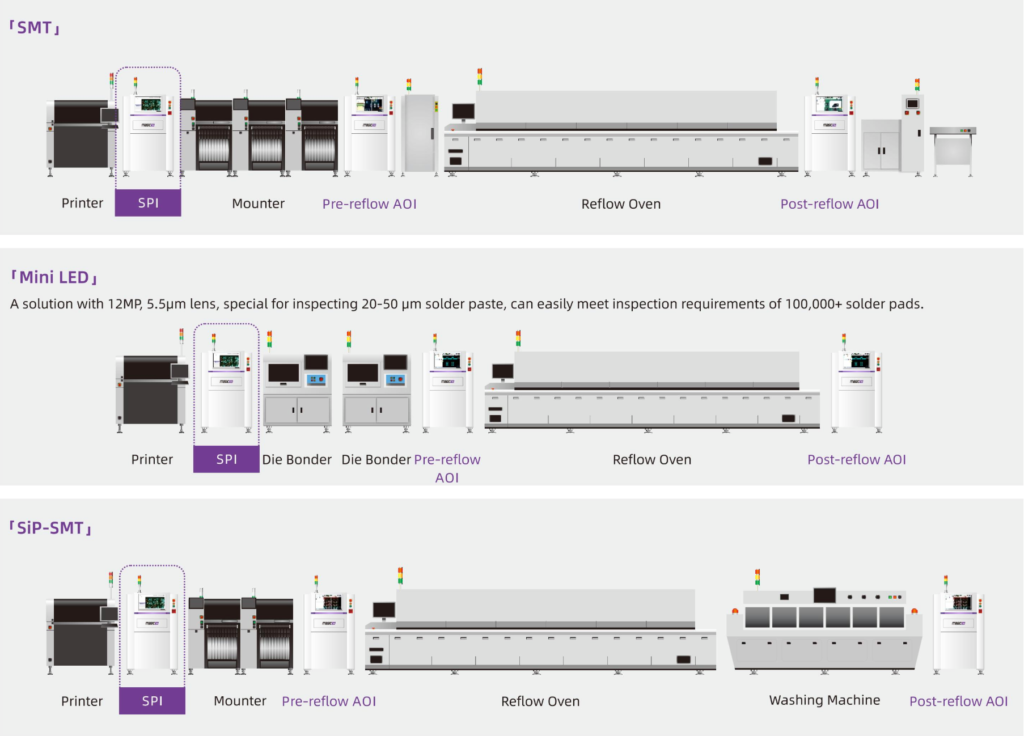
Why SPI is Important in SMT Production
Prevents Defects at the Source
Most SMT defects originate from poor solder paste printing.
SPI helps detect issues before they become costly problems.
Improves Yield and Quality
By ensuring consistent solder paste application, SPI reduces defects such as:
- solder bridges
- insufficient solder
- tombstoning
- open circuits
Reduces Rework and Scrap Costs
Early detection avoids expensive rework after reflow soldering.
Enhances Process Control
SPI provides real-time data that helps optimize printing parameters.
Supports High-Precision Manufacturing
Essential for fine-pitch components and high-density PCBs.
How SPI Works in SMT Production
Step 1: Solder Paste Printing
Solder paste is applied to PCB pads using a stencil printer.
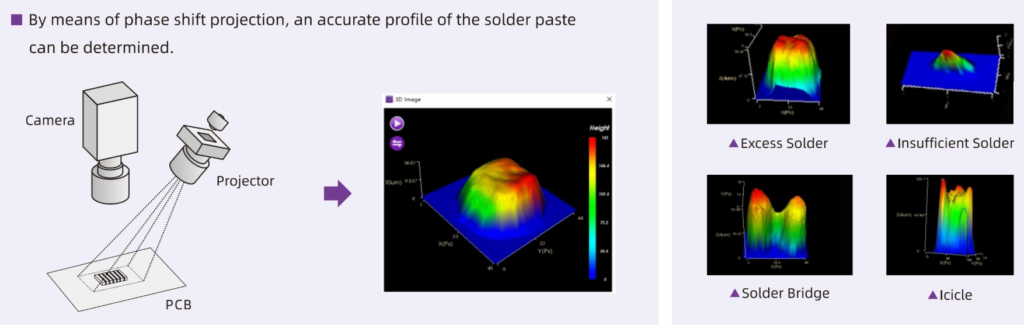
Step 2: 3D Measurement
SPI system scans the PCB using 3D imaging technology.
Step 3: Data Analysis
Software analyzes solder paste parameters against predefined standards.
Step 4: Defect Detection
The system identifies abnormalities such as:
- insufficient volume
- excessive paste
- misalignment
Step 5: Feedback to Printer
SPI systems can provide feedback to adjust printing parameters automatically.
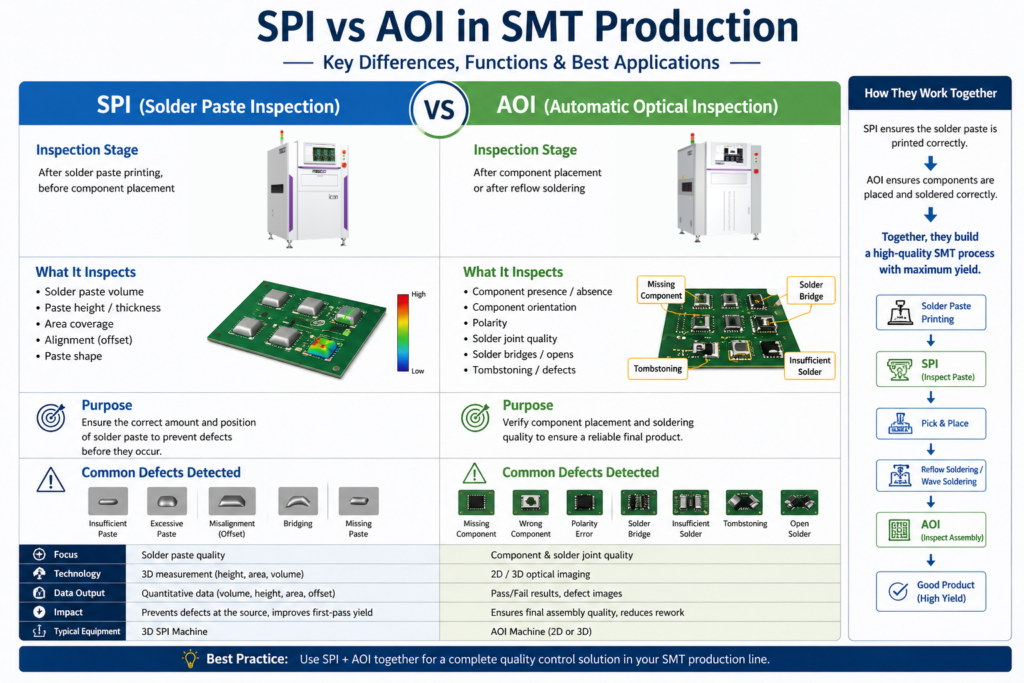
SPI vs AOI vs Manual Inspection
SPI
- performed before component placement
- focuses on solder paste quality
AOI
- performed after placement or reflow
- checks components and solder joints
Manual Inspection
- less consistent
- depends on operator experience
Best practice: use SPI + AOI for complete inspection coverage.
How SPI Integrates with Reflow and Wave Soldering
SPI is part of a complete SMT + THT production ecosystem:
Before Reflow Soldering
SPI ensures solder paste quality before components are placed and soldered in the reflow oven.
High-quality reflow ovens (such as multi-zone systems from JT) rely on consistent paste quality for optimal results.
In Mixed Production Lines
After SMT reflow:
- THT components are inserted
- PCB enters wave soldering process
Wave soldering machines (such as JT dual-wave systems) rely on proper upstream quality to ensure stable solder joints.
Key Insight
Poor solder paste = poor reflow results
Poor reflow = poor final assembly quality
SPI is the foundation of the entire process.
Types of SPI Systems
2D SPI
- basic inspection
- lower cost
- limited accuracy
3D SPI (Recommended)
- measures volume and height
- higher accuracy
- essential for modern SMT production
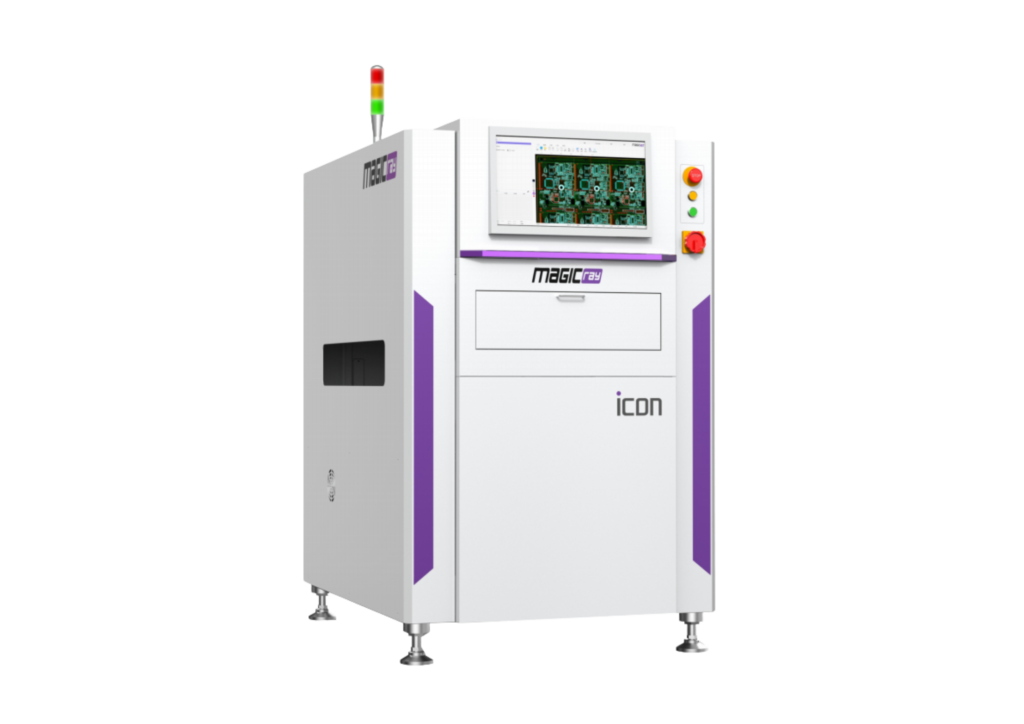
How to Choose the Right SPI Machine
Production Volume
High-speed lines require fast inspection systems.
PCB Complexity
Fine-pitch and high-density boards require 3D SPI.
Integration Capability
SPI must work seamlessly with:
- printer
- pick and place machine
- AOI system
Software and Data Analysis
Advanced software improves defect detection and process optimization.
Supplier Support
Reliable technical support ensures stable operation.
Cost Considerations
SPI machine cost typically ranges:
$20,000 – $80,000+
Factors affecting cost:
- 2D vs 3D technology
- inspection speed
- resolution
- software capability
Although SPI adds initial cost, it significantly reduces long-term production losses.
Common Mistakes in SPI Implementation
Skipping SPI to Reduce Cost
This often leads to higher defect rates.
Poor Parameter Settings
Incorrect thresholds result in false alarms or missed defects.
Ignoring Data Analysis
SPI data should be used to improve processes.
Lack of Maintenance
Dirty sensors reduce accuracy.
Practical Tips for Using SPI Effectively
- combine SPI with AOI for full inspection
- regularly calibrate the system
- optimize stencil design
- train operators properly
- use SPI data for continuous improvement
Real-World Application Scenarios
Consumer Electronics
High-speed production requires reliable inspection.
Automotive Electronics
Strict quality standards demand advanced SPI systems.
Medical Devices
High precision and reliability are critical.
EMS Factories
SPI ensures consistency across multiple projects.
Why SPI is Essential for Modern SMT Lines
- improves product quality
- reduces defect rates
- lowers production costs
- enhances process stability
- supports advanced manufacturing
SPI is no longer optional—it is a critical investment for competitive PCB assembly.
Conclusion
Solder Paste Inspection (SPI) is a fundamental part of SMT production that ensures high-quality PCB assembly from the very beginning.
By detecting defects early and optimizing the printing process, SPI helps manufacturers reduce costs, improve efficiency, and achieve consistent production quality.
For companies planning to build or upgrade an SMT production line, investing in SPI is essential for long-term success.
About FULIU Electronics
FULIU Electronics is a professional provider of SMT and PCBA production line solutions for global customers.
We offer:
- turnkey SMT production line solutions
- SMT equipment supply (including SPI, reflow ovens, and wave soldering machines)
- factory layout planning
- installation and training support
- global delivery and after-sales service
With extensive experience in SMT manufacturing, we help customers build efficient, reliable, and high-quality production lines.
Contact us today to get a customized SMT solution for your factory.