
Choosing an SMT production line is one of the most important investment decisions an electronics manufacturer will make. A properly configured production line directly affects manufacturing efficiency, product quality, production costs, and the ability to meet future customer demands.
However, selecting the right SMT line involves much more than choosing a pick and place machine. Manufacturers must consider PCB complexity, production volume, component types, factory space, automation level, quality requirements, budget, and long-term expansion plans.
With hundreds of equipment configurations available, many companies struggle to determine which solution best fits their production goals.
How to Choose an SMT Production Line: A Complete Buyer’s Guide
In this guide, we’ll explain how to choose an SMT production line, outline the key decision factors, compare different configurations, and help you select a solution that maximizes both productivity and return on investment.
What Is an SMT Production Line?
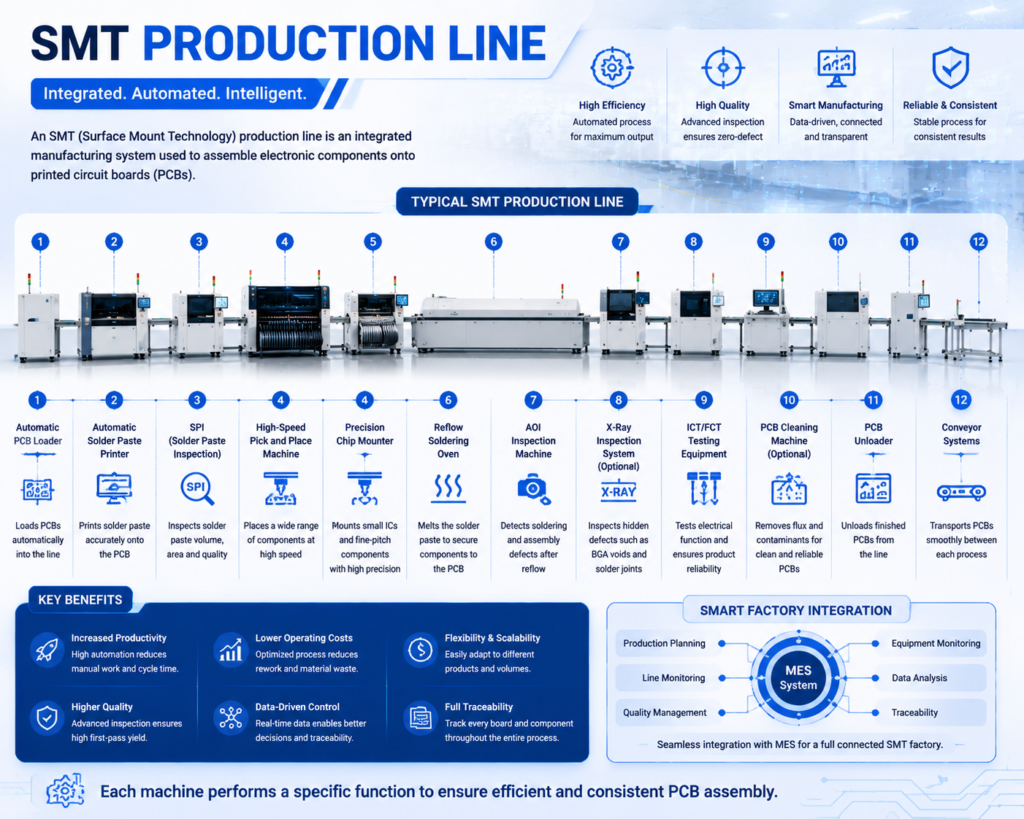
An SMT (Surface Mount Technology) production line is an integrated manufacturing system used to assemble electronic components onto printed circuit boards (PCBs).
A typical SMT production line includes:
- Automatic PCB Loader
- Automatic Solder Paste Printer
- SPI (Solder Paste Inspection)
- High-Speed Pick and Place Machine
- Precision Chip Mounter
- Reflow Soldering Oven
- AOI Inspection Machine
- X-Ray Inspection System (optional)
- ICT/FCT Testing Equipment
- PCB Cleaning Machine (optional)
- PCB Unloader
- Conveyor Systems
Each machine performs a specific function to ensure efficient and consistent PCB assembly.
Why Choosing the Right SMT Line Matters
An improperly configured production line may result in:
- Production bottlenecks
- Increased downtime
- Higher defect rates
- Lower first-pass yield
- Excessive maintenance costs
- Reduced profitability
By selecting equipment that matches your manufacturing requirements, you can improve productivity, maintain product quality, and reduce long-term operating costs.
Step 1: Define Your Production Requirements
The first step is understanding what your factory needs to manufacture.
Consider the following questions:
- What types of PCBs will be produced?
- What is the expected annual production volume?
- How many different products will be assembled?
- What component sizes will be used?
- Are fine-pitch ICs or BGAs common?
- Is double-sided assembly required?
Clearly defining production requirements helps determine the appropriate equipment configuration.
Step 2: Evaluate Production Capacity
Production capacity is often measured in:
- Boards per hour
- Components per hour (CPH)
- Daily output
- Monthly production volume
Choose equipment capable of meeting both current demand and anticipated future growth.
Avoid selecting machines that operate continuously at maximum capacity, as this reduces flexibility and may increase maintenance requirements.
Step 3: Consider PCB Complexity
PCB design has a major impact on equipment selection.
Evaluate factors such as:
- Board dimensions
- Board thickness
- Number of layers
- Component density
- Fine-pitch packages
- BGA and QFN devices
- Connector count
More complex PCBs generally require higher-precision placement equipment and advanced inspection systems.
Step 4: Determine the Required Automation Level
Automation requirements vary depending on production volume.
Entry-Level SMT Line
Suitable for:
- Small production batches
- Prototype manufacturing
- Research and development
Characteristics:
- Lower investment
- Semi-automatic equipment
- Flexible production
Fully Automatic SMT Line
Suitable for:
- Medium- and high-volume production
- EMS providers
- Continuous manufacturing
Advantages:
- Higher productivity
- Reduced labor requirements
- Better process consistency
- Higher first-pass yield
Step 5: Select the Right Pick and Place Machines
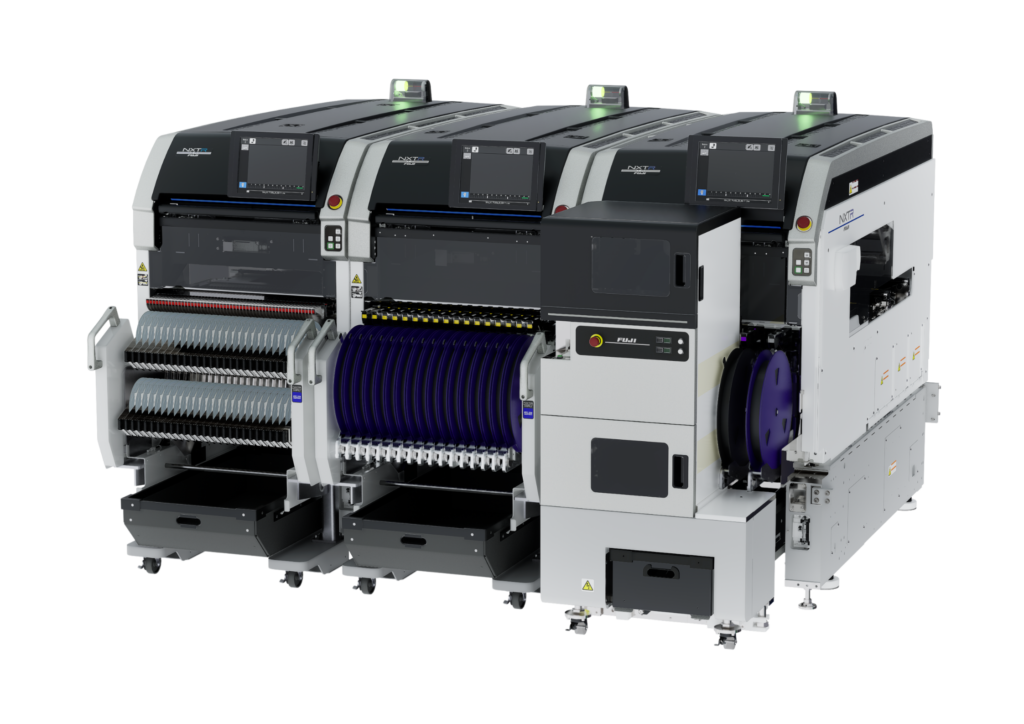
The pick and place machine is the core of every SMT production line.
Selection should consider:
- Placement speed (CPH)
- Placement accuracy
- Component range
- Feeder capacity
- Changeover efficiency
- Software capabilities
Many manufacturers combine:
- High-speed chip shooters
- Flexible precision mounters
This combination optimizes both speed and versatility.
Step 6: Choose Appropriate Inspection Equipment
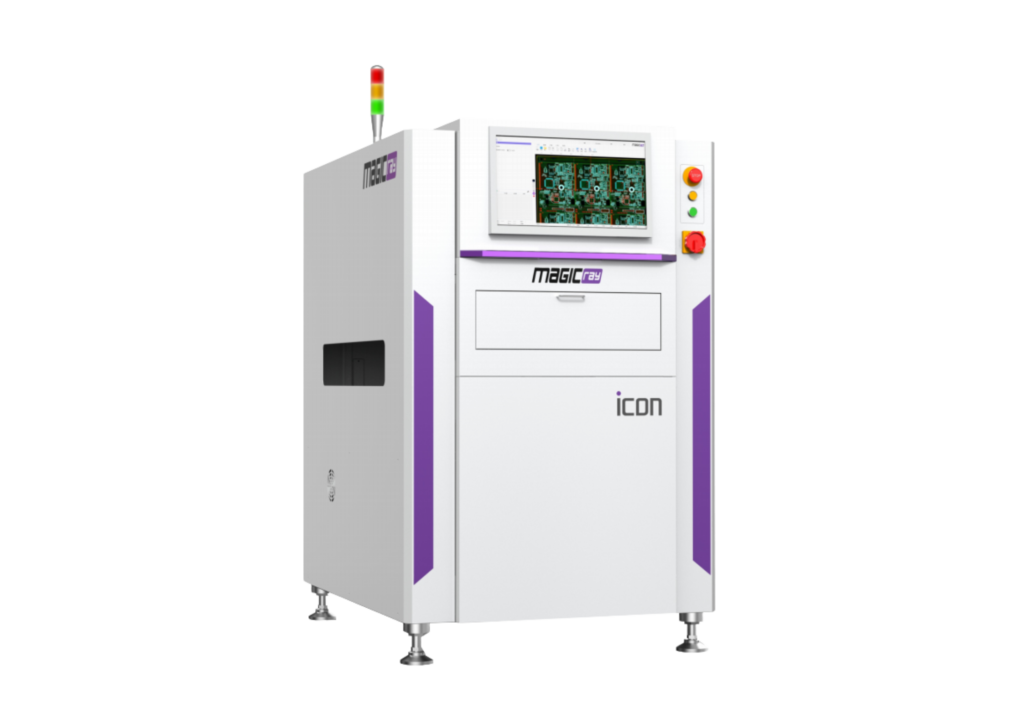
Inspection systems are essential for maintaining consistent product quality.
A modern SMT production line should include:
SPI verifies solder paste quality before component placement.
Benefits include:
- Early defect detection
- Reduced soldering issues
- Higher process stability
AOI (Automated Optical Inspection)
AOI automatically detects:
- Missing components
- Wrong polarity
- Rotation errors
- Component offset
- Solder bridges
- Tombstoning
AOI significantly reduces manual inspection while improving first-pass yield.
For BGA, QFN, and hidden solder joints, X-ray inspection provides additional quality assurance.
Step 7: Consider Factory Space
Factory layout directly influences production efficiency.
Evaluate:
- Available floor space
- Material flow
- Maintenance access
- Operator movement
- Future expansion space
An optimized layout minimizes unnecessary transportation and improves production efficiency.
Step 8: Plan for Future Expansion
Many manufacturers initially purchase equipment based only on current production needs.
However, future growth should also be considered.
Select equipment that supports:
- Additional placement machines
- Larger PCB sizes
- Higher throughput
- Additional inspection stations
- Smart factory integration
Planning ahead helps avoid costly production line redesigns later.
Step 9: Evaluate Software and Industry 4.0 Capabilities
Modern SMT production lines are increasingly software-driven.
Important features include:
- MES integration
- SPC analysis
- Barcode traceability
- Production dashboards
- Remote monitoring
- AI-assisted optimization
- Predictive maintenance
These capabilities improve manufacturing visibility and support continuous process improvement.
Step 10: Evaluate Total Cost of Ownership
Equipment purchase price is only part of the investment.
Manufacturers should also consider:
- Installation costs
- Training expenses
- Maintenance costs
- Spare parts availability
- Energy consumption
- Software licensing
- Technical support
- Downtime risk
Evaluating the Total Cost of Ownership (TCO) provides a more accurate picture of long-term investment value.
Turnkey vs. Individual Equipment Purchasing
Manufacturers generally choose between:
Turnkey SMT Solution
Advantages:
- Single supplier
- Integrated equipment
- Faster installation
- Unified technical support
- Lower implementation risk
Individual Equipment Purchasing
Advantages:
- Greater supplier flexibility
- Custom equipment selection
Challenges:
- Equipment compatibility
- Longer implementation
- Multiple service providers
- Increased engineering complexity
For many manufacturers, turnkey solutions reduce project risks while accelerating production startup.
Questions to Ask Before Purchasing
Before selecting an SMT production line, ask your supplier:
- What production capacity does the line support?
- Which PCB sizes can it process?
- Can the configuration be upgraded later?
- What inspection systems are included?
- Is operator training provided?
- What warranty is available?
- Are spare parts stocked locally?
- How quickly can technical support respond?
- Does the supplier provide factory layout planning?
- Is installation included?
Comprehensive answers help ensure the selected solution aligns with your manufacturing goals.
Common Mistakes to Avoid
Avoid these common purchasing mistakes.
Buying Based Only on Price
The lowest-cost equipment may result in higher maintenance costs and lower productivity.
Ignoring Future Growth
A production line should support future expansion rather than only current requirements.
Underestimating Inspection Requirements
Skipping SPI or AOI may reduce initial costs but can significantly increase rework and defect rates.
Choosing Incompatible Equipment
Machines from different suppliers may not integrate efficiently without careful engineering.
Overlooking After-Sales Support
Reliable technical support, spare parts availability, and preventive maintenance are critical to minimizing downtime.
Why Choose Fuliu Electronics?
Established in 2014, Fuliu Electronics is dedicated to providing customers with high-quality PCBA intelligent manufacturing solutions and comprehensive technical services.
With extensive experience in the SMT industry, Fuliu Electronics supplies complete SMT production line solutions featuring internationally recognized brands such as Fuji, Panasonic, ASM, Yamaha, JUKI, and Hanwha, together with ERSA reflow ovens, MagicRay SPI/AOI inspection systems, automatic solder paste printers, refurbished SMT equipment, SMT spare parts, equipment leasing, maintenance services, and turnkey production line integration.
Serving customers across India, Vietnam, the Philippines, Indonesia, the Middle East, South Africa, and Europe, Fuliu Electronics helps manufacturers select the most suitable SMT production line through factory layout planning, equipment configuration, installation, commissioning, process optimization, operator training, and comprehensive after-sales support.
Conclusion
Selecting the right SMT production line requires balancing production capacity, PCB complexity, automation level, inspection capability, factory layout, software integration, and long-term business strategy. Rather than focusing solely on equipment specifications or purchase price, manufacturers should evaluate the complete production ecosystem to ensure sustainable growth and operational efficiency.
Working with an experienced turnkey supplier can simplify equipment selection, reduce implementation risks, and ensure that every component of the production line operates as a unified system. The right SMT production line not only increases productivity today but also provides the flexibility needed to support tomorrow’s manufacturing challenges.
Frequently Asked Questions
Start by evaluating your PCB types, production volume, automation requirements, factory space, budget, and future expansion plans before selecting equipment.
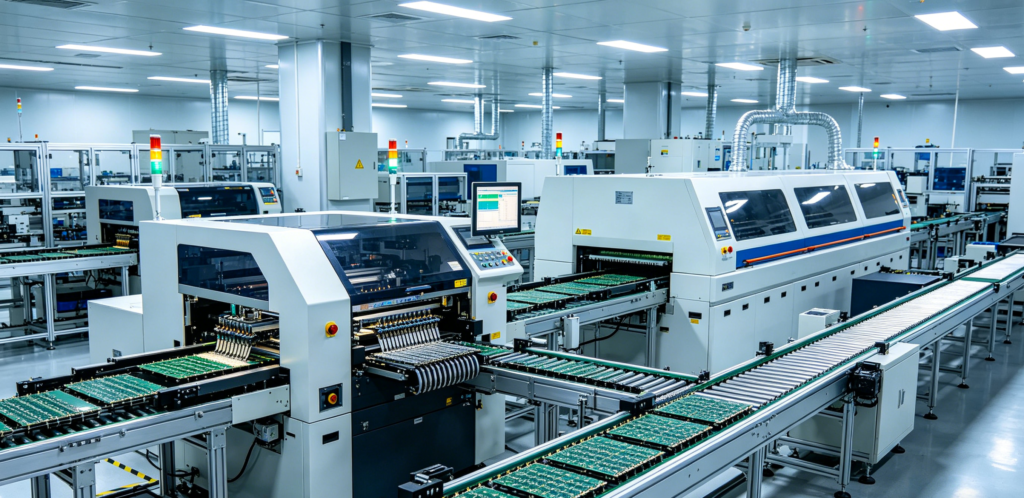
A complete SMT line typically includes a PCB loader, solder paste printer, SPI system, pick and place machines, reflow oven, AOI inspection machine, conveyors, PCB unloader, and optional X-ray inspection and testing equipment.
Turnkey solutions are recommended for most manufacturers because they simplify project management, improve equipment compatibility, and provide unified technical support.
AOI is highly recommended for medium- and high-volume production because it improves quality control, reduces manual inspection, and increases first-pass yield.
Choosing scalable equipment allows manufacturers to increase production capacity and integrate new technologies without replacing the entire production line.
Look for industry experience, comprehensive equipment offerings, engineering expertise, installation capabilities, training programs, spare parts availability, and reliable after-sales service.