
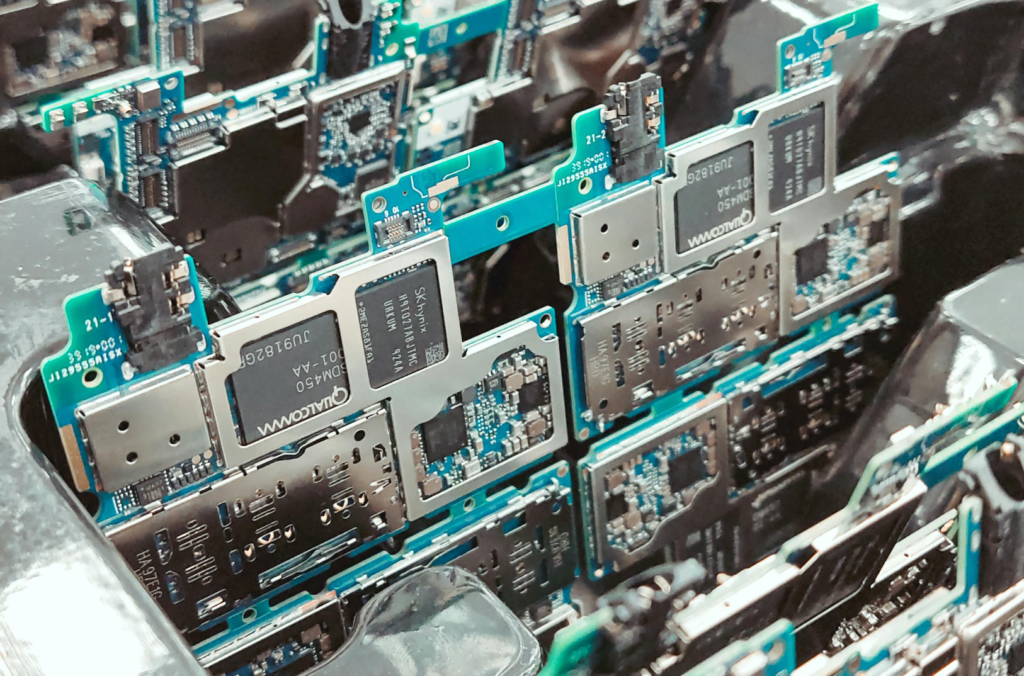
Consumer electronics manufacturing demands speed, precision, flexibility, and consistent quality. Products such as smart home devices, wearable electronics, audio products, power adapters, controllers, communication devices, and other connected products often use compact PCBs with a wide range of surface-mount components.
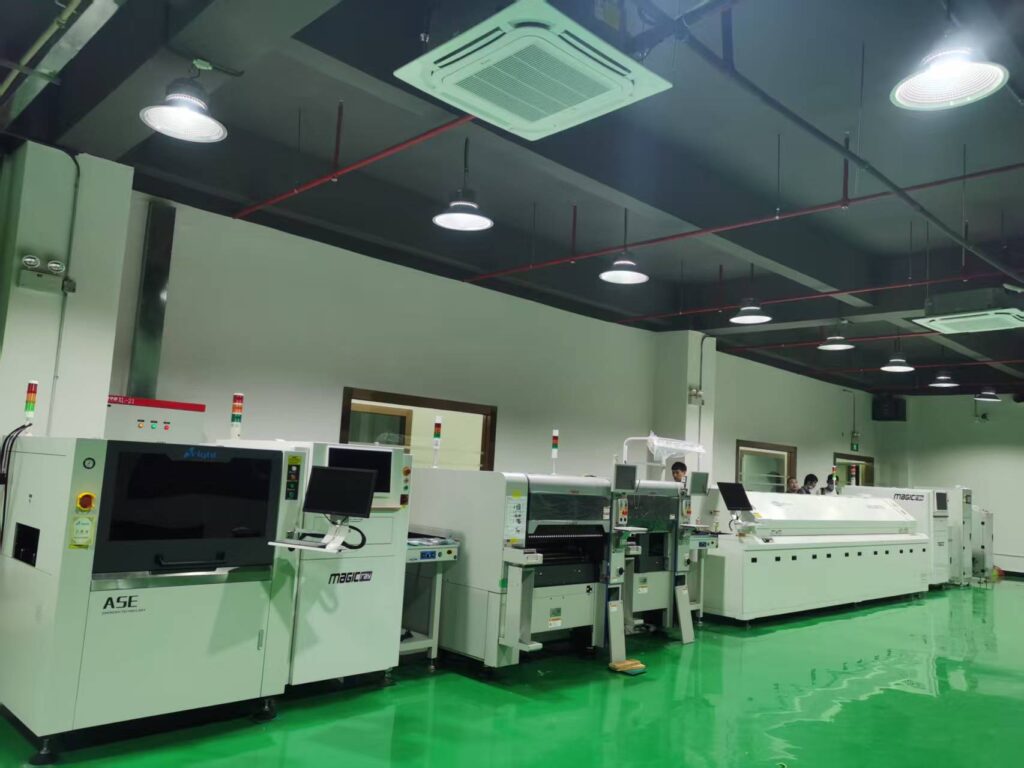
For manufacturers building a new PCB assembly factory or expanding production capacity, purchasing individual machines is only part of the challenge. Printers, SPI systems, pick and place machines, reflow ovens, AOI systems, conveyors, software, and material handling equipment must work together as one coordinated production system.
This is where a turnkey SMT line for consumer electronics becomes valuable.
A properly planned turnkey solution considers the entire manufacturing process—from PCB loading and solder paste printing to component placement, reflow soldering, inspection, and unloading—while matching equipment configuration to the manufacturer’s actual products and target capacity.
This guide explains what a turnkey SMT production line includes, how the process works, and what consumer electronics manufacturers should consider when selecting an SMT line.
What Is a Turnkey SMT Line?
A turnkey SMT line is a complete Surface Mount Technology production solution configured around the customer’s PCB assembly requirements.
Instead of sourcing each machine independently, manufacturers work with a solution provider to plan the production process, select compatible equipment, organize the factory layout, and integrate individual machines into a complete line.
A typical automatic SMT line may follow this process:
PCB Loader → Automatic Solder Paste Printer → SPI → Pick and Place Machine → Reflow Oven → AOI → PCB Unloader
Depending on production requirements, the line may also include:
- PCB conveyors
- Buffer systems
- Magazine loaders and unloaders
- Board handling equipment
- Barcode or traceability systems
- Reject conveyors
- Inspection stations
- Supporting production equipment
The exact configuration should be determined by the product rather than using the same equipment list for every factory.

Why Consumer Electronics Need an Efficient SMT Production Line
Consumer electronics frequently combine compact PCB designs with large component counts and short product life cycles.
Manufacturers may need to manage:
- Small SMD components
- ICs and fine-pitch devices
- High component density
- Multiple PCB models
- Frequent product changeovers
- High production volumes
- Short delivery schedules
- Strict quality requirements
- Rapid production expansion
These characteristics make SMT production line planning particularly important.
A high-speed pick and place machine provides limited value if the printer, SPI, reflow oven, or material supply process cannot support the same production capacity.
The goal of a turnkey solution is therefore not simply to maximize the speed of an individual machine. It is to create a balanced production line.
What Equipment Is Included in a Turnkey SMT Line?
PCB Loader
The PCB loader automatically supplies boards to the production line.
For continuous production, automated loading helps reduce manual handling and creates a stable starting point for the SMT process.
The loader should be selected according to PCB dimensions, magazine requirements, line direction, and production method.
Automatic Solder Paste Printer
Solder paste printing is a critical stage of SMT assembly.
The printer applies solder paste through a stencil onto the PCB pads before component placement.
Important considerations include:
- PCB dimensions
- Printing accuracy requirements
- Stencil compatibility
- Board support
- Cleaning system
- Changeover requirements
- Production cycle time
Stable printing creates the foundation for downstream placement and reflow quality.
SPI — Solder Paste Inspection
SPI inspects solder paste after printing and can help manufacturers identify printing-related abnormalities before components are placed.
Depending on the system and process requirements, SPI can evaluate characteristics such as solder paste position, area, height, and volume.
For consumer electronics factories running high-volume production, early detection can reduce the number of boards continuing downstream with printing problems.
SMT Pick and Place Machine
The pick and place machine is one of the core pieces of equipment in an SMT production line.
It automatically picks components from feeders or other supported packaging and places them onto the PCB.
When selecting a machine, manufacturers should evaluate:
- Component range
- PCB dimensions
- Required placement accuracy
- Target production capacity
- Feeder capacity
- Number of component types
- Product changeover frequency
- Component package requirements
- Future production plans
Consumer electronics manufacturers often need a combination of high placement speed and component flexibility.
Established SMT machine brands include Fuji, Panasonic, ASM, Yamaha, JUKI, and Hanwha, with different platforms designed for various production requirements.
Reflow Oven
After component placement, the PCB enters the reflow oven.
The oven heats the assembly according to a controlled thermal process so that the solder paste forms solder joints between SMD components and PCB pads.
When selecting a reflow oven, manufacturers should consider:
- PCB characteristics
- Production throughput
- Number and configuration of heating zones
- Temperature control
- Cooling requirements
- Process repeatability
- Maintenance
- Factory exhaust requirements
The reflow process should be developed according to the actual PCB, solder paste, components, and manufacturing requirements.
AOI — Automated Optical Inspection
AOI can be integrated after reflow to inspect suitable visible assembly characteristics and defects.
Depending on equipment capability and PCB design, AOI may help identify issues such as:
- Missing components
- Incorrect components
- Component displacement
- Polarity errors
- Certain soldering abnormalities
Inspection data can also help process engineers identify recurring production problems.
AOI should be considered part of a complete quality-control strategy rather than simply a final sorting station.
PCB Conveyors and Handling Equipment
Conveyors connect machines and maintain consistent PCB transportation throughout the line.
Although conveyors appear simple compared with pick and place machines, poor line handling can create unnecessary waiting time and reduce overall efficiency.
A complete turnkey PCB assembly line should consider line height, PCB flow direction, transfer signals, board dimensions, buffers, operator access, and maintenance space.
How Does a Consumer Electronics SMT Line Work?
A typical manufacturing process can be divided into five stages.
Stage 1: PCB Loading and Printing
Bare PCBs enter the line automatically and receive solder paste through stencil printing.
Stage 2: Solder Paste Inspection
SPI verifies the printing process before expensive components are placed.
Stage 3: Component Placement
Pick and place machines mount SMD components according to the programmed PCB data.
Depending on the product and capacity, multiple placement machines may be combined to balance speed and component flexibility.
Stage 4: Reflow Soldering
The assembled PCB passes through a controlled reflow process to form solder joints.
Stage 5: Inspection and Downstream Processing
AOI inspects suitable assembly features before the PCB proceeds to downstream processes such as DIP/THT assembly, testing, programming, conformal coating, or final product assembly.
How to Choose an SMT Line for Consumer Electronics
There is no universal SMT line for consumer electronics manufacturing. Equipment selection should begin with production data.
PCB Specifications
Provide PCB length, width, thickness, weight, panel configuration, and other relevant board information.
BOM and Component Range
The bill of materials helps determine feeder requirements, component package range, placement head configuration, and machine selection.
Target Production Capacity
Factories should define realistic output requirements instead of choosing equipment solely according to the highest advertised placement speed.
Actual throughput is influenced by PCB complexity, component mix, feeder arrangement, machine configuration, and changeovers.
Product Mix
A factory producing one PCB model continuously has different requirements from a high-mix manufacturer producing many consumer electronics products.
High-mix environments may prioritize fast changeover and flexibility, while high-volume environments may focus more heavily on throughput and line balancing.
Quality Requirements
Determine where SPI, AOI, visual inspection, traceability, ICT, functional testing, and other quality-control processes are required.
Factory Space
A complete SMT production line solution should be designed around available floor space while allowing sufficient room for operators, maintenance, materials, and future expansion.
New or Refurbished SMT Equipment?
Consumer electronics manufacturers can build production lines using new equipment, professionally prepared pre-owned equipment, or an appropriate combination of both.
New equipment may be preferred when current-generation technology, advanced automation, long-term standardization, or demanding production requirements justify the investment.
Pre-owned SMT equipment may be attractive when manufacturers want to reduce initial capital expenditure, add production capacity, or use an established machine platform already supported by their factory.
The decision should consider:
- Machine condition
- Production requirements
- Equipment configuration
- Spare parts availability
- Technical support
- Maintenance costs
- Expected utilization
- Total cost of ownership
The lowest purchase price does not necessarily produce the best manufacturing ROI.
How to Balance an SMT Production Line
Line balancing is one of the most important parts of a turnkey project.
For example, installing an extremely high-speed placement machine will not achieve its full potential if printing, component supply, reflow, inspection, or PCB handling becomes the production bottleneck.
A balanced line considers:
Printing Capacity → Inspection Cycle Time → Placement Capacity → Reflow Throughput → AOI Capacity → PCB Handling
The objective is to reduce unnecessary waiting between processes and achieve stable production at the required output.
For consumer electronics factories with multiple products, line balancing should also account for changeover frequency and component diversity.
Can SMT and THT Be Integrated?
Yes. Many consumer electronics PCBs contain both surface-mount and through-hole components.
A complete process may therefore include:
Solder Paste Printing → SPI → SMT Placement → Reflow → AOI → DIP/THT Insertion → Wave Soldering → Inspection → Testing
Through-hole components may include connectors, transformers, relays, terminals, switches, or other components that are better suited to THT assembly.
For this reason, manufacturers planning a new PCBA factory should consider the entire assembly process rather than focusing only on SMT.
Why Turnkey SMT Line Planning Matters
Buying machines individually without complete process planning can create compatibility and capacity problems.
A turnkey approach helps manufacturers evaluate:
- Equipment compatibility
- Production capacity
- PCB transfer
- Machine communication
- Factory layout
- Material flow
- Operator requirements
- Utilities
- Inspection strategy
- Maintenance access
- Future expansion
This is particularly important when setting up a new electronics manufacturing facility where multiple systems must be installed and commissioned together.
Turnkey SMT Solutions from Fuliu Electronics
Established in 2014, Fuliu Electronics is dedicated to providing customers with high-quality PCBA intelligent manufacturing solutions and services.
With extensive experience in the SMT industry, we specialize in providing dependable equipment, professional technical support, and complete SMT production line solutions.
Our product portfolio includes SMT pick and place machines from Fuji, Panasonic, ASM, Yamaha, JUKI, and Hanwha, along with ERSA reflow ovens from Germany, MagicRay SPI/AOI inspection systems, automatic solder paste printers, supporting SMT equipment, pre-owned SMT machines, SMT spare parts, machine leasing, and maintenance services.
For consumer electronics manufacturers, Fuliu Electronics can help evaluate PCB specifications, BOM data, component range, target capacity, factory layout, automation requirements, and investment plans to configure an appropriate turnkey SMT line.
Our solutions can cover individual equipment requirements as well as complete SMT and supporting PCBA production processes.
As part of our global growth strategy, we are actively expanding into international markets, with key focus areas including India, Vietnam, the Philippines, Indonesia, the Middle East, South Africa, and Europe.
Build the Right SMT Line Around Your Product
A successful turnkey SMT line for consumer electronics is not simply a collection of high-performance machines.
The printer, SPI, pick and place machines, reflow oven, AOI, PCB handling systems, and supporting equipment must be selected and balanced according to the actual product and target production capacity.
For manufacturers building a new consumer electronics factory or expanding an existing PCB assembly operation, proper line planning can reduce equipment mismatches, improve production flow, and provide a better foundation for future expansion.
If you are planning a new SMT production line for consumer electronics manufacturing, Fuliu Electronics can help evaluate your production requirements and develop a suitable equipment configuration.
Send us your PCB dimensions, BOM, component package range, target capacity, product mix, factory layout, preferred machine brands, and investment requirements to start planning your turnkey SMT and PCBA production line solution.
Frequently Asked Questions
A turnkey SMT production line is a complete PCB surface-mount assembly solution configured around the customer’s manufacturing requirements. It typically combines PCB handling, solder paste printing, SPI, pick and place, reflow soldering, AOI, conveyors, and supporting equipment into an integrated production line.
A typical line includes a PCB loader, automatic solder paste printer, SPI, one or more pick and place machines, reflow oven, AOI, conveyors, and PCB unloading equipment.
Additional systems may be added according to production, traceability, inspection, and automation requirements.
There is no universal price for a complete SMT production line. Cost depends on placement capacity, machine brand and model, new or pre-owned equipment, SPI/AOI configuration, reflow requirements, PCB handling automation, feeders, accessories, and supporting equipment.
A meaningful quotation should therefore be based on the customer’s actual production requirements.
Customers should ideally provide PCB dimensions, PCB photos or Gerber-related production information where appropriate, BOM, component package range, target output, product mix, factory layout, required automation level, quality requirements, and investment considerations.
It depends on component count, component types, PCB complexity, required throughput, placement machine configuration, and target cycle time.
Some production requirements can be handled by one placement machine, while higher-volume lines may use multiple machines to balance placement workload.
Manufacturers commonly use established SMT platforms from brands such as Fuji, Panasonic, ASM, Yamaha, JUKI, and Hanwha.
The appropriate brand and model should be selected according to component range, production capacity, PCB specifications, budget, technical support, and existing factory equipment.