
As PCB assembly technology continues to evolve, product quality requirements are becoming stricter across industries such as consumer electronics, automotive systems, industrial control, medical devices, and communication equipment.
In SMT (Surface Mount Technology) production, even small defects can lead to product failure, customer complaints, and expensive rework costs. This is why AOI (Automatic Optical Inspection) has become one of the most important quality control technologies in modern PCB manufacturing.
However, many manufacturers face a common question when building or upgrading an SMT production line:
Should you choose an inline AOI machine or an offline AOI machine?
For overseas factory investors, electronics manufacturing business owners, procurement managers, and engineers, understanding the differences between these two AOI solutions is essential for making the right investment decision.
In this guide, we will explain how inline and offline AOI systems work, compare their advantages and limitations, and help you determine which solution best fits your production needs.
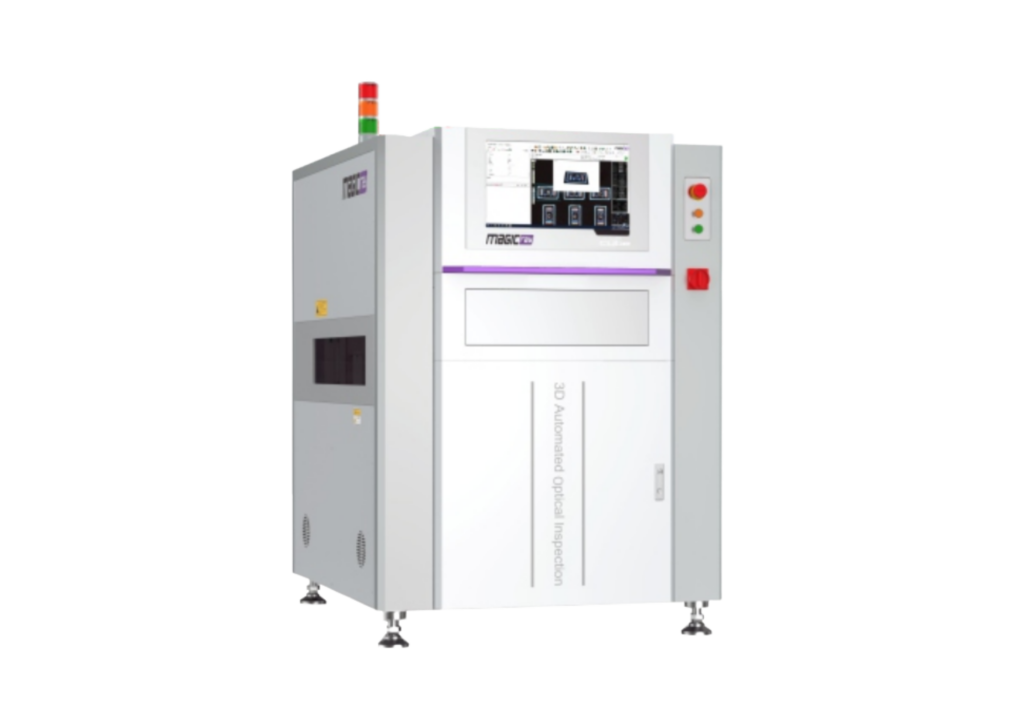
What is AOI in SMT Production?
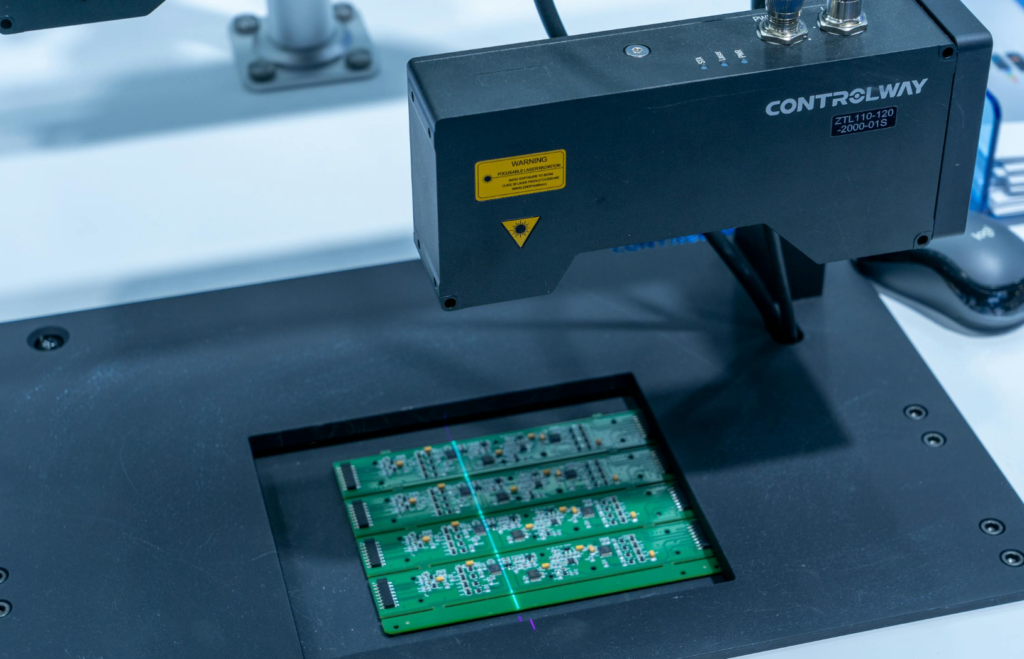
AOI (Automatic Optical Inspection) is an automated inspection system used to detect defects in PCB assembly.
Using high-resolution cameras and intelligent software, AOI machines inspect:
missing components
incorrect placement
polarity errors
solder bridges
tombstoning
insufficient solder
lifted leads
AOI helps manufacturers improve product quality while reducing manual inspection workload.
Why AOI is Important in PCB Assembly
Reduces Production Defects
AOI identifies problems early before products move to the next process.
Improves Production Efficiency
Automated inspection is significantly faster than manual inspection.
Reduces Labor Cost
AOI minimizes dependence on human inspectors.
Supports High-Density PCB Manufacturing
Modern PCBs with fine-pitch components require automated inspection.
Improves Traceability and Quality Control
AOI systems provide inspection records and production data analysis.
What is an Inline AOI Machine?
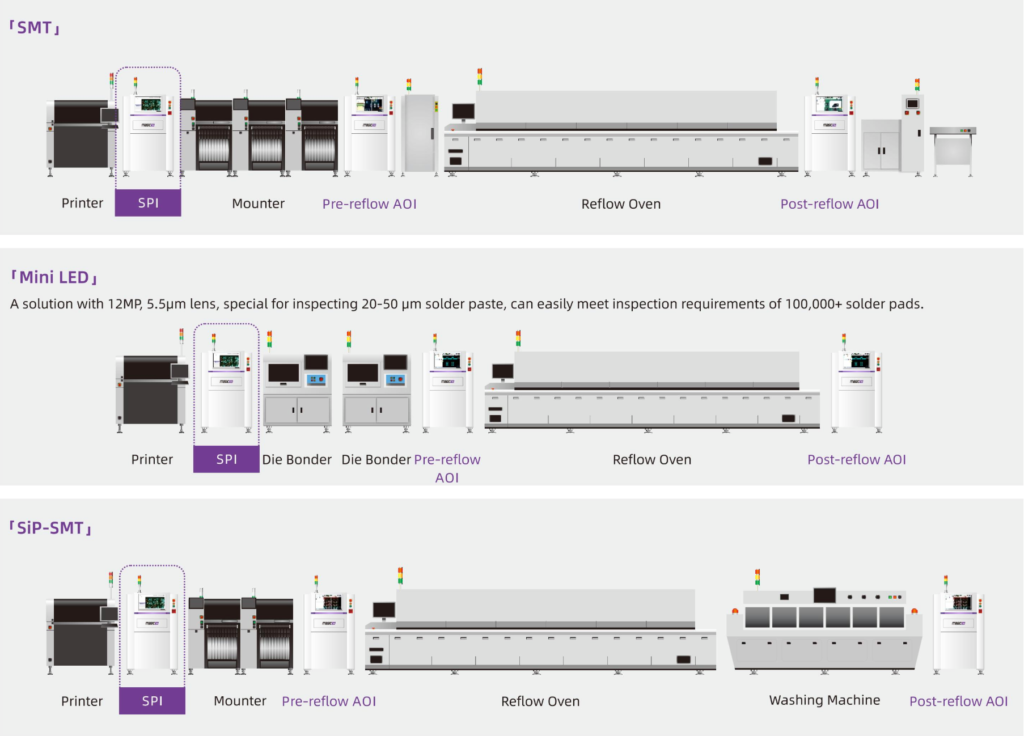
An inline AOI machine is installed directly within the SMT production line.
It automatically inspects PCBs during continuous production without operator intervention.
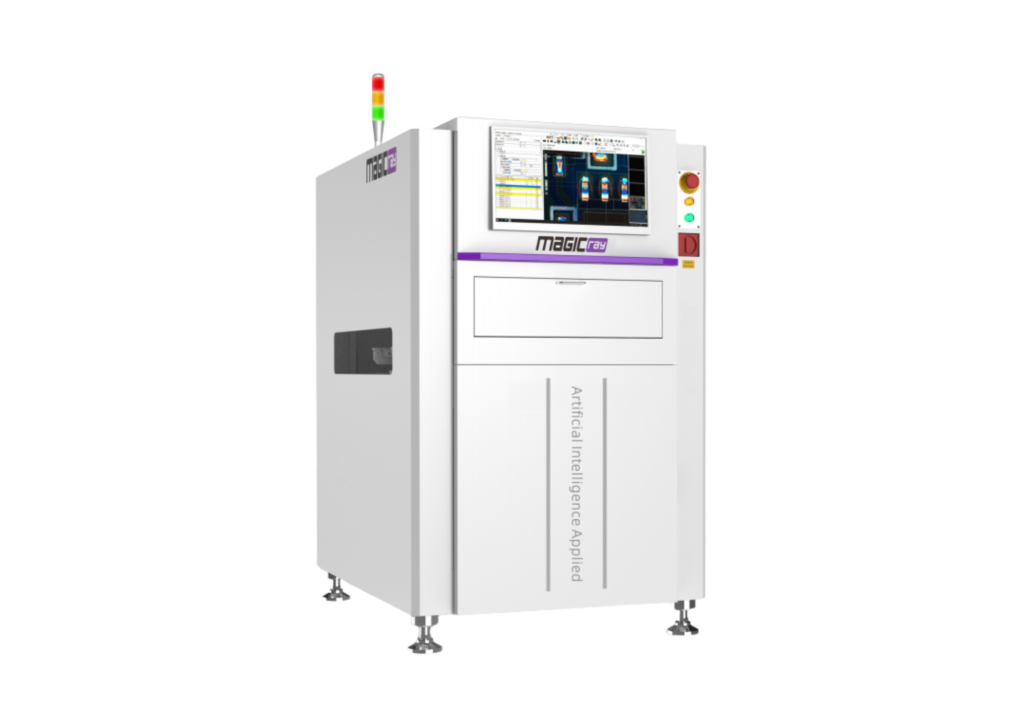
How Inline AOI Works
PCB exits the reflow oven
Conveyor transfers PCB into AOI system
Cameras capture images automatically
Software compares PCB against standard data
Defects are identified in real time
PCB continues or is rejected automatically
Advantages of Inline AOI
Real-Time Inspection
Defects are detected immediately during production.
High Production Efficiency
Suitable for high-speed SMT lines.
Reduced Human Intervention
Automation minimizes operator handling.
Better Process Control
Inline AOI provides continuous production monitoring.
Ideal for Mass Production
Best suited for large-volume manufacturing environments.
Limitations of Inline AOI
Higher Initial Investment
Inline systems are generally more expensive.
Requires Production Line Integration
Installation and setup are more complex.
Less Flexible for Small Batch Production
Frequent product switching may require optimization.
What is an Offline AOI Machine?
An offline AOI machine operates independently from the SMT line.
Operators manually place PCBs into the inspection system after production.
How Offline AOI Works
PCB is removed from the production line
Operator loads PCB into AOI machine
Inspection is performed independently
Results are reviewed manually
Advantages of Offline AOI
Lower Equipment Cost
More affordable for smaller factories.
Flexible Operation
Suitable for multiple product types and small batches.
Easier Installation
Does not require complex production line integration.
Ideal for Prototyping and R&D
Useful for engineering verification and sample production.
Limitations of Offline AOI
Lower Inspection Efficiency
Manual loading slows production flow.
Higher Labor Requirement
Requires more operator involvement.
Delayed Defect Detection
Problems may be discovered later in the process.
How to Choose Between Inline and Offline AOI
Production Volume
Inline AOI
Recommended for:
- high-volume manufacturing
- continuous SMT production
- Offline AOI
Recommended for:
- low-volume production
- prototype manufacturing
Budget Considerations
Factories with limited budget may start with offline AOI and upgrade later.
Product Complexity
Complex PCBs with fine-pitch components benefit from inline real-time inspection.
Factory Automation Level
Highly automated factories typically prefer inline AOI systems.
Available Factory Space
Inline AOI requires additional production line space.
Cost Considerations
Inline AOI Cost
Typically:
$40,000 – $150,000+
Depending on:
- camera resolution
- inspection speed
- software capability
- automation level
Offline AOI Cost
Typically:
$15,000 – $60,000+
More suitable for smaller operations.
Common Mistakes When Choosing AOI Machines
Choosing Based on Price Only
Low-cost systems may have poor detection accuracy.
Ignoring Future Expansion
Production volume may increase over time.
Underestimating Software Capability
Advanced algorithms significantly improve detection performance.
Skipping Operator Training
Improper programming reduces inspection efficiency.
Practical Tips for AOI Implementation
- combine SPI and AOI for best results
- optimize inspection programs carefully
- regularly maintain cameras and lighting systems
- train operators on false call reduction
- work with experienced SMT solution providers

Real-World Application Scenarios
Consumer Electronics
High-speed production lines usually use inline AOI.
Automotive Electronics
Inline AOI ensures strict quality control.
EMS Factories
Often combine inline and offline AOI for flexibility.
R&D and Prototype Production
Offline AOI provides cost-effective inspection.
Why Choosing the Right AOI Solution Matters
Selecting the right AOI system directly impacts:
- production efficiency
- product quality
- labor cost
- defect rate
- customer satisfaction
The best solution depends on your production goals, factory scale, and automation requirements.
Conclusion
Both inline and offline AOI machines play important roles in SMT production.
Inline AOI systems are ideal for high-speed, automated mass production, while offline AOI machines provide flexibility and cost efficiency for smaller-scale operations and prototype manufacturing.
Understanding your production requirements, budget, and future expansion plans is essential when selecting the right AOI solution.
A properly configured AOI system can significantly improve PCB assembly quality, reduce defects, and increase manufacturing efficiency.
About FULIU Electronics
FULIU Electronics is a professional provider of SMT and PCBA production line solutions for global customers.
We offer:
- turnkey SMT production line solutions
- SMT equipment supply
- factory layout planning
- installation and training support
- global delivery and after-sales service
With extensive experience in PCB assembly manufacturing, we help customers select the most suitable AOI solutions and build efficient, reliable SMT production lines.
Contact us today to get a customized AOI solution for your factory.
Pingback: What Is AOI Inspection in PCB Assembly? | Complete Guide - Turnkey PCBA Line Solutions|Fuliu Electronics