
As global electronics manufacturing continues to evolve, demand for small batch SMT production is growing rapidly. Industries such as industrial automation, medical electronics, IoT devices, smart home products, automotive prototyping, and consumer electronics startups increasingly require flexible manufacturing rather than traditional high-volume production.
Unlike mass production environments, small batch manufacturing focuses on producing multiple product types in relatively low quantities. This creates unique challenges, including frequent product changeovers, shorter lead times, tighter budgets, and higher demands for production flexibility.
For factory investors, EMS startup owners, and PCB assembly manufacturers, selecting the right SMT line for small batch production is critical. The wrong equipment configuration can lead to excessive investment, low equipment utilization, long setup times, and reduced profitability.
This guide explains how to choose the most suitable SMT production line, equipment configuration, and investment strategy for high-mix, low-volume manufacturing.
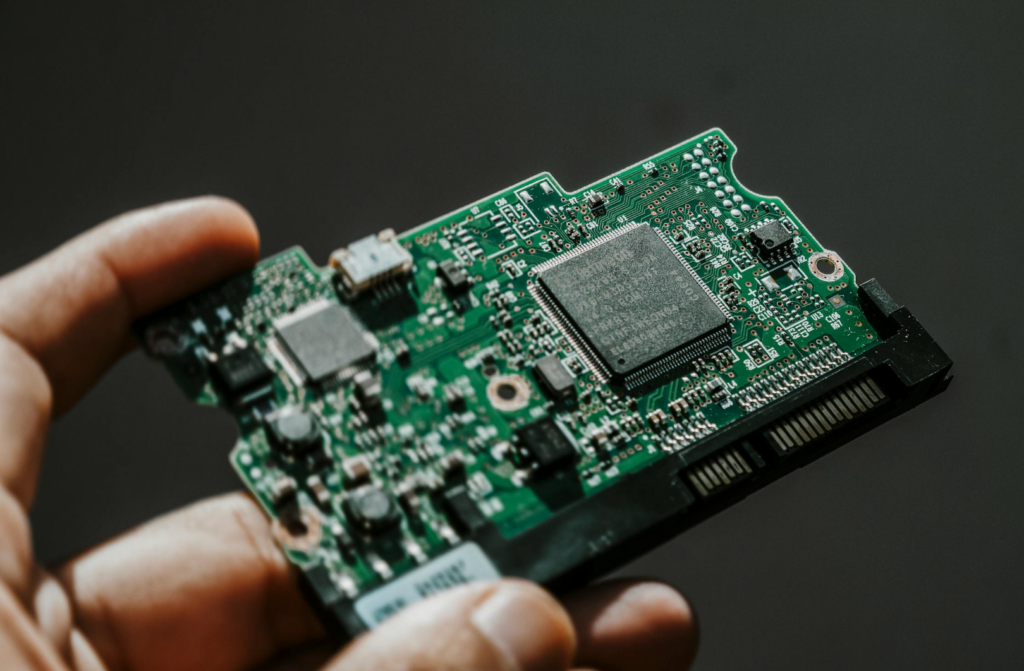
What Is Small Batch SMT Production?
Small batch SMT production refers to manufacturing electronic assemblies in relatively low quantities while frequently switching between different product models.
Common Applications
Small batch manufacturing is widely used in:
- Industrial control systems
- Medical devices
- IoT products
- Automotive prototypes
- Smart home devices
- Communication equipment
- Consumer electronics startups
Unlike high-volume factories, these manufacturers require flexibility rather than maximum placement speed.
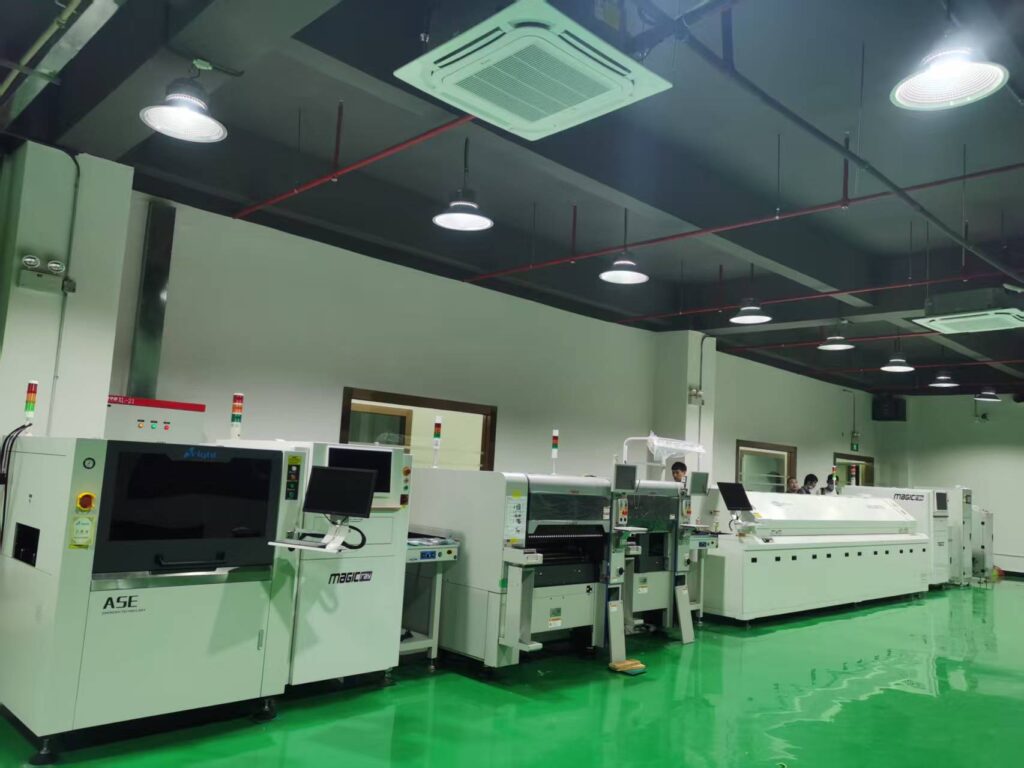
Why SMT Line Selection Matters for Small Batch Production
Many companies mistakenly purchase SMT equipment designed for mass production, only to discover that it does not fit their actual business model.
Poor equipment selection can result in:
- Excessive capital investment
- Low machine utilization
- Long changeover times
- Increased labor costs
- Difficult production scheduling
- Reduced return on investment (ROI)
For small batch manufacturers, the ideal SMT line should balance:
- Flexibility
- Placement accuracy
- Changeover speed
- Expandability
- Cost efficiency
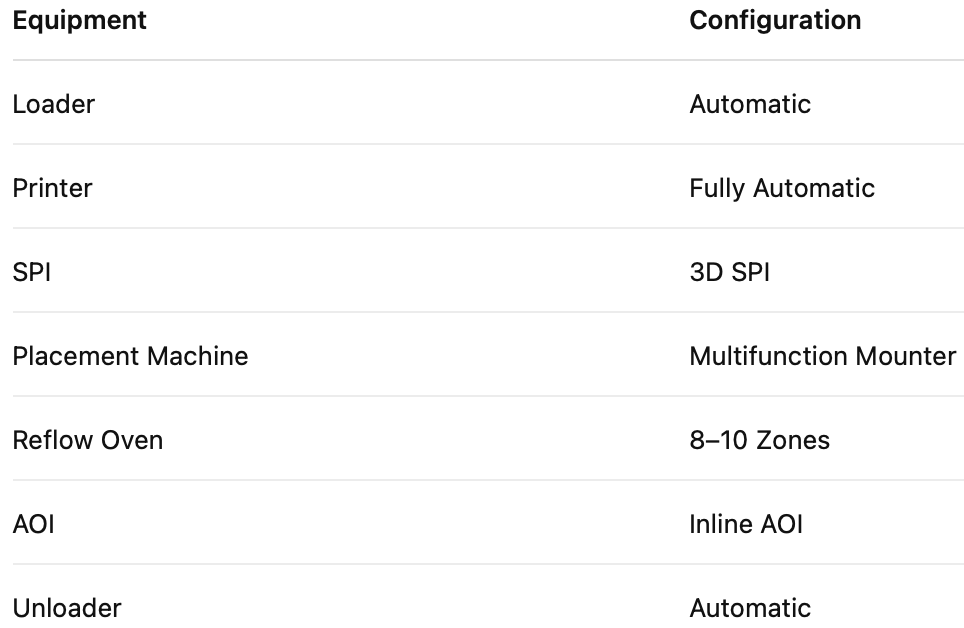
Key Requirements for Small Batch SMT Production
Fast Changeover Capability
Frequent product switching is one of the biggest challenges in small batch manufacturing.
A production line may run several different PCB models in a single day. Therefore, equipment must support
- Quick feeder replacement
- Rapid program switching
- Fast setup verification
- Minimal downtime
Reducing changeover time directly improves equipment utilization and profitability.
Flexible Component Handling
Small batch manufacturers often assemble a wide variety of component types.
Typical components include:
- Chip resistors and capacitors
- IC packages
- BGA devices
- QFN packages
- Connectors
- Odd-shaped components
For this reason, a multifunction pick-and-place machine is often more valuable than an ultra-high-speed chip shooter.
A versatile machine can handle different products without requiring additional equipment investment.
High Placement Accuracy
Although production volumes may be lower, quality requirements are often higher.
Industries such as:
- Medical electronics
- Industrial control
- Aerospace
- Automotive R&D
require highly accurate component placement to ensure product reliability.
Key performance indicators include:
- Placement accuracy
- Repeatability
- Vision alignment capability
- Fine-pitch placement support
Easy Programming and Operation
Engineering efficiency is critical in high-mix environments.
Modern SMT equipment should support:
- CAD data import
- Offline programming
- Automatic component recognition
- Intelligent teaching functions
These features reduce programming time and speed up new product introduction (NPI).
Recommended SMT Line Configurations for Small Batch Production
Entry-Level Small Batch SMT Line
Suitable For
- EMS startups
- Prototype assembly companies
- Small electronics workshops
Capacity
10,000–20,000 CPH
Estimated Investment
$50,000–150,000
Advantages
- Low investment
- Simple operation
- Fast deployment
- Easy expansion
Flexible Small Batch SMT Line
Suitable For
- EMS providers
- Industrial electronics manufacturers
- IoT device manufacturers
Capacity
20,000–50,000 CPH
Estimated Investment
$150,000–350,000
Advantages
- Better quality control
- Higher flexibility
- Improved production consistency
Advanced High-Mix SMT Line
Suitable For
Medical electronics manufacturers
Automotive prototype factories
High-end industrial electronics
Capacity
50,000+ CPH
Estimated Investment
$300,000–800,000+
Advantages
- Maximum flexibility
- Smart factory readiness
- High product traceability
Best SMT Equipment Features for Small Batch Production
Quick Changeover Feeders
Quick-change feeder systems help reduce setup time and support frequent product changes.
Benefits include:
- Faster production switching
- Reduced downtime
- Higher machine utilization
Multifunction Placement Machines
For high-mix manufacturing, multifunction placement machines offer the best ROI.
Advantages include:
- Handling multiple component types
- Lower equipment investment
- Reduced floor space requirements
Intelligent Software Systems
Modern SMT software can significantly improve productivity.
Features include:
- Offline programming
- Production scheduling
- Traceability management
- Data analytics
AOI Inspection Systems
Automatic Optical Inspection (AOI) is highly recommended even for low-volume production.
Benefits include:
- Early defect detection
- Reduced rework costs
- Improved first-pass yield
- Enhanced customer satisfaction
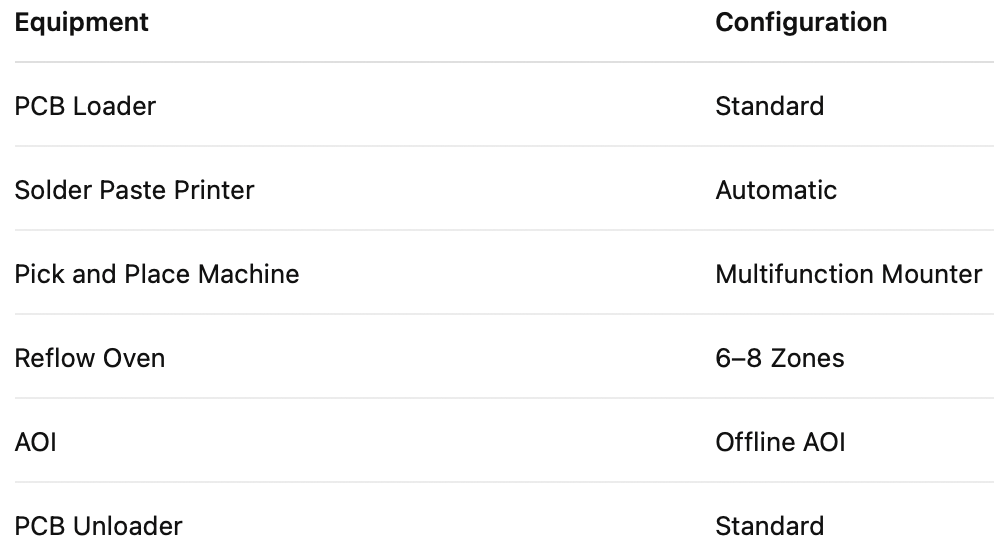
Small Batch SMT Line Cost Analysis
Major Cost Considerations
- Initial equipment investment
- Operator costs
- Maintenance expenses
- Spare parts inventory
- Facility requirements
A properly configured SMT line can achieve a faster ROI while avoiding unnecessary capital expenditures.
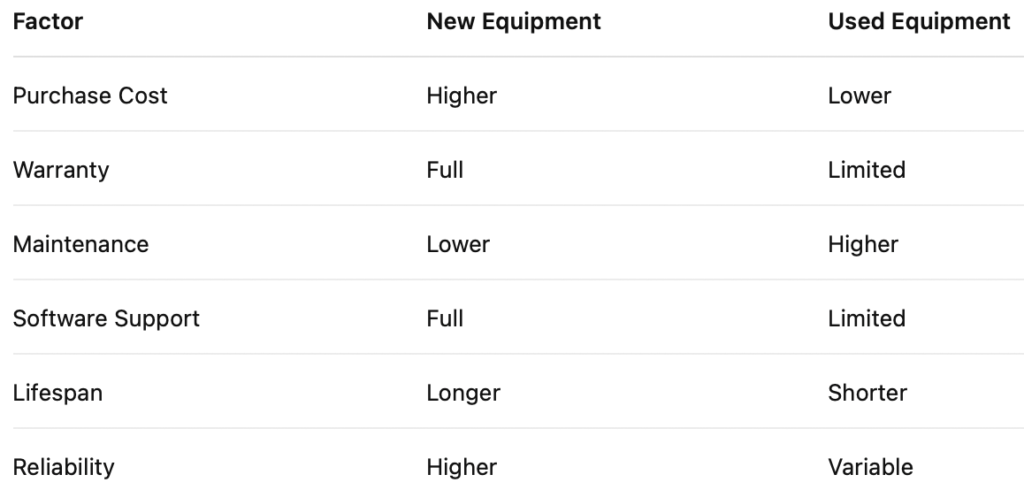
New vs Used SMT Equipment for Small Batch Production
When to Choose New Equipment
- Long-term factory planning
- Medical electronics production
- Automotive applications
- High-reliability manufacturing
When to Choose Used Equipment
- Startup businesses
- Budget-sensitive projects
- Prototype production
- Early-stage capacity expansion
A combination of new and used equipment often provides the best balance between investment and performance.
Common Mistakes When Building a Small Batch SMT Line
Buying High-Speed Equipment Too Early
Many startups invest in high-speed machines that exceed actual production requirements.
Result:
- Higher depreciation
- Lower utilization
- Reduced ROI
Ignoring Future Expansion
Always choose equipment with scalability in mind.
Future expansion options may include:
- Additional placement machines
- Inline AOI
- MES integration
- Smart storage systems
Skipping AOI Inspection
Although AOI adds upfront cost, it significantly reduces defect-related losses.
Quality issues often cost more than inspection systems.
Choosing Equipment Based Only on Price
The lowest-priced machine is rarely the most economical option.
Evaluate:
- Reliability
- Service support
- Spare parts availability
- Software upgrades
- Total ownership cost
Industry-Specific Recommendations
Industrial Electronics
Recommended:
- Flexible multifunction SMT lines
- Strong traceability capabilities
Medical Electronics
Recommended:
- High-precision placement machines
- AOI and SPI inspection systems
- Strict process control
IoT Devices
Recommended:
- Cost-effective flexible SMT lines
- Expandable configurations
Consumer Electronics Startups
Recommended:
- Entry-level SMT lines
- Modular equipment selection
- Future expansion capability
Why Turnkey SMT Solutions Are Ideal for Small Batch Manufacturers
Many small manufacturers lack dedicated engineering teams to integrate equipment from multiple suppliers.
Turnkey SMT solutions offer:
Faster Startup
Equipment arrives ready for integration and production.
Lower Risk
All equipment is configured and tested for compatibility.
Easier Training
Single-source technical support simplifies operator training.
Better Long-Term Support
Maintenance, spare parts, and upgrades are easier to manage through one supplier.
Higher ROI
Reduced implementation time accelerates production and revenue generation.
Frequently Asked Questions
What is considered small batch SMT production?
Typically, production runs ranging from a few hundred to several thousand boards per product model.
How much does a small SMT line cost?
Most small batch SMT lines require an investment between $50,000 and $350,000 depending on automation level and equipment selection.
Do I need SPI for low-volume production?
Yes. SPI helps prevent solder paste defects and improves yield, especially for complex PCB assemblies.
Can one placement machine handle all components?
Modern multifunction placement machines can handle most component types, making them ideal for small batch production.
Is used SMT equipment a good choice?
Used equipment can provide excellent value for startups when purchased from reliable suppliers with technical support.
How many operators are required?
Most small SMT lines require 2–5 operators depending on automation level.
How much factory space is needed?
A compact SMT line typically requires 50–150 square meters of production space.
Can the SMT line be expanded later?
Yes. Modular SMT line designs allow future additions such as SPI, AOI, extra mounters, and MES systems.
Conclusion
Choosing the right SMT line for small batch production requires a different approach than building a high-volume manufacturing facility. Success depends on selecting equipment that delivers flexibility, quick changeovers, placement accuracy, and long-term scalability rather than simply maximizing production speed.
For most high-mix, low-volume manufacturers, a well-balanced SMT line consisting of an automatic printer, multifunction placement machine, reflow oven, AOI system, and PCB handling equipment offers the best combination of cost efficiency and operational flexibility.
Before making an investment decision, manufacturers should carefully evaluate production requirements, future growth plans, equipment compatibility, and total ownership costs to ensure long-term profitability.
About FULIU Electronics
FULIU Electronics is a professional provider of turnkey SMT production line solutions for global electronics manufacturers.
Our services include:
- Turnkey SMT production lines
- Small batch SMT production solutions
- New and used SMT equipment supply
- Factory layout planning
- AOI and SPI inspection systems
- Reflow soldering equipment
- Installation and operator training
- Global delivery and technical support
With extensive experience in helping manufacturers build flexible, cost-effective, and scalable PCB assembly factories, FULIU Electronics supports customers worldwide in achieving higher productivity, better quality, and faster return on investment.
Contact our team today for a customized SMT line proposal tailored to your production goals and budget.