
As global demand for consumer electronics, automotive electronics, LED lighting, industrial control systems, and communication equipment continues to grow, manufacturers are increasingly investing in automated SMT production lines to improve efficiency, quality, and profitability.
However, configuring a complete SMT production line is not simply a matter of purchasing equipment. The right SMT line configuration directly impacts:
- Production capacity
- Product quality
- Labor costs
- Factory utilization
- Return on investment (ROI)
- Future scalability
For overseas factory investors, EMS providers, procurement managers, and manufacturing engineers, understanding how to build a full SMT line is essential before making equipment purchasing decisions.
This guide explains the standard SMT production line configuration, equipment selection principles, investment considerations, and practical recommendations for factories of different production scales.
What Is an SMT Production Line?
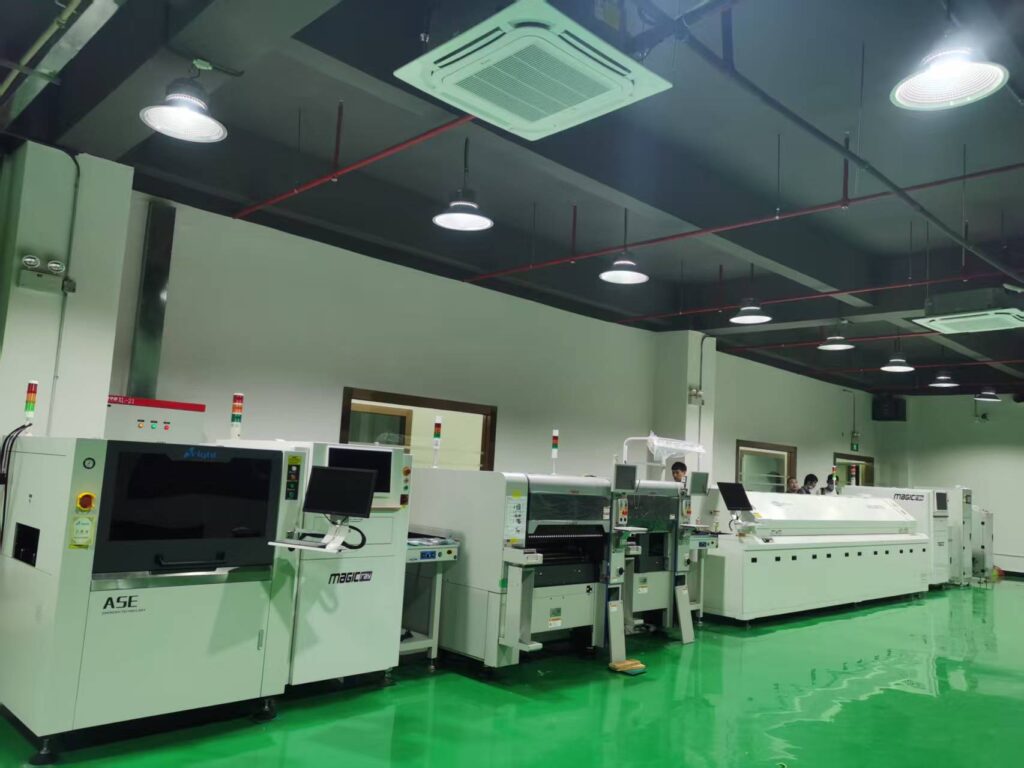
An SMT (Surface Mount Technology) production line is an automated manufacturing system used to assemble electronic components onto printed circuit boards (PCBs).
The SMT assembly process transforms a bare PCB into a fully assembled PCBA through a series of automated manufacturing and inspection processes.
Key Benefits of SMT Manufacturing
- High-speed production
- High automation
- Consistent product quality
- Lower labor costs
- Higher production capacity
- Better manufacturing efficiency
Today, SMT manufacturing is widely used in:
- Consumer electronics
- Automotive electronics
- Medical devices
- LED lighting
- Telecommunications
- Industrial control systems
Standard SMT Production Line Configuration
A typical SMT production line consists of the following equipment:
SMT Line Process Flow
PCB Loader
↓
Solder Paste Printer
↓
SPI Inspection
↓
Pick and Place Machine
↓
Reflow Oven
↓
AOI Inspection
↓
PCB Unloader
Each machine plays a specific role in ensuring quality and efficiency.
SMT Line Equipment Explained
PCB Loader
Function
The PCB Loader automatically loads bare PCBs into the SMT production line.
Benefits
- Reduces manual handling
- Improves production efficiency
- Minimizes board damage
- Supports continuous production
A loader is usually the starting point of any fully automated SMT line.
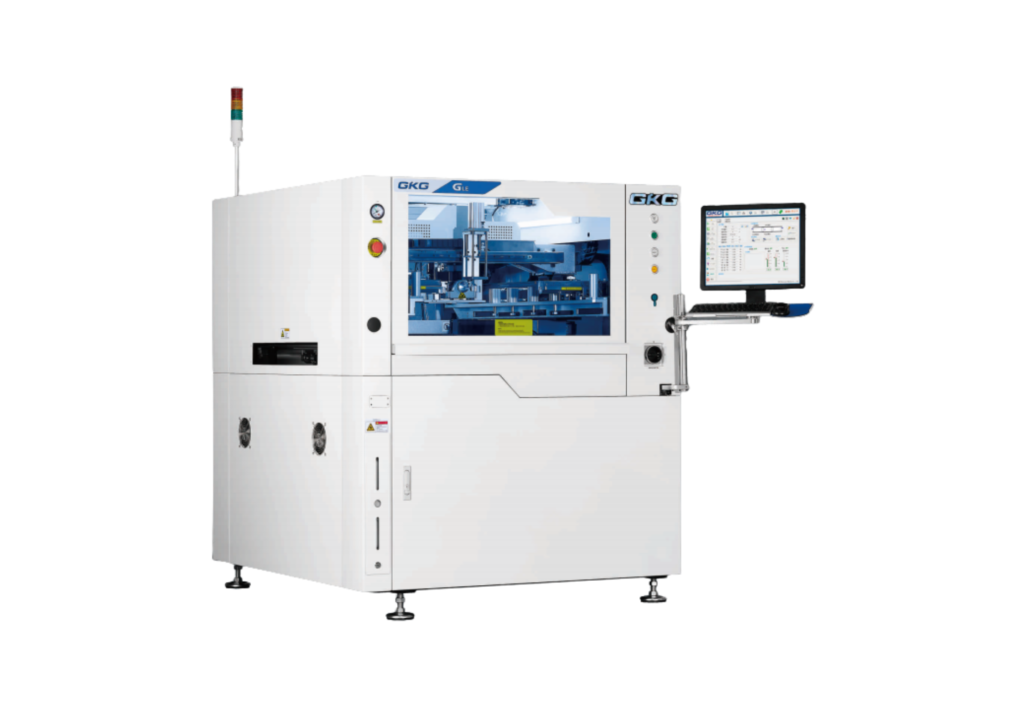
Solder Paste Printer
The solder paste printer applies solder paste accurately onto PCB pads through a stencil.
Key Functions
- Solder paste deposition
- Stencil alignment
- Print accuracy control
Printer Types
Semi-Automatic Printer
Suitable for:
- Small factories
- Prototype production
Fully Automatic Printer
Suitable for:
- Medium and large-scale manufacturing
- High-volume production
Printing quality significantly affects the final soldering result.
SPI (Solder Paste Inspection)
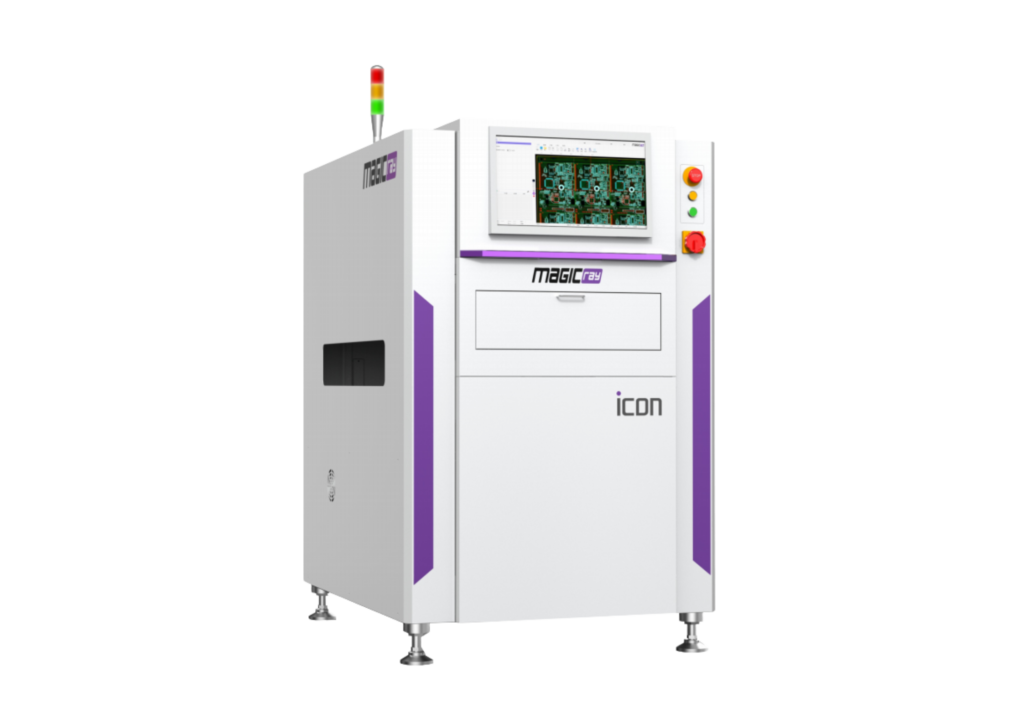
SPI systems inspect solder paste immediately after printing.
SPI Detects
- Insufficient solder
- Excessive solder
- Offset printing
- Potential solder bridges
Why SPI Matters
Industry studies show that more than half of SMT defects originate during solder paste printing.
By detecting problems before placement, SPI significantly improves yield.
Pick and Place Machine
The pick and place machine is the core equipment of an SMT production line.
Its role is to mount electronic components onto the PCB accurately and efficiently.
Main Components
- Feeder system
- Placement heads
- Vision alignment system
- Conveyor system
High-Speed Mounter
Applications:
- Chip resistors
- Chip capacitors
- Mass production
Advantages:
- Extremely high placement speed
- Excellent productivity
Multifunction Mounter
Applications:
- ICs
- Connectors
- BGAs
- Special-shaped components
Advantages:
- Flexible production capability
- High precision
Many factories combine high-speed and multifunction mounters to achieve the best balance between speed and flexibility.
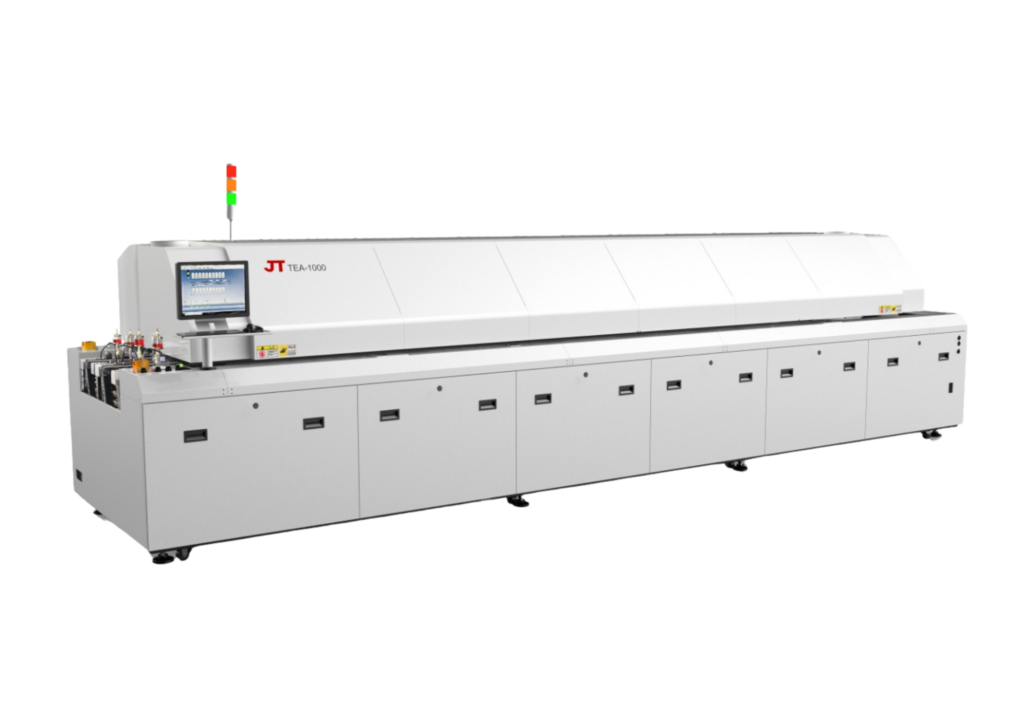
Reflow Oven
The reflow oven creates permanent solder joints between components and PCB pads.
Typical Reflow Zones
Preheating Zone
Gradually increases PCB temperature.
Soaking Zone
Activates flux and stabilizes temperature.
Reflow Zone
Melts solder paste.
Cooling Zone
Solidifies solder joints.
Advanced Reflow Features
- Nitrogen protection
- Energy-saving systems
- Intelligent temperature control
- MES connectivity
A stable reflow process is critical for product reliability.
AOI Inspection System
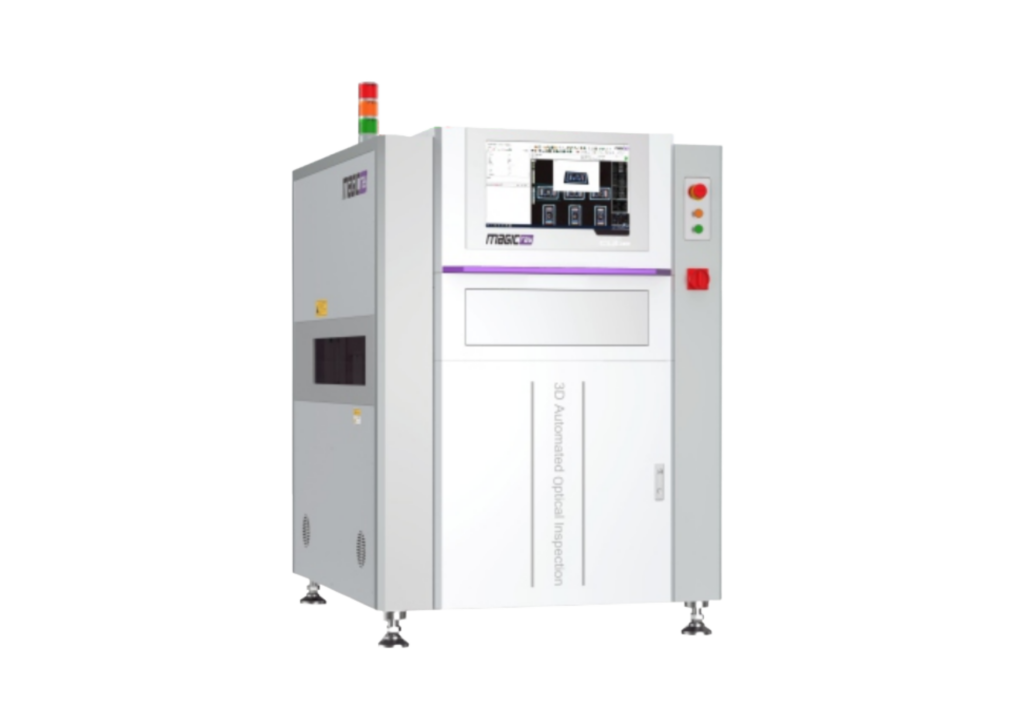
AOI (Automatic Optical Inspection) verifies assembly quality after soldering.
Defects AOI Can Detect
- Missing components
- Wrong components
- Polarity errors
- Solder bridges
- Misalignment
- Insufficient solder
PCB Unloader
The unloader automatically collects finished PCBs.
Benefits
- Reduces labor requirements
- Maintains line balance
- Improves workflow efficiency
Recommended SMT Line Configurations by Production Scale
Small SMT Factory
Capacity
10,000–30,000 CPH
Suitable For
- Startups
- Prototype manufacturing
- Small EMS companies
Medium SMT Factory
Capacity
30,000–80,000 CPH
Suitable For
LED manufacturers
Consumer electronics factories
Growing EMS providers
Large SMT Factory
Capacity
100,000+ CPH
Suitable For
Automotive electronics
Smart factories
Large EMS providers
How to Choose the Right SMT Line
Selecting the proper SMT line requires balancing production goals and investment costs.
Production Volume
Higher volume requires more placement capacity.
Product Type
LED products and automotive electronics require different equipment configurations.
PCB Complexity
Complex boards often require additional inspection equipment.
Component Types
Products containing BGA, QFN, or fine-pitch components require higher precision placement systems.
Budget
Equipment selection should consider both initial investment and long-term operating costs.
Future Expansion
Choose scalable solutions whenever possible.
New Equipment vs Used Equipment
New Equipment
Advantages:
- Latest technology
- Better reliability
- Manufacturer warranty
Disadvantages:
- Higher initial investment
Used Equipment
Advantages:
- Lower purchase cost
- Faster ROI
Disadvantages:
- Higher maintenance requirements
- Potential spare parts limitations
Common SMT Line Configuration Mistakes
Buying Oversized Equipment
Many new factories purchase more capacity than necessary.
Solution
Match equipment to actual production forecasts.
Ignoring Future Expansion
Some factories quickly outgrow their initial production line.
Solution
Reserve space for future equipment additions.
Skipping SPI Inspection
SPI is often removed to reduce costs.
Solution
Consider SPI an investment in yield improvement.
Underestimating AOI Requirements
Manual inspection is no longer sufficient for most modern SMT production environments.
Solution
Implement AOI early in production planning.
Choosing Suppliers Based Only on Price
The lowest-priced equipment may lead to higher operating costs later.
Solution
Evaluate technical support, spare parts availability, and supplier experience.
SMT Line Layout Best Practices
A good SMT line layout improves productivity and flexibility.
Material Flow Optimization
Reduce unnecessary movement.
Operator Efficiency
Position workstations logically.
Maintenance Access
Reserve sufficient service space around machines.
Future Expansion
Leave room for additional equipment.
Smart Factory Readiness
Prepare for MES and Industry 4.0 integration.
Industry-Specific SMT Line Recommendations
Consumer Electronics
Recommended:
- High-speed placement lines
- Automated inspection systems
Automotive Electronics
Recommended:
- SPI + AOI integration
- Nitrogen reflow
- Full traceability systems
LED Manufacturing
Recommended:
Cost-effective medium-speed lines
Flexible placement capability
Industrial Electronics
Recommended:
Mixed-model production lines
High flexibility
Why Turnkey SMT Production Lines Are Becoming Popular
More manufacturers are choosing turnkey SMT solutions because they provide:
Single supplier responsibility
Faster implementation
Better equipment compatibility
Lower project risk
Easier training
Simplified maintenance
A turnkey solution helps investors focus on production instead of coordinating multiple suppliers.
Frequently Asked Questions
How many machines are needed for a complete SMT line?
A standard SMT line usually requires 6–8 major machines, including loader, printer, SPI, pick and place machine, reflow oven, AOI, and unloader.
What is the most important machine in an SMT line?
The pick and place machine is typically considered the core production equipment.
Is SPI necessary?
For medium and large-scale production, SPI is highly recommended to reduce defects.
How much does an SMT line cost?
Investment ranges from approximately $50,000 for entry-level lines to over $500,000 for advanced production lines.
How many operators are required?
A fully automated SMT line may only require 2–5 operators per shift.
Can SMT lines be upgraded later?
Yes. Most modern SMT lines support future expansion.
What production capacity should I choose?
Capacity should match actual production requirements and growth forecasts.
What is the difference between a standard SMT line and a smart factory SMT line?
Smart factory lines integrate MES systems, traceability, automation, and real-time production monitoring.
About FULIU Electronics
FULIU Electronics is a professional provider of turnkey SMT production line solutions for global electronics manufacturers.
We provide:
- New and used SMT equipment
- SMT factory planning
- Complete SMT line configuration
- Production line layout design
- SPI and AOI solutions
- Reflow soldering systems
- Installation and operator training
- Global delivery and technical support
Our team helps customers build reliable, scalable, and profitable PCB assembly factories worldwide.
Conclusion
A successful SMT factory begins with the right production line configuration.
Choosing the correct combination of loaders, printers, SPI systems, placement machines, reflow ovens, AOI systems, and supporting equipment directly affects production efficiency, product quality, and long-term profitability.
Before investing in SMT equipment, manufacturers should carefully evaluate production capacity, product requirements, future growth plans, and total operating costs.
Working with an experienced turnkey SMT solution provider can significantly reduce project risk and accelerate factory success.
Contact FULIU Electronics today to receive a customized SMT production line configuration proposal tailored to your manufacturing goals.