
As the electronics manufacturing industry continues to grow, companies worldwide are investing in advanced PCB assembly capabilities to improve production efficiency, shorten delivery cycles, and maintain better control over product quality.
However, building a competitive SMT factory requires more than purchasing individual machines. Manufacturers need a complete production solution that includes equipment selection, production line configuration, factory planning, installation, commissioning, process optimization, and long-term technical support.
Choosing the right SMT production line manufacturer is therefore one of the most important decisions for electronics manufacturers.
A reliable SMT supplier can help companies reduce investment risks, avoid equipment compatibility problems, accelerate production startup, and build a stable manufacturing system.
This guide explains how to identify the best SMT production line manufacturer, what services a professional supplier should provide, and why experienced turnkey SMT partners are becoming increasingly important in modern PCB assembly.
What Does an SMT Production Line Manufacturer Do?
An SMT production line manufacturer or supplier provides equipment, engineering solutions, and technical services for PCB assembly production.
A professional SMT supplier typically supports customers with:
- SMT line design
- Equipment selection
- Production capacity planning
- Factory layout optimization
- Equipment installation
- Machine commissioning
- Process adjustment
- Operator training
- Preventive maintenance
- Spare parts supply
- Long-term technical support
The best manufacturers do not simply sell machines—they provide complete manufacturing solutions.
Why Choosing the Right SMT Manufacturer Matters
The SMT production line directly affects:
- Production efficiency
- Product quality
- Equipment availability
- Manufacturing costs
- Delivery performance
- Long-term profitability
Selecting an unsuitable supplier may result in:
- Poor equipment compatibility
- Difficult commissioning
- Frequent downtime
- Limited technical support
- Higher operating costs
- Production delays
A reliable SMT partner helps manufacturers avoid these challenges and achieve stable production performance.
Key Factors When Choosing the Best SMT Production Line Manufacturer
Industry Experience and Technical Expertise
Experience is one of the most important factors when selecting an SMT supplier.
A professional manufacturer should understand:
- SMT process flow
- PCB assembly requirements
- Equipment integration
- Production optimization
- Quality control systems
Experienced suppliers can recommend practical solutions based on real manufacturing requirements rather than simply selling equipment.
Complete SMT Equipment Portfolio
A strong SMT production line manufacturer should provide a complete range of equipment.
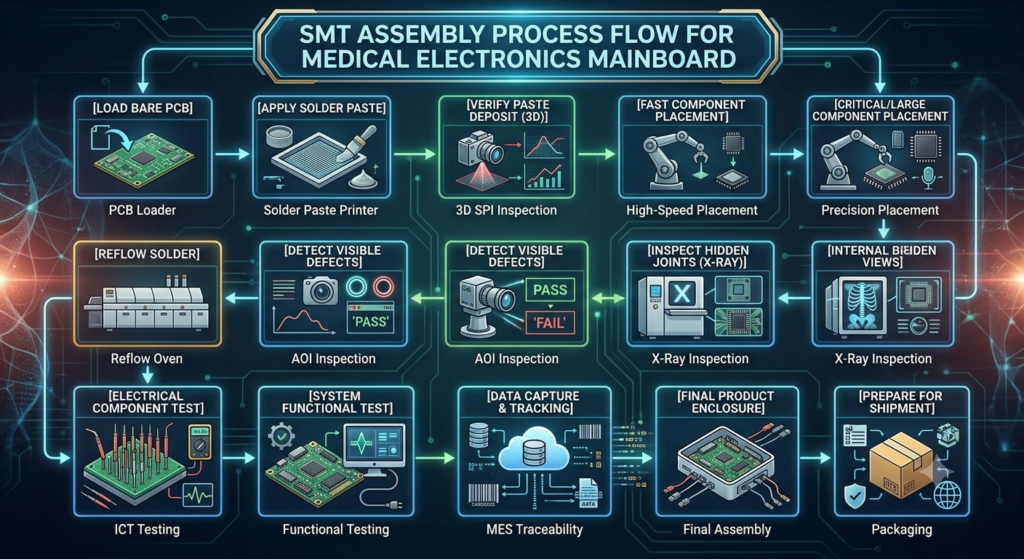
A typical SMT production line includes:
Automatic PCB Loader
Automatically feeds PCBs into the production line while maintaining stable material handling.
Automatic Solder Paste Printer
Provides precise solder paste deposition to ensure reliable solder joints.
SPI Inspection System
Checks:
- Solder paste volume
- Paste height
- Printing position
- Paste consistency
SPI helps identify printing defects before component placement.
Pick and Place Machines
The core equipment of SMT manufacturing.
A complete solution may include:
- High-speed placement machines
- Precision chip mounters
- Flexible placement systems
Leading brands include:
- Fuji
- Panasonic
- ASM
- Yamaha
- JUKI
- Hanwha
Reflow Oven
Controls the soldering process through accurate thermal profiling.
AOI Inspection System
Detects:
- Missing components
- Incorrect polarity
- Component offset
- Rotation errors
- Solder bridges
X-Ray Inspection System
Used for advanced packages such as:
- BGA
- QFN
- CSP
to inspect hidden solder joints.
PCB Handling Equipment
Including:
- Conveyors
- PCB loaders
- PCB unloaders
- Buffer systems
These improve automation and production flow.
Ability to Provide Turnkey SMT Solutions
The best SMT production line manufacturers provide turnkey solutions rather than individual machine sales.
A complete turnkey SMT project includes:
- Production requirement analysis
- Equipment configuration
- Factory layout design
- Utility planning
- Installation
- Commissioning
- Process optimization
- Operator training
- After-sales service
This approach reduces project complexity and allows manufacturers to start production faster.
Support for New and Used SMT Equipment
A flexible SMT supplier should provide both new and high-quality pre-owned equipment options.
Used SMT equipment can help manufacturers:
- Reduce investment costs
- Shorten delivery time
- Expand production capacity quickly
- Access premium equipment brands
Professional suppliers should provide:
- Equipment inspection
- Refurbishment
- Calibration
- Trial production testing
- Technical support
Global Technical Support Capability
SMT production is highly dependent on equipment uptime.
A reliable supplier should provide:
- Remote technical support
- On-site service
- Spare parts supply
- Maintenance guidance
- Operator training
For international customers, global service capability is especially important.

Understanding of Different Industry Applications
Different industries have different SMT requirements.
A professional SMT manufacturer should understand applications including:
Consumer Electronics
Requirements:
- High-speed production
- Cost efficiency
- Flexible manufacturing
Automotive Electronics
Requirements:
- High reliability
- Traceability
- Strict quality control
Medical Electronics
Requirements:
- High precision
- Stable process control
- Strong quality management
Industrial Electronics
Requirements:
- Long-term reliability
- Customized production solutions
Battery Management Systems (BMS)
Requirements:
- High-quality soldering
- Advanced inspection
- Reliable testing
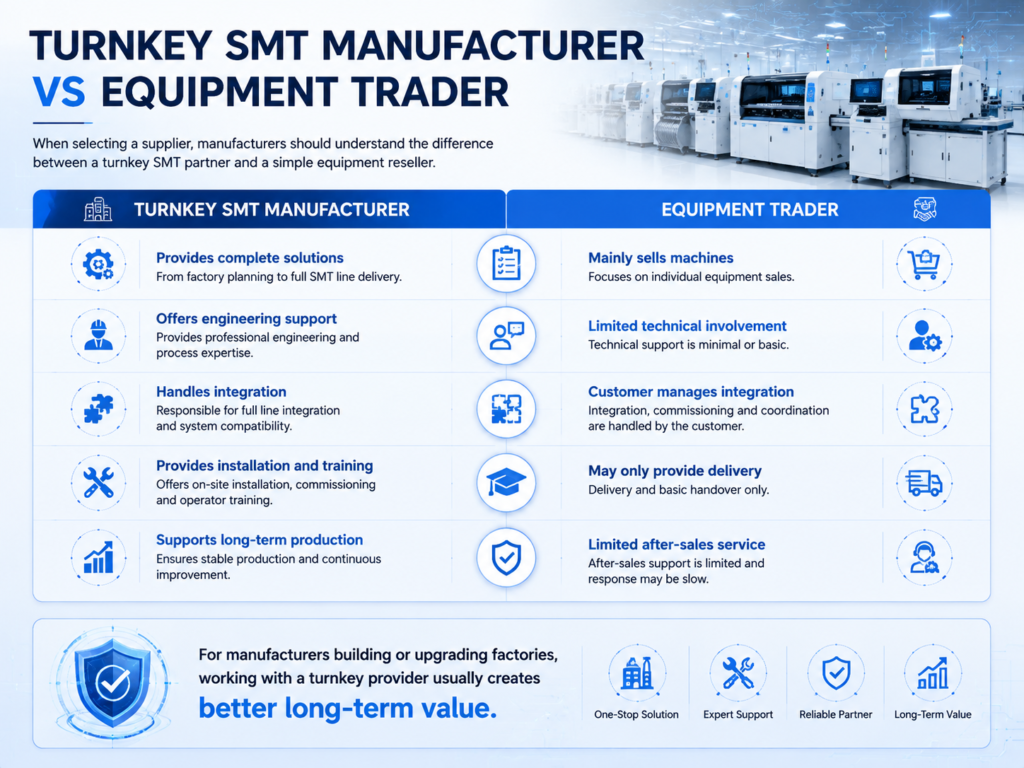
Turnkey SMT Manufacturer vs Equipment Trader
When selecting a supplier, manufacturers should understand the difference between a turnkey SMT partner and a simple equipment reseller.
How to Evaluate an SMT Supplier Before Purchase
Before selecting a supplier, ask:
Equipment Questions
- Which brands and models are available?
- Are new and used machines offered?
- What production capacity can be achieved?
- Can equipment be customized?
Engineering Questions
- Do you provide factory layout planning?
- Can you optimize line balance?
- Do you provide installation and commissioning?
Service Questions
- Is operator training included?
- How are spare parts supplied?
- What technical support is available?
Project Experience Questions
- Do you have international installation experience?
- Can you provide customer references?
- What industries have you served?
Common Mistakes When Choosing an SMT Manufacturer
Selecting Based Only on Price
The cheapest supplier may not provide the best long-term value.
Consider:
- Equipment reliability
- Service capability
- Spare parts availability
- Technical expertise
Ignoring After-Sales Support
Production downtime can quickly become more expensive than the initial equipment investment.
Choosing Equipment Without Process Analysis
A suitable SMT line should be designed around:
- PCB type
- Production volume
- Component mix
- Future expansion
Buying Individual Machines Without Integration Planning
Machines must work together as one production system.
SMT Production Line Trends in 2026
Modern SMT manufacturing is moving toward:
Smart Manufacturing
Including:
- MES integration
- Real-time monitoring
- Digital production dashboards
- Data analysis
Higher Automation
Manufacturers increasingly adopt:
- Automated material handling
- Smart storage systems
- Robotic solutions
AI-Based Quality Control
Advanced inspection systems use AI algorithms to improve:
- Defect recognition
- False call reduction
- Process optimization
Flexible Manufacturing
Factories require faster changeovers and greater adaptability for multiple product types.
Why Choose Fuliu Electronics?
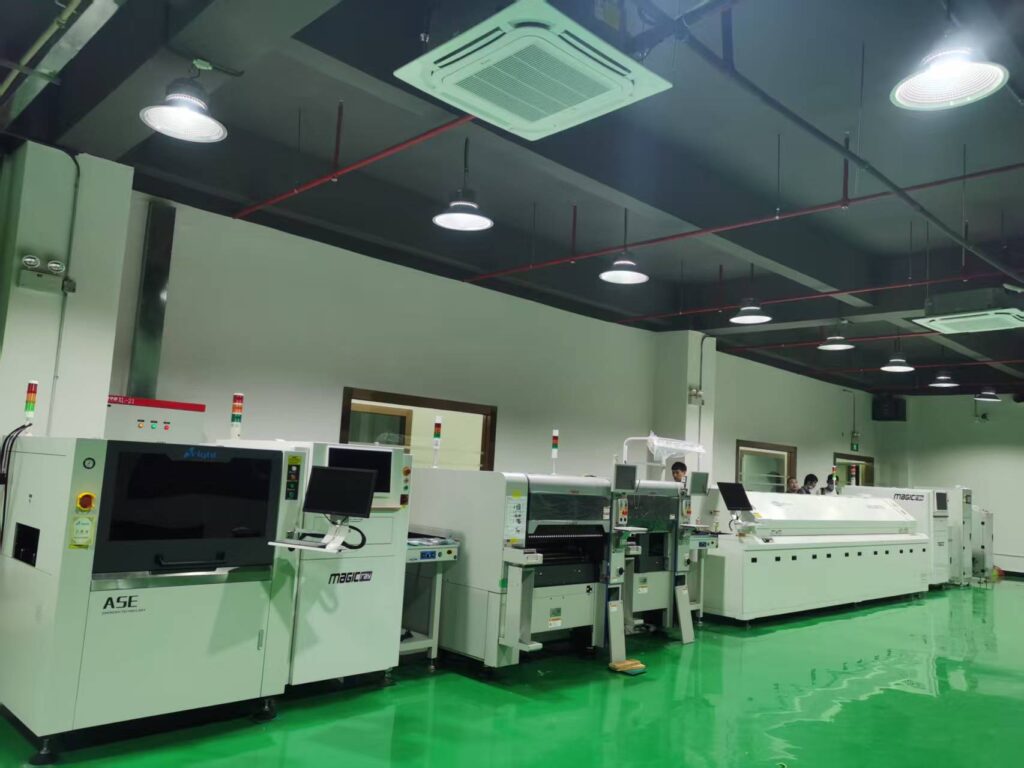
Established in 2014, Fuliu Electronics is dedicated to providing customers with high-quality PCBA intelligent manufacturing solutions and comprehensive technical services.
With extensive experience in the SMT industry, Fuliu Electronics provides complete SMT production line solutions featuring internationally recognized equipment brands such as:
- Fuji
- Panasonic
- ASM
- Yamaha
- JUKI
- Hanwha
Our product portfolio also includes:
- ERSA reflow ovens from Germany
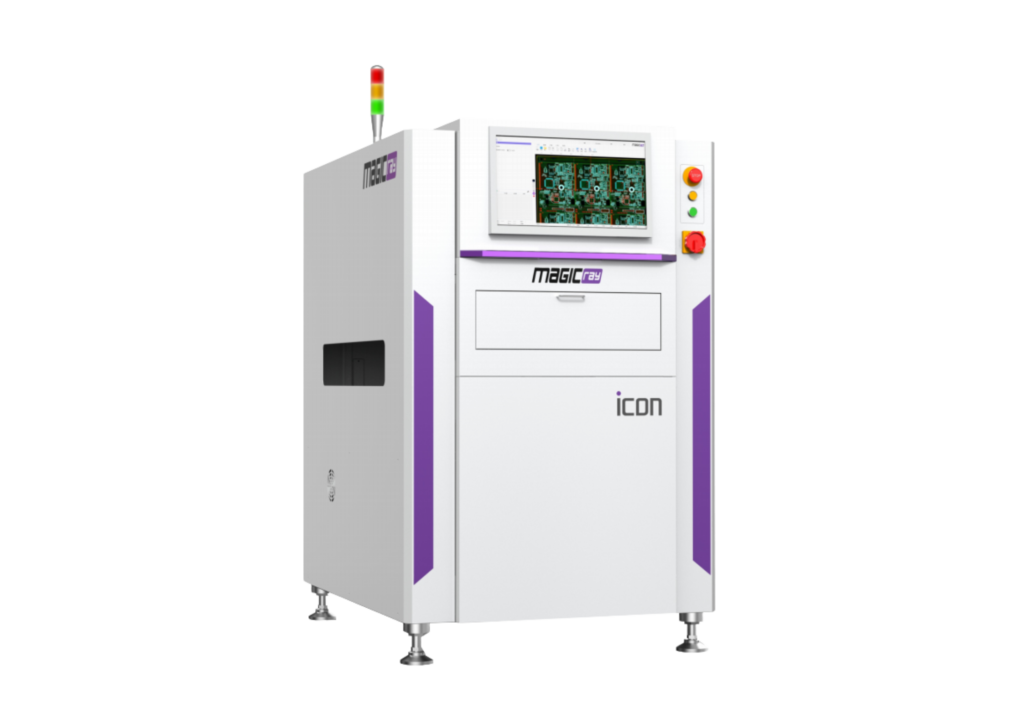
- MagicRay SPI/AOI inspection systems
- Automatic solder paste printers
- Pre-owned SMT equipment
- SMT spare parts
- Equipment leasing solutions
- Maintenance and technical support services
Serving customers across India, Vietnam, the Philippines, Indonesia, the Middle East, South Africa, and Europe, Fuliu Electronics supports manufacturers with:
- SMT factory planning
- Production line configuration
- Equipment selection
- Installation
- Commissioning
- Process optimization
- Operator training
- Long-term after-sales support
Conclusion
Choosing the best SMT production line manufacturer is a strategic decision that directly influences manufacturing efficiency, product quality, and long-term business success.
The ideal SMT supplier should provide more than equipment—they should offer engineering expertise, turnkey integration, technical support, and a complete understanding of PCB assembly requirements.
Whether you are building a new PCB assembly factory, upgrading an existing production line, or expanding manufacturing capacity, partnering with an experienced SMT solution provider can help reduce risks, accelerate production startup, and create a more competitive electronics manufacturing operation.
Frequently Asked Questions
The best SMT manufacturers provide complete solutions, including equipment selection, engineering support, installation, commissioning, training, and long-term technical service.
Working with an experienced SMT manufacturer or turnkey solution provider usually provides better technical support, integration capability, and long-term value.
Leading SMT equipment brands include Fuji, Panasonic, ASM, Yamaha, JUKI, Hanwha, ERSA, and other international manufacturers.
Many professional suppliers provide inspected and refurbished SMT equipment as a cost-effective alternative to new machines.
Installation time depends on project complexity, but a typical turnkey SMT line installation includes equipment delivery, setup, commissioning, and operator training.
A reliable supplier should provide spare parts support, maintenance services, technical troubleshooting, software assistance, and production optimization.