
The pick and place machine is often one of the largest investments—and one of the most important capacity drivers—in an SMT production line.
Manufacturers planning a new line may encounter brands such as:
- Fuji
- Panasonic
- ASM
- Yamaha
- JUKI
- Hanwha
So which is the best pick and place machine?
There is no universal winner.
A high-volume consumer electronics factory can have very different requirements from a high-mix EMS manufacturer producing industrial, automotive, medical, power electronics, or communication PCBAs.
The right machine depends on:
PCB + BOM + Component Range + Placement Quantity + Product Mix + Required Capacity + Changeover + Automation + Factory Support + Budget
Best Pick and Place Machines Compared
This guide compares major SMT pick and place machine brands and explains how PCB manufacturers can choose the right placement platform for their production requirements.
What Is an SMT Pick and Place Machine?
An SMT pick and place machine automatically picks surface-mount components from feeders, trays, or other supply units and places them onto solder-paste-printed PCBs.
A typical SMT production process is:
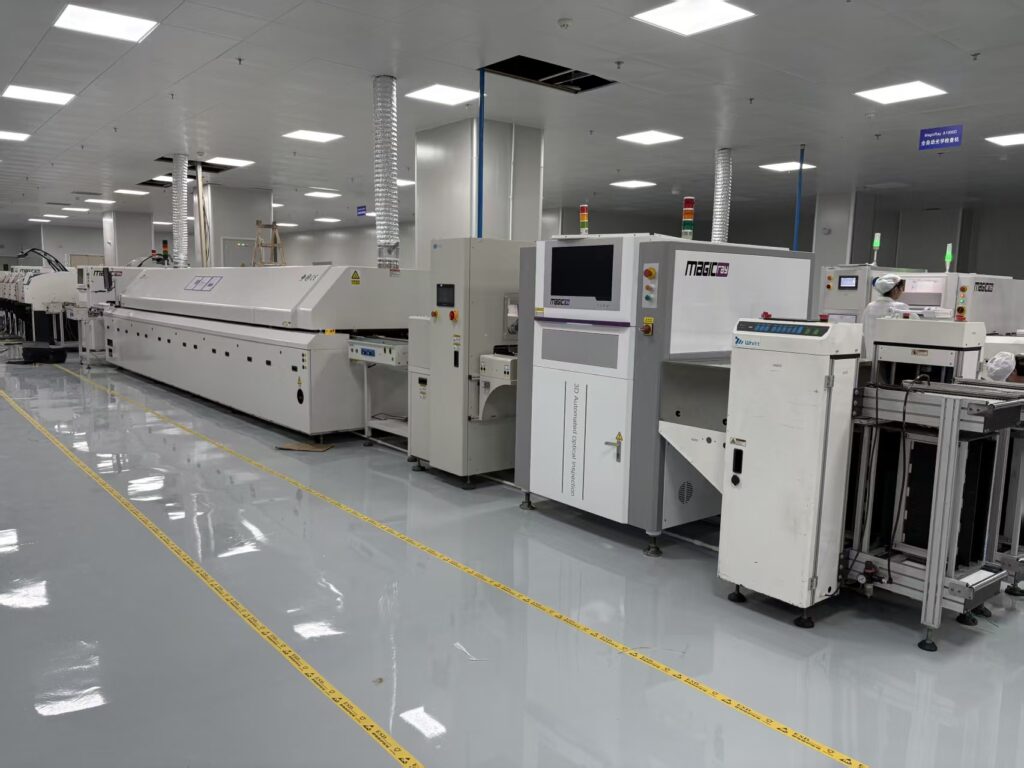
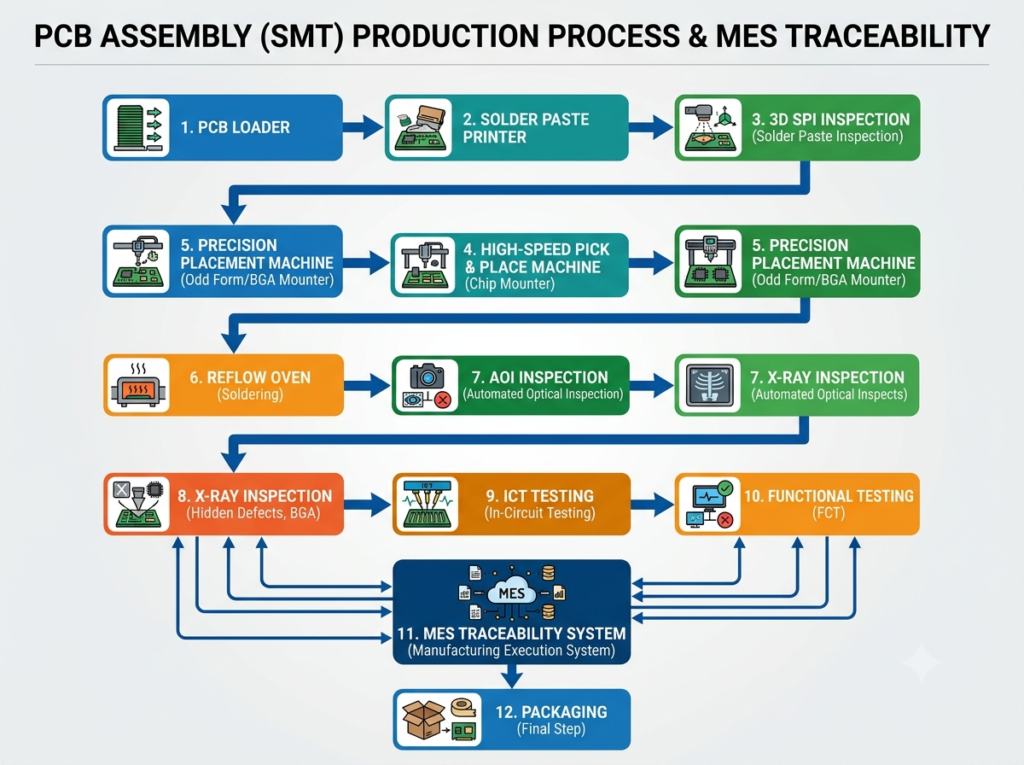
PCB Loader → Solder Paste Printer → SPI → Pick and Place Machine(s) → Reflow Oven → AOI → PCB Unloader
The placement section can contain:
- One flexible mounter
- Multiple placement machines
- High-speed chip placement modules
- Flexible placement modules
- Specialized component-handling equipment
The configuration depends on the PCB and required output.
What Defines the “Best” Pick and Place Machine?
Do not evaluate an SMT machine using catalog CPH alone.
A useful comparison should include:
- Placement speed
- Placement accuracy
- Component range
- Feeder capacity
- PCB size
- Large/odd-form component capability
- Product changeover
- High-mix flexibility
- Automation
- Software
- Maintenance
- Spare-parts availability
- Local technical support
- New/pre-owned availability
- Total cost of ownership
The machine that performs best in one category may not provide the best overall production economics for your factory.
Quick Comparison of Major Pick and Place Machine Brands
Fuji Pick and Place Machines
Fuji is widely used in professional SMT manufacturing.
Current Fuji placement platforms include:
- NXTR
- AIMEXR
- Earlier NXT/AIMEX generations still operating in many factories
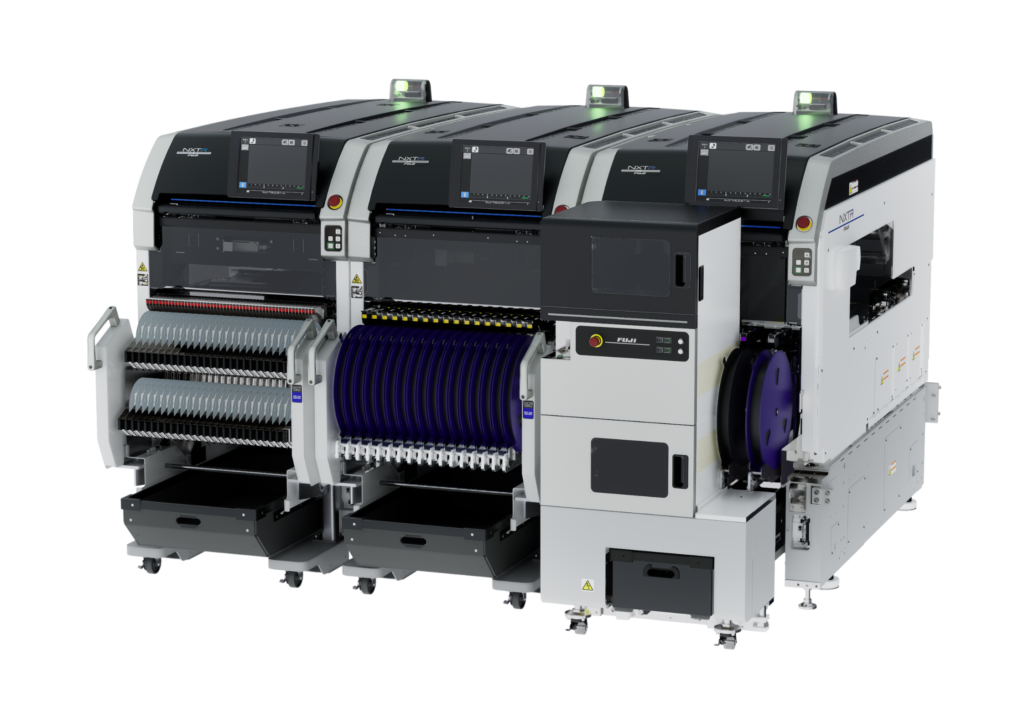
Fuji NXTR
NXTR follows Fuji’s modular placement concept.
Depending on configuration, the platform can support:
- High-speed placement
- Different placement heads
- Flexible line configurations
- Component verification
- Real-time sensing
- Automated production functions
- Smart-factory integration
This modular approach allows manufacturers to configure the placement section according to the actual component mix and production target.
Fuji AIMEXR
AIMEXR focuses strongly on flexible production.
It can be relevant for manufacturers requiring:
- Large feeder capacity
- High-mix production
- Large PCB capability
- Wide component range
- Frequent product changeover
Fuji states that AIMEXR can hold up to 130 different component types with its large-capacity supply configuration and can support panels up to 1,068 × 610 mm in specified configurations.
Where Fuji Can Be Considered
Fuji platforms can be evaluated for:
- Automotive electronics
- Consumer electronics
- Industrial electronics
- Communication equipment
- High-density PCB assembly
- High-volume manufacturing
- High-mix manufacturing
The correct NXTR/AIMEX configuration should be selected according to the PCB and BOM rather than brand reputation alone.
Panasonic Pick and Place Machines
Panasonic is another major SMT placement equipment manufacturer.
Its NPM family is used in professional electronics manufacturing.
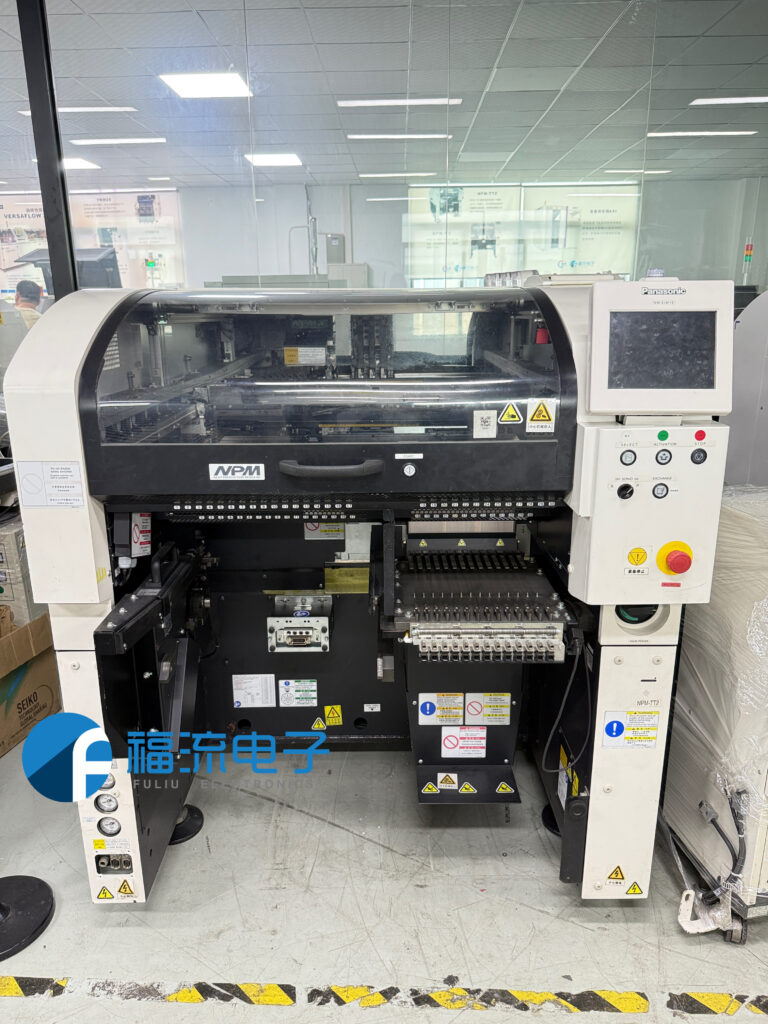
Panasonic NPM-GH
The NPM-GH is a modular placement machine designed around productivity, placement accuracy, component flexibility, and automation.
Depending on head and operating mode, Panasonic specifies placement capabilities reaching approximately 55,500 CPH for its FC16 head configuration.
The machine supports different head configurations and component supply methods, allowing production to be configured for different product requirements.
Panasonic also emphasizes:
- Automated material supply
- Process monitoring
- Production stability
- Factory automation
Where Panasonic Can Be Considered
Panasonic platforms can be evaluated for applications such as:
- Automotive electronics
- Industrial electronics
- Consumer electronics
- High-density PCBAs
- High-volume production
- Products requiring high placement accuracy
As with every brand, actual performance depends on machine configuration and real PCB conditions.
ASM SIPLACE Pick and Place Machines
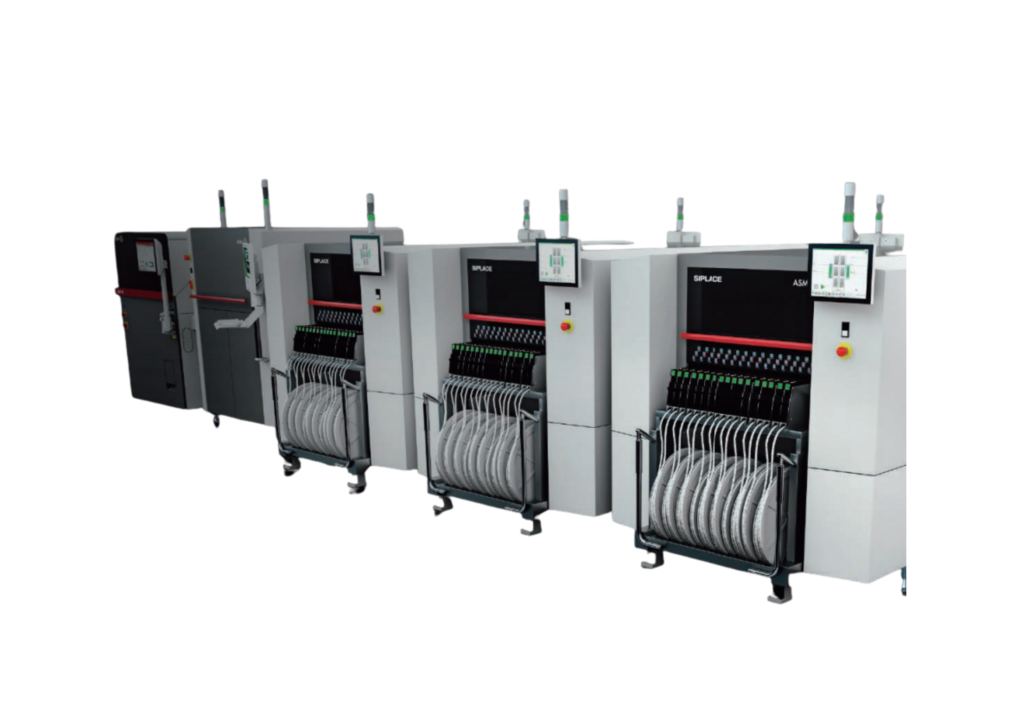
ASM’s SIPLACE platform is another major option in advanced SMT manufacturing.
Two relevant platform directions include:
- SIPLACE SX
- SIPLACE X S
ASM SIPLACE SX
SIPLACE SX emphasizes flexibility.
Depending on configuration, ASM specifies:
- SX1: up to approximately 43,250 CPH
- SX2: up to approximately 86,500 CPH
The platform supports different placement heads for:
- Small components
- Flexible component ranges
- Odd-shaped components
- Higher-force placement applications
This can be useful where the component mix extends beyond standard chip placement.
ASM SIPLACE X S
SIPLACE X S is positioned more strongly toward demanding high-volume production.
It can be considered where manufacturers prioritize:
- High placement capacity
- Factory automation
- High-volume production
- Process integration
- Advanced material handling
ASM also provides software and factory-integration systems around its placement platforms.
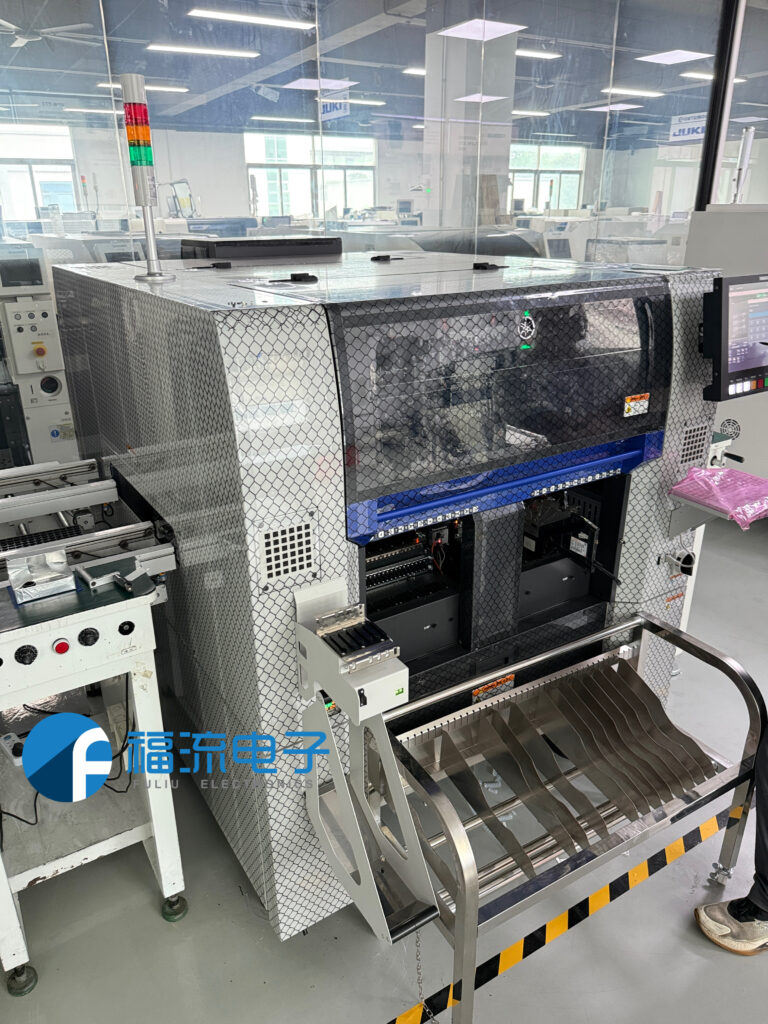
Yamaha Pick and Place Machines
Yamaha provides SMT placement machines and broader SMT line solutions.
Yamaha equipment can be considered for manufacturers seeking a combination of:
- Placement flexibility
- Production capacity
- Component handling
- Integrated SMT processes
- Line-level equipment compatibility
Depending on the model, Yamaha platforms can serve both flexible and higher-volume production requirements.
JUKI Pick and Place Machines
JUKI is widely recognized in SMT manufacturing and provides placement equipment for different production requirements.
JUKI machines can be evaluated for:
- High-mix production
- General EMS manufacturing
- Industrial electronics
- Medium-volume production
- Flexible SMT lines
For factories with frequent product changes, important factors include feeder setup, programming, component range, and effective changeover time.
Hanwha Pick and Place Machines
Hanwha is another established SMT equipment manufacturer.
Its placement platforms can be evaluated for:
- General PCBA manufacturing
- EMS production
- Industrial electronics
- Flexible line configurations
- Medium-to-high-volume applications
When comparing Hanwha with other brands, buyers should evaluate not only machine specifications but also local service, spare-parts availability, feeder requirements, software, and total investment.
Fuji vs Panasonic
Fuji and Panasonic are both widely used in professional SMT manufacturing.
Instead of asking which brand is universally better, compare the production requirement.
Consider Fuji When Evaluating:
- Modular line architecture
- Flexible head configurations
- High placement capacity
- Automation
- High-mix/high-volume combinations
- Large component supply capacity
Consider Panasonic When Evaluating:
- High placement accuracy
- Modular production
- Integrated process control
- Automation and material supply
- Broad component handling
The better fit depends on the actual PCB portfolio and factory ecosystem.
Fuji vs ASM
Both platforms can serve demanding SMT manufacturing.
Fuji can be evaluated where modularity, flexible configuration, automated material handling, and broad production requirements are important.
ASM can be evaluated where advanced high-volume production, flexible head configurations, odd-form component handling, and factory software integration are priorities.
The decision should consider:
- Existing factory equipment
- Feeder inventory
- Operator experience
- Local service
- Product portfolio
- Future expansion
Switching brands can introduce additional costs beyond the placement machine itself.
Yamaha vs JUKI vs Hanwha
These brands are frequently considered by factories seeking flexible SMT production configurations.
The comparison should focus on:
- Actual placement demand
- Component range
- Feeder requirements
- Changeover
- Programming
- Maintenance
- Service availability
- Equipment price
- Pre-owned market
- Total cost of ownership
Avoid selecting a machine based only on nominal CPH
Catalog CPH vs Actual Production Speed
This is one of the most important points when comparing pick and place machines.
Suppose a machine is rated at:
60,000 CPH
That does not mean it will place 60,000 components per hour on every production PCB.
Actual throughput is influenced by:
- Component mix
- Feeder location
- Head movement
- PCB dimensions
- Component recognition
- Tray components
- Large components
- Rotation
- Placement accuracy requirements
- Board transfer
- Machine efficiency
Catalog CPH is useful for comparison, but real production analysis should use the actual PCB and BOM.
How to Calculate Required Placement Capacity
Suppose your PCB contains:
450 SMT components
Target production:
120 boards/hour
The theoretical placement requirement is:
450 × 120 = 54,000 placements/hour
A machine rated at 55,000 CPH may appear sufficient.
However, there is almost no allowance for:
- Actual placement efficiency
- PCB transfer
- Component recognition
- Difficult components
- Production variation
Therefore, the theoretical number should not be used directly as the final machine specification.
One Pick and Place Machine vs Multiple Machines
A single flexible placement machine can be practical for:
- Lower-volume production
- High-mix production
- Smaller PCBAs
- Factories with limited floor space
Multiple machines can be useful when:
- Placement quantity is high
- Required output is high
- Component mix can be balanced between machines
- Production continuity is important
For example:
High-Speed Placement Machine → Flexible Placement Machine
can allow one machine to process small chip components while another handles larger ICs, connectors, and special components.
Component Range Matters More Than Speed Alone
A PCB may contain:
- 0201/01005 components
- ICs
- QFPs
- BGAs
- Connectors
- Shields
- Large capacitors
- Odd-form components
A high-speed head optimized for small chips may not be the ideal tool for every component.
Therefore, evaluate:
Smallest Component + Largest Component + Component Height + Weight + Package Type + Required Placement Force
before selecting the machine.
Feeder Capacity
Feeder capacity can have a major impact on high-mix production.
Suppose a PCB family uses:
100 different component types
If the machine can keep most common materials loaded, manufacturers may reduce:
- Feeder replacement
- Setup work
- Changeover time
This is one reason feeder capacity can sometimes matter more than a small difference in catalog placement speed.
Feeder Ecosystem and Cost
When purchasing a pick and place machine, also consider:
- Number of feeders required
- Feeder sizes
- Smart feeder functions
- Feeder carts
- Tray units
- Feeder maintenance
- Spare feeders
A machine with a lower purchase price can become more expensive after adding a large feeder inventory.
High-Mix Production
For high-mix PCB assembly, prioritize:
- Fast changeover
- Feeder capacity
- Flexible heads
- Recipe management
- Offline preparation
- Component verification
- Tray handling
- Software support
Applications can include:
- Industrial control
- Medical electronics
- Power electronics
- Low-to-medium volume EMS
- Specialized electronics
In these factories, effective production time can matter more than maximum theoretical CPH.
High-Volume Production
High-volume factories may prioritize:
- Placement speed
- Area productivity
- Multiple modules
- Automated material supply
- Low downtime
- Production monitoring
- Fast replenishment
- Smart-factory integration
- Typical applications can include:
- Consumer electronics
- Communication products
- Computing electronics
- High-volume automotive electronics
However, production volume alone should not determine the machine.
Component mix remains important.
Large and Odd-Form Components
Modern PCBAs can contain components that challenge conventional placement equipment.
Examples include:
- Large connectors
- Shields
- Power components
- Heavy components
- Tall components
- Irregular components
If these are part of the BOM, evaluate:
- Maximum component dimensions
- Maximum component weight
- Placement force
- Vision recognition
- Gripper/nozzle options
- Tray supply
ASM, Fuji, Panasonic, Yamaha, JUKI, and Hanwha offer different solutions depending on platform and configuration.
Placement Accuracy
Higher accuracy may be important for:
- Fine-pitch devices
- Advanced packages
- High-density assemblies
- Specialized electronics
But buyers should understand how accuracy is specified.
Different manufacturers may use different:
- Test conditions
- Component types
- Statistical definitions
- Operating modes
Do not compare two accuracy numbers without checking their measurement conditions.
PCB Size
Standard PCBs may be supported by most industrial placement platforms.
However, special applications can require:
- Long PCBs
- Large panels
- Heavy PCBs
- LED boards
Communication infrastructure boards
For example, Fuji specifies AIMEXR configurations supporting placement areas up to 1,068 × 610 mm.
Large-board capability should be verified using the actual panel dimensions and component layout.
Changeover Time
For high-mix manufacturing:
Changeover Time = Lost Production Time
Consider:
- Feeder carts
- Offline setup
- Recipe loading
- Component verification
- Automatic width adjustment
- Material replenishment
A slightly slower machine with much faster changeover can potentially deliver more finished PCBAs over a high-mix production week.
Smart Factory Automation
Modern placement platforms increasingly support:
- Material verification
- Production monitoring
- Automated changeover functions
- Maintenance monitoring
- Recipe management
- Traceability
- Factory software integration
These functions can reduce manual work and improve process visibility.
However, factories should evaluate whether the automation provides practical value for their actual production volume.
Maintenance
Placement machines contain precision mechanical and electronic systems.
Maintenance can include:
- Placement heads
- Nozzles
- Feeders
- Cameras
- Sensors
- Vacuum systems
- Conveyor
- Filters
- Motion systems
A machine with excellent catalog specifications but poor local maintenance support can create significant downtime risk.
Spare Parts and Technical Support
Before selecting a brand, ask:
- Are spare parts available locally?
- What are typical lead times?
- Are trained engineers available?
- Are feeders repairable locally?
- Is software support available?
- How quickly can critical failures be diagnosed?
These factors can be more important than small differences in theoretical speed.
New vs Pre-Owned Pick and Place Machines
New machines can provide:
- Current technology
- Latest automation
- Manufacturer support
- New-machine condition
- Pre-owned machines can provide:
- Lower initial investment
Access to proven international-brand platforms
Potentially faster return on investment for suitable applications
However, pre-owned equipment should be carefully inspected.
Which Pick and Place Machine Is Best for Your Factory?
Why Line Balance Still Matters
Finished output is approximately limited by:
AOI = 80 boards/hour
Increasing placement capacity from 160 to 200 boards/hour would not solve the main bottleneck.
The complete SMT line should be balanced.
Pick and Place Machine Solutions from Fuliu Electronics
Established in 2014, Fuliu Electronics is dedicated to providing customers with high-quality PCBA intelligent manufacturing solutions and services.
With extensive experience in the SMT industry, we specialize in dependable equipment, professional technical support, and complete SMT production line solutions.
Our placement equipment portfolio includes machines from major SMT brands such as:
- Fuji
- Panasonic
- ASM
- Yamaha
- JUKI
- Hanwha
We also provide solutions involving ERSA reflow ovens from Germany, MagicRay SPI/AOI inspection systems, automatic solder paste printers, PCB handling equipment, pre-owned SMT equipment, SMT spare parts, machine leasing, and maintenance services.
For manufacturers selecting a pick and place machine, Fuliu Electronics can evaluate:
PCB + BOM + Component Range + Placement Quantity + Target Capacity + Product Mix + Existing Equipment + Factory Layout + Budget
The goal is not simply to select the machine with the highest catalog CPH.
It is to configure an SMT placement solution that fits the complete production line.
As part of our global growth strategy, Fuliu Electronics is actively expanding into international markets, with key focus areas including India, Vietnam, the Philippines, Indonesia, the Middle East, South Africa, and Europe.
Frequently Asked Questions
There is no universal best machine. Fuji, Panasonic, ASM, Yamaha, JUKI, and Hanwha offer different platforms for different production requirements. Selection should be based on PCB, BOM, capacity, product mix, support, and budget.
High-volume production generally benefits from high throughput, automated material supply, strong uptime, and scalable placement capacity. Specific machine selection should still be based on the actual component mix.
High-mix factories should prioritize feeder capacity, flexible placement heads, fast changeover, recipe management, and offline setup rather than CPH alone.
Both provide advanced SMT placement platforms. Fuji emphasizes modular and flexible production architectures, while Panasonic offers modular placement with high accuracy and integrated automation features. The better fit depends on production requirements.
Both can support demanding SMT production. The comparison should consider throughput, component mix, head configuration, odd-form requirements, automation, software, existing factory ecosystem, and local support.
No. Actual production speed is affected by PCB design, component mix, feeder arrangement, recognition, machine movement, accuracy requirements, and board transfer.