
Why Is THT Still Used in Modern Electronics Manufacturing?
Surface Mount Technology has transformed electronics manufacturing.
Modern SMT lines can place thousands of small components at high speed, support compact PCB designs, and integrate solder paste printing, SPI, pick and place machines, reflow ovens, and AOI into highly automated production systems.
With these advantages, it is reasonable to ask:
Why is THT still used in modern electronics manufacturing?
The answer is simple: SMT and THT are designed for different manufacturing and product requirements.
THT, or Through-Hole Technology, remains valuable for components and applications where mechanical support, component size, connection structure, electrical requirements, or product design make through-hole mounting more suitable.
Modern PCB assemblies often use both technologies.
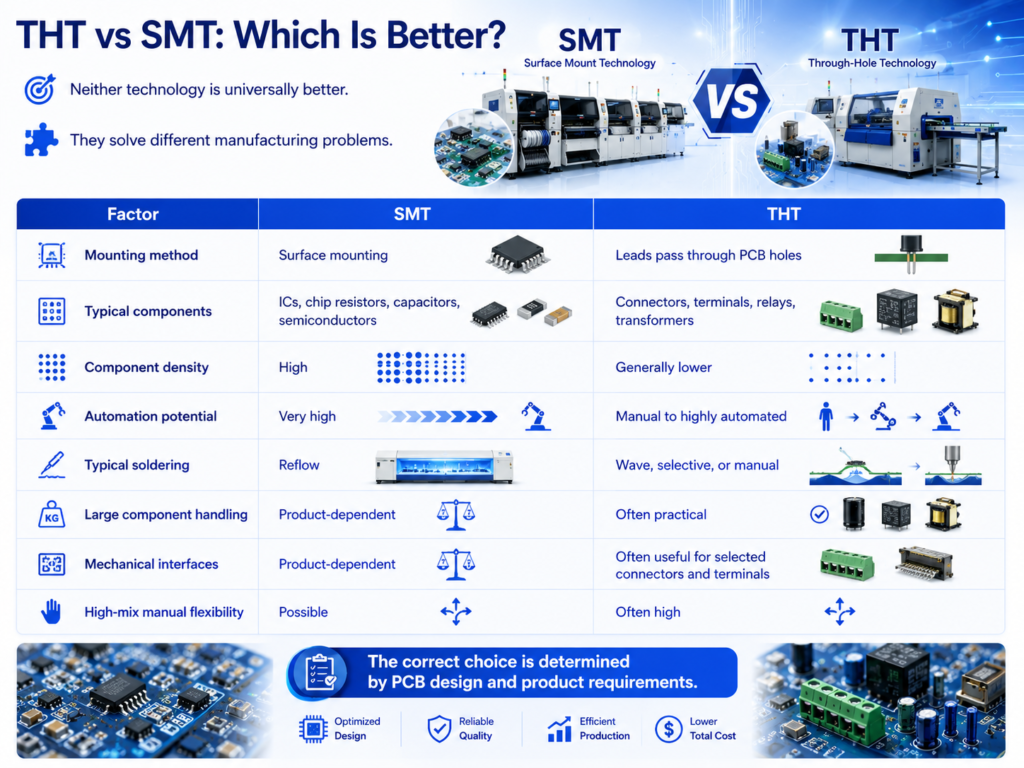
SMT is commonly used for high-density electronic components such as ICs, resistors, capacitors, and semiconductor packages, while THT may be used for connectors, terminal blocks, relays, transformers, switches, large capacitors, and selected power components.
For many PCB assembly factories, the question is therefore not:
SMT or THT?
It is:
How should SMT and THT be combined in the most suitable PCBA production process?
What Is THT?
THT stands for Through-Hole Technology.
In THT assembly, the leads or pins of a component are inserted through holes in the PCB and soldered on the opposite side.
A typical process may include:
Component Preparation → THT Insertion → Pre-Solder Inspection → Fluxing → Preheating → Wave or Selective Soldering → Cooling → Inspection → Testing
THT should not be confused with DIP.
DIP stands for Dual In-line Package and describes a particular package style, while THT describes the broader mounting technology.
In many factories, however, terms such as DIP line or DIP assembly are commonly used to refer to the overall through-hole production process.
Why Has SMT Become Dominant?
Before understanding why THT remains important, it helps to understand why SMT is so widely used.
SMT offers major manufacturing advantages.
These include:
- High component density
- Smaller PCB size
- High-speed automatic placement
- Compatibility with compact electronic products
- Efficient mass production
- Double-sided assembly capability
- Wide component availability
- Integration with automated inspection systems
A typical SMT production line can follow:
PCB Loader → Solder Paste Printer → SPI → Pick and Place → Reflow Oven → AOI → PCB Unloader
For many electronic products, SMT handles most of the components.
However, SMT does not eliminate every requirement that THT addresses.
THT Can Provide Additional Mechanical Support
One of the main reasons through-hole mounting remains useful is mechanical support.
A through-hole component lead passes through the PCB rather than remaining only on the surface.
This can be beneficial for components exposed to mechanical forces.
Examples include:
- Connectors
- Terminal blocks
- Switches
- Pin headers
- Large electromechanical components
Consider a connector that is repeatedly plugged and unplugged.
The connector may experience mechanical force from:
- Cable insertion
- Cable removal
- Pulling
- Twisting
- Repeated maintenance
Depending on product design, a through-hole mounting structure can help distribute these forces through the PCB.
This does not mean THT is automatically stronger or more reliable in every application.
Mechanical performance depends on component design, PCB construction, solder joints, mounting points, enclosure design, and operating conditions.
However, THT remains useful when additional mechanical support is part of the design requirement.
Many Large Components Are Better Suited to Through-Hole Mounting
Not every electronic component is designed for compact surface mounting.
Modern electronics still use relatively large components such as:
- Transformers
- Relays
- Large electrolytic capacitors
- Large connectors
- Terminal blocks
- Switches
- Power devices
- Fuses
These components may be physically large, heavy, or mechanically complex.
Through-hole mounting can provide a practical method of securing these components to the PCB.
This is especially common in:
- Industrial control systems
- Power supplies
- Energy equipment
- Home appliances
- Automotive electronics
- Factory automation
- Communication equipment
THT Is Important for Connectors and Terminals
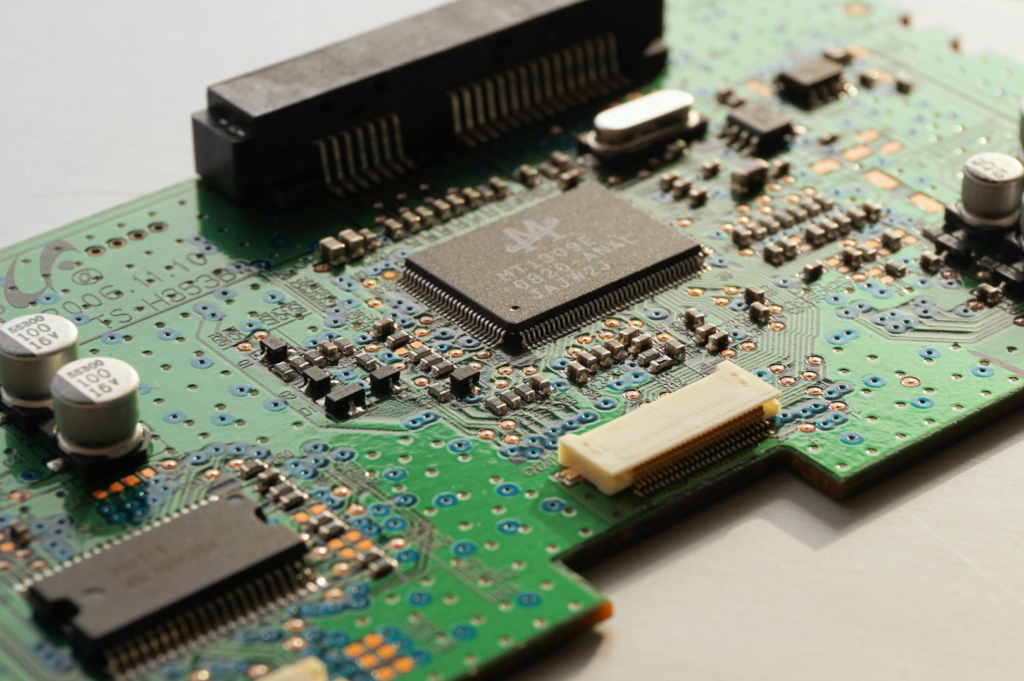
Connectors are one of the clearest examples of why THT remains relevant.
Many PCBs must connect to:
- Cables
- Wire harnesses
- External equipment
- Sensors
- Motors
- Power sources
- Industrial networks
These connections often use:
- Terminal blocks
- Headers
- Multi-pin connectors
- Power connectors
- Communication connectors
Because these parts are mechanical interfaces as well as electrical connections, PCB designers may choose through-hole mounting where appropriate.
This is common in products that undergo repeated installation or maintenance.
THT Remains Useful in Power Electronics
Power electronics often includes larger components that are not always suitable for standard high-density SMT assembly.
Examples can include:
- Power connectors
- Large capacitors
- Transformers
- Inductors
- Relays
- Fuses
- Selected power semiconductor packages
The appropriate mounting method depends on:
- Electrical current
- Voltage
- Thermal design
- Mechanical requirements
- Component availability
- PCB architecture
THT should not automatically be assumed to be electrically superior to SMT.
Modern surface-mount power components can handle demanding applications as well.
However, through-hole mounting remains practical for many large power-related components.
THT Works Well with Electromechanical Components
Modern electronics increasingly combine digital circuitry with physical switching and control functions.
This creates demand for components such as:
- Relays
- Switches
- Contactors
- Connectors
- Transformers
- Terminal blocks
Many of these parts remain available in through-hole formats.
They are common in:
- PLC systems
- Motor control
- Industrial I/O boards
- Power supplies
- Building automation
- Energy control
- Home appliance control systems
As a result, THT assembly continues to be part of many modern PCBA production lines.
Industrial Electronics Frequently Use THT
Industrial control systems are a major application area for THT.
Industrial PCBs may include:
- Terminal blocks
- Large connectors
- Relays
- Transformers
- Switches
- Large capacitors
- Power components
- Communication interfaces
These products often combine low-voltage digital circuits with external connections and power-related functions.
The digital electronics may use SMT.
The mechanical and power-related interfaces may use THT.
This creates a mixed-technology PCB.
For example:
SMT Components → Reflow Soldering → THT Components → Wave/Selective Soldering
This approach allows manufacturers to use each assembly technology where it is most suitable.
THT Is Still Common in Automotive Electronics
Automotive electronics may also contain through-hole components depending on the module and PCB design.
Possible examples include:
- Connectors
- Relays
- Power components
- Large capacitors
- Transformers
- Selected inductive devices
Applications can include:
- Body control
- Lighting systems
- Power management
- Battery management systems
- Charging systems
- Motor control
- Other vehicle electronic modules
However, not every automotive PCB uses THT, and not every module has the same requirements.
The mounting method should be determined by the component, mechanical design, electrical requirements, production process, and customer specification.
THT Is Useful for Prototypes and Low-Volume Manufacturing
Automation is not always the main priority.
For:
- Prototype production
- Engineering validation
- Low-volume products
- High-mix production
- Frequent design changes
manual THT insertion can provide high flexibility.
Operators can insert components without requiring complex automated feeders or dedicated placement setups.
This can make through-hole assembly practical for products where volumes do not justify extensive automation.
THT Components Can Be Easier to Handle Manually
Some components are difficult to automate because they have:
- Irregular shapes
- Large dimensions
- Flexible leads
- Mechanical features
- Non-standard packaging
Examples might include certain:
- Transformers
- Connectors
- Relays
- Switches
- Custom electromechanical components
Manual THT insertion can be more economical than developing complex automation for low or moderate volumes.
This is one reason hybrid production lines remain common.
THT vs SMT: Which Is Better?
Neither technology is universally better.
They solve different manufacturing problems.
The correct choice is determined by PCB design and product requirements.
Modern Electronics Often Use SMT and THT Together
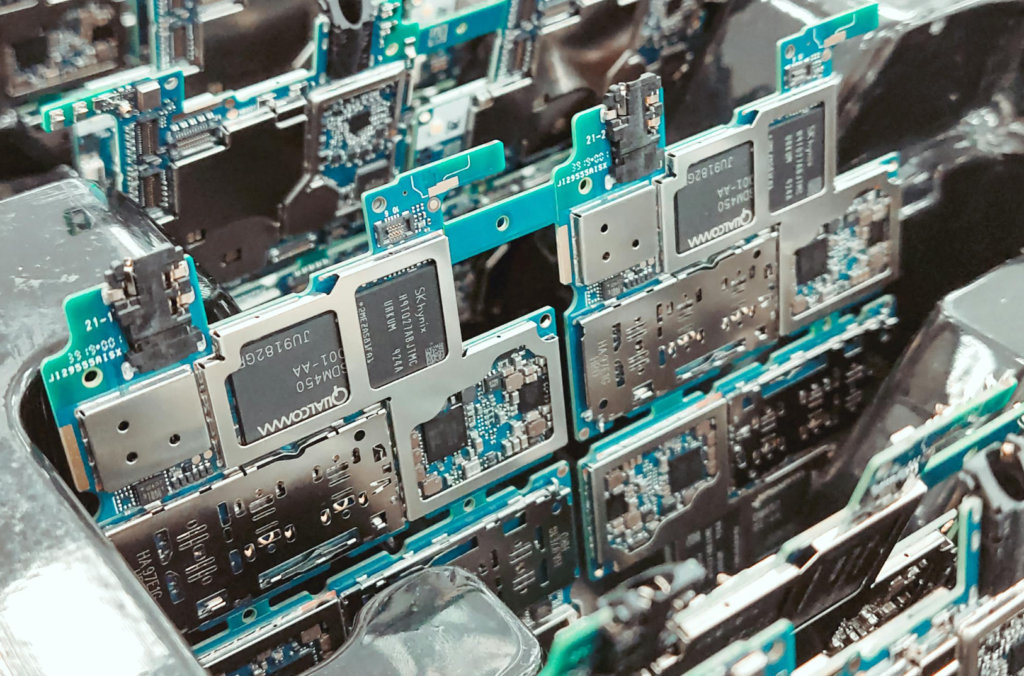
Many PCBs are mixed-technology assemblies.
A typical process may look like:
Solder Paste Printing → SPI → SMT Placement → Reflow → AOI → THT Insertion → Wave/Selective Soldering → Inspection → Testing
The SMT section handles:
- ICs
- Resistors
- Capacitors
- Diodes
- Transistors
- QFN
- QFP
- BGA
- Other surface-mount components
The THT section handles:
- Connectors
- Terminal blocks
- Relays
- Transformers
- Large capacitors
- Switches
- Selected power components
This is one of the main reasons THT has not disappeared.
Modern PCB design often requires multiple assembly technologies rather than a single universal method.
Why THT Has Not Been Completely Replaced by SMT
It is tempting to view manufacturing technology as a simple progression:
THT → SMT → THT disappears
In practice, electronics manufacturing does not work that way.
SMT replaced THT for many functions because it enabled smaller products and much higher automation.
But certain component and mechanical requirements remain better suited to through-hole designs.
As long as modern products continue to require:
- Large connectors
- Terminals
- Relays
- Transformers
- Power interfaces
- Mechanically loaded components
- Certain large capacitors
- Electromechanical devices
THT will continue to have a role in PCB assembly.
Does THT Mean Lower Automation?
Not necessarily.
THT production is often more labor-intensive than SMT, especially during component insertion.
However, many stages can be automated.
An automated or semi-automated THT line can include:
Automatic PCB Loader → THT Insertion → Inspection → Automatic Transfer → Fluxing → Preheating → Wave Soldering → Cooling → Inspection → Testing → PCB Unloader
Automation can be introduced in:
- PCB handling
- Component preparation
- Suitable THT insertion
- Fluxing
- Soldering
- Inspection
- Testing
- Traceability
The most suitable automation level depends on the BOM and production volume.
Manual vs Automatic THT Insertion
One of the biggest challenges in through-hole production is component diversity.
Manual Insertion Is Often Suitable For:
- Low-volume production
- High-mix products
- Complex component shapes
- Frequent changeovers
- Irregular packaging
Automatic Insertion May Be Suitable For:
- Higher-volume production
- Stable products
- Standardized components
- Components supplied in automation-friendly packaging
Many factories use a hybrid approach:
Automatic insertion for suitable components + manual insertion for irregular components.
This can provide a practical balance between flexibility and productivity.
How Are THT Components Soldered?
Three common methods are used.
Wave Soldering
Wave soldering passes the underside of the PCB over molten solder.
It is often suitable when:
- Many THT joints are present
- PCB design supports wave soldering
- Higher throughput is required
A typical process is:
Fluxing → Preheating → Solder Wave → Cooling
Selective Soldering
Selective soldering applies solder only to programmed areas.
It can be useful when:
- Only a limited number of THT joints exist
- Bottom-side SMT components are present
- Some areas must avoid solder contact
Manual Soldering
Manual soldering may still be used for:
- Prototypes
- Low-volume manufacturing
- Repair
- Special components
The correct soldering method depends on PCB design and production requirements.
Does THT Cost More Than SMT?
There is no universal answer.
THT may involve more manual labor because component insertion can be slower.
However, total manufacturing cost depends on:
- PCB volume
- Product complexity
- Labor cost
- Automation level
- Component type
- Soldering method
- Changeover frequency
- Rework
- Testing
- Equipment utilization
For some products, replacing a suitable THT component with SMT may reduce assembly labor.
For others, the mechanical or electrical redesign required may outweigh the manufacturing benefit.
The correct evaluation should consider total product and manufacturing cost rather than assembly speed alone.
Is THT More Reliable Than SMT?
It is not accurate to say that THT is always more reliable.
Reliability depends on many factors, including:
- PCB design
- Component package
- Solder joint design
- Process control
- Operating environment
- Mechanical loads
- Thermal cycling
- Materials
- Product enclosure
THT can provide useful mechanical support in certain applications, but SMT can also achieve high reliability when properly designed and manufactured.
The best assembly method should be determined by the specific application.
When Should a PCB Designer Consider THT?
THT may be worth considering when the product includes:
- Large connectors
- Terminal blocks
- Transformers
- Relays
- Large capacitors
- Mechanically loaded switches
- Certain power components
- Irregular components difficult to surface mount
Designers should evaluate both the product requirement and manufacturability.
How THT Affects Production Line Planning
A PCB containing only SMT components can typically move through a standard SMT line.
A PCB containing THT components requires additional downstream processes.
For example:
SMT Printing → SPI → Placement → Reflow → AOI → THT Insertion → Soldering → Inspection → Testing
This affects:
- Floor space
- Labor
- Equipment
- Material flow
- Buffer requirements
- Production capacity
- Factory layout
Manufacturers should therefore analyze SMT and THT as one complete PCBA process.
What Equipment Is Needed for a Modern THT Line?
Depending on the application, equipment may include:
- PCB loader
- PCB conveyors
- Component preparation equipment
- THT insertion workstations
- Semi-automatic insertion equipment
- Automatic insertion machines
- Inspection conveyors
- Wave soldering machine
- Selective soldering machine
- Cooling conveyor
- PCB unloader
- AOI or visual inspection
- ICT
- Functional testing
- Rework equipment
Not every factory needs all of these systems.
The correct line should be built according to the PCB and BOM.
How to Choose the Right THT Production Configuration
Before designing a THT line, manufacturers should evaluate:
- PCB dimensions
- PCB thickness
- BOM
- THT component types
- THT component quantity
- Component packaging
- Component height and weight
- Target production capacity
- Product mix
- Changeover frequency
- Manual vs automatic insertion requirements
- Wave vs selective soldering
- Inspection requirements
- Testing requirements
- Existing SMT equipment
- Factory layout
- Automation target
- Budget
This information helps determine whether the factory requires a manual, semi-automatic, or highly automated THT production line.
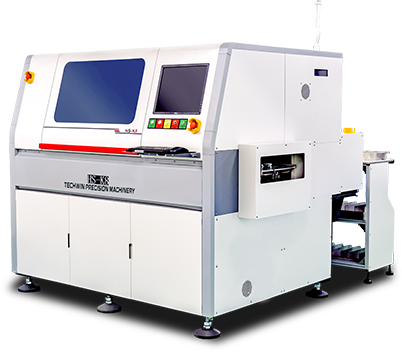
THT and Complete PCBA Production Line Solutions from Fuliu Electronics
Established in 2014, Fuliu Electronics is dedicated to providing customers with high-quality PCBA intelligent manufacturing solutions and services.
With extensive experience in the SMT industry, we specialize in dependable equipment, professional technical support, and complete SMT and PCBA production line solutions.
Our product portfolio includes SMT pick and place machines from Fuji, Panasonic, ASM, Yamaha, JUKI, and Hanwha, together with ERSA reflow ovens from Germany, MagicRay SPI/AOI inspection systems, automatic solder paste printers, supporting PCBA equipment, pre-owned SMT equipment, SMT spare parts, machine leasing, and maintenance services.
For manufacturers planning a new SMT + THT line or upgrading an existing DIP/THT process, Fuliu Electronics can help evaluate:
- PCB dimensions
- BOM
- SMT and THT component mix
- Component packaging
- Target production capacity
- Product variety
- Manual vs automatic THT insertion
- Wave vs selective soldering
- Inspection and testing
- Existing equipment
- Factory layout
- Automation requirements
- Investment budget
Rather than treating SMT and THT as competing technologies, manufacturers can configure each process according to the actual product requirements and build a balanced PCBA production system.
As part of our global growth strategy, Fuliu Electronics is actively expanding into international markets, with key focus areas including India, Vietnam, the Philippines, Indonesia, the Middle East, South Africa, and Europe.
Conclusion
So, why is THT still used in modern electronics manufacturing?
Because modern electronics still need components and connection structures that are not always best served by surface mounting alone.
THT remains relevant for applications involving:
- Connectors
- Terminal blocks
- Relays
- Transformers
- Large capacitors
- Switches
- Selected power components
- Electromechanical devices
Its value is especially clear where component size, mechanical loading, connection structure, product design, or production requirements make through-hole mounting practical.
At the same time, SMT remains the preferred technology for most high-density electronic components.
That is why many modern PCB assemblies combine both:
SMT for high-density electronic circuitry + THT for selected larger, mechanical, and through-hole components.
The most effective manufacturing strategy is therefore not to treat SMT and THT as competing technologies, but to design a balanced mixed-technology PCBA process around the actual product.
If you are planning a new THT/DIP production line, upgrading an existing through-hole assembly process, or building a complete SMT + THT PCBA factory, Fuliu Electronics can help evaluate your PCB dimensions, BOM, component mix, target capacity, existing equipment, factory layout, automation requirements, and budget to develop a suitable production solution.
Frequently Asked Questions
THT remains useful for components such as connectors, terminal blocks, transformers, relays, large capacitors, and selected power devices where through-hole mounting suits mechanical, electrical, or component-design requirements.
SMT has replaced THT for many component types, especially small and high-density electronics, but it has not eliminated the need for through-hole assembly.
Not universally. Reliability depends on PCB design, component type, solder joints, process control, environment, and mechanical requirements.
Common examples include connectors, terminal blocks, relays, transformers, switches, pin headers, large capacitors, and selected power components.
Some connectors experience repeated insertion, removal, or other mechanical forces. Through-hole mounting can provide useful additional mechanical support depending on the product design.
Yes, selected automotive PCB assemblies may use THT components such as connectors, relays, power components, and large capacitors depending on the application.