
In modern PCB assembly manufacturing, quality control begins long before the final inspection stage. As electronic products become smaller and more complex, defects that occur during early SMT processes can create significant production losses if they are not detected immediately.
One of the most critical stages in SMT manufacturing is solder paste printing. Poor solder paste application is one of the leading causes of PCB assembly defects, including solder bridges, insufficient solder joints, component shifting, and open circuits.
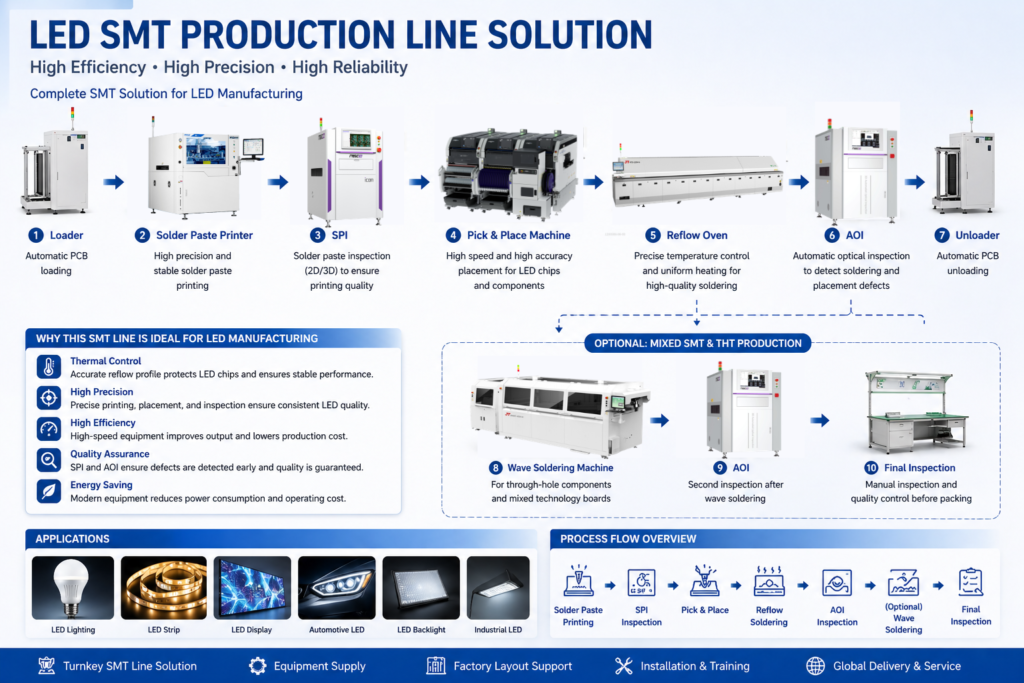
This is why many advanced SMT production lines install SPI (Solder Paste Inspection) before the pick and place machine.
By inspecting solder paste quality before components are mounted, manufacturers can identify printing problems at the earliest possible stage, prevent defective boards from moving forward, and significantly improve production yield.
Why SPI Should Be Installed Before Pick and Place: Improving SMT Quality Control
In this guide, we will explain why SPI should be installed before pick and place, how SPI works, the benefits it provides, and why it has become an essential part of modern SMT quality control.
What Is SPI Inspection?
SPI stands for Solder Paste Inspection. It is an automated inspection technology used to evaluate solder paste printing quality after solder paste is applied to a PCB and before electronic components are placed.
SPI systems use high-resolution cameras, laser measurement technology, and advanced software algorithms to analyze solder paste deposition.
SPI measures:
- Solder paste volume
- Paste height
- Paste area
- Printing position
- Shape consistency
- Offset deviation
By verifying solder paste quality before component placement, SPI prevents defects from continuing through the SMT process.
Why Is Solder Paste Printing So Important?
The solder paste printing process creates the foundation for reliable PCB assembly.
During SMT manufacturing:
- PCB enters the solder paste printer.
- Solder paste is deposited through a stencil.
- SPI checks paste quality.
- Pick and place machine installs components.
- Reflow oven creates solder joints.
If solder paste printing is incorrect, later processes cannot completely correct the problem.
For example:
- Too little solder paste may cause weak solder joints.
- Too much solder paste may create solder bridges.
- Incorrect paste position may cause component offset.
- Uneven paste volume may cause inconsistent soldering.
Therefore, controlling solder paste quality before placement is one of the most effective ways to prevent defects.
Why Should SPI Be Installed Before Pick and Place?
Detect Defects Before Components Are Mounted
The biggest advantage of installing SPI before pick and place is early defect detection.
If solder paste problems are discovered after component placement or reflow soldering, correcting them becomes more difficult and expensive.
Without SPI:
- Defective boards continue through production.
- Components may need to be removed.
- Rework costs increase.
- Production efficiency decreases.
With SPI:
- Printing defects are identified immediately.
- Operators can adjust printer parameters quickly.
- Defective boards are stopped before further processing.
- Early detection reduces both time and cost.
Improve First-Pass Yield (FPY)
First-Pass Yield measures how many products pass production without requiring rework.
SPI improves FPY by ensuring that every PCB starts assembly with correct solder paste conditions.
Benefits include:
- Fewer solder defects
- Less rework
- Lower scrap rates
- More stable production output
Higher FPY directly improves manufacturing profitability.
Reduce Solder-Related Defects
Many SMT defects originate from solder paste printing problems.
Common defects include:
Solder Bridges
Excess solder paste may connect adjacent pads, causing electrical shorts.
SPI detects excessive paste volume before components are placed.
Insufficient Solder
Too little solder paste can create weak joints or open circuits.
SPI identifies insufficient paste deposition early.
Component Misalignment
Incorrect solder paste positioning can cause component shift during placement and reflow.
SPI ensures paste is accurately aligned with PCB pads.
Tombstoning
Uneven solder paste distribution may cause small components to stand vertically during reflow.
SPI helps maintain consistent paste volume on both pads.
Prevent Expensive Rework
The cost of repairing defects increases as a PCB moves through production.
A defect detected immediately after printing is relatively easy to correct
The same defect discovered after:
- Component placement
- Reflow soldering
- Functional testing
- Final assembly
requires significantly more labor and time.
SPI acts as an early quality gate, preventing unnecessary downstream costs.
Optimize Solder Paste Printing Proces
SPI does more than simply detect defects—it provides valuable process data.
Manufacturers can analyze:
- Printer performance
- Stencil condition
- Squeegee pressure
- Printing speed
- Paste condition
- Environmental influence
This information helps engineers continuously optimize the printing process.
Reduce Dependence on Manual Inspection
Manual solder paste inspection has several limitations:
- Difficult to measure paste volume accurately
- Operator fatigue
- Slow inspection speed
- Inconsistent judgment
SPI provides:
- Automated measurement
- Repeatable inspection standards
- Real-time feedback
- Digital quality records
This improves consistency in high-volume manufacturing.
SPI Before Pick and Place vs AOI After Reflow
Many manufacturers ask whether AOI can replace SPI.
The answer is no.
SPI focuses on the beginning of the SMT process, while AOI evaluates the final assembly result.
Using both systems creates a stronger quality control process.
Where Should SPI Be Installed in an SMT Line?
The recommended SMT process flow is:
- PCB Loader
- Automatic Solder Paste Printer
- SPI Inspection System
- Pick and Place Machine
- Reflow Oven
- AOI Inspection System
- X-Ray Inspection (Optional)
- ICT/FCT Testing
- PCB Cleaning (Optional)
- PCB Unloader
Installing SPI immediately after solder paste printing allows manufacturers to correct issues before component placement.
Key Features to Consider When Choosing an SPI Machine
When selecting an SPI system, manufacturers should evaluate:
3D Measurement Capability
Modern 3D SPI systems provide accurate measurement of:
- Paste height
- Volume
- Area
- Shape
This is especially important for fine-pitch components.
Inspection Speed
The SPI system should match SMT line throughput without creating production bottlenecks.
Measurement Accuracy
High accuracy is essential for:
- Miniature components
- Fine-pitch ICs
- High-density PCB designs
Software Capability
Advanced SPI software should support:
- Automatic defect classification
- SPC analysis
- Data reporting
- MES integration
- Recipe management
Integration Capability
Modern SPI systems should integrate with:
- SMT printers
- Pick and place machines
- MES systems
- Factory monitoring platforms
This enables closed-loop process control.
Industries That Benefit Most from SPI Inspection
SPI is particularly valuable for industries requiring high reliability.
Applications include:
- Automotive electronics
- Medical devices
- Telecommunications equipment
- Industrial automation
- Battery Management Systems (BMS)
- Aerospace electronics
- Consumer electronics
For these industries, preventing defects before component placement is essential.
Common Mistakes Without SPI
Manufacturers without SPI inspection may experience:
Late Defect Detection
Problems are discovered only after expensive downstream processes.
Increased Rework
Incorrect solder paste often requires component removal and PCB repair.
Lower Production Efficiency
Repeated defects interrupt production schedules.
Poor Process Visibility
Without SPI data, engineers cannot accurately evaluate printing performance.
How SPI Supports Industry 4.0 Manufacturing
Modern SPI systems contribute to smart factory development through:
- Real-time data collection
- MES integration
- SPC monitoring
- Automated feedback
- Production analytics
- Quality traceability
SPI transforms solder paste inspection from a simple quality check into a data-driven process improvement tool.
Why Choose Fuliu Electronics?
Established in 2014, Fuliu Electronics is dedicated to providing customers with high-quality PCBA intelligent manufacturing solutions and comprehensive technical services.
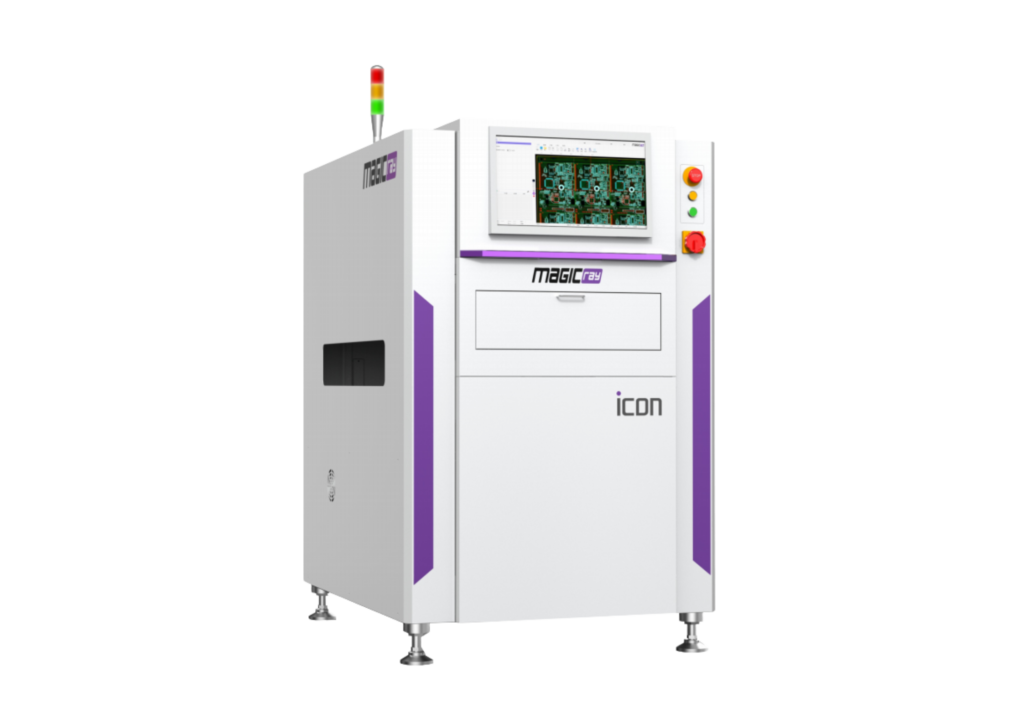
With extensive experience in the SMT industry, Fuliu Electronics supplies complete SMT production line solutions featuring internationally recognized brands such as Fuji, Panasonic, ASM, Yamaha, JUKI, and Hanwha, together with ERSA reflow ovens, MagicRay SPI/AOI inspection systems, automatic solder paste printers, refurbished SMT equipment, SMT spare parts, equipment leasing, and maintenance services.
Serving customers across India, Vietnam, the Philippines, Indonesia, the Middle East, South Africa, and Europe, Fuliu Electronics helps manufacturers build reliable SMT production lines through customized equipment configuration, factory planning, installation, commissioning, process optimization, operator training, and long-term technical support.
Conclusion
Installing SPI before the pick and place machine is one of the most effective ways to improve SMT production quality. By detecting solder paste defects before component placement, manufacturers can prevent costly downstream failures, increase first-pass yield, reduce rework, and achieve more stable PCB assembly performance.
In modern electronics manufacturing, quality control must begin at the earliest possible stage. Combining SPI, AOI, X-Ray inspection, and intelligent production management creates a comprehensive quality system that supports efficient, reliable, and scalable SMT manufacturing.
For manufacturers seeking higher productivity and lower defect rates, SPI inspection is not simply an additional machine—it is a critical investment in long-term production success.
Frequently Asked Questions
SPI is installed before pick and place because it detects solder paste defects before components are mounted, preventing expensive downstream rework and improving production quality.
SPI detects solder paste volume problems, height variation, printing offset, insufficient paste, excessive paste, and irregular paste shapes.
No. SPI and AOI inspect different stages of the SMT process. SPI checks solder paste quality before placement, while AOI detects assembly defects after soldering.
SPI is highly recommended for factories producing complex, high-density, or high-volume PCBs because it improves process stability and reduces defect costs.
SPI reduces rework, improves first-pass yield, provides process data, and allows engineers to correct printing issues before they affect later production stages.
Key factors include measurement accuracy, inspection speed, 3D capability, software functions, MES integration, and compatibility with your SMT production line.