
As competition in the electronics industry continues to intensify, manufacturers are under constant pressure to deliver high-quality products at lower prices while maintaining profitability. Rising labor costs, fluctuating component prices, and increasing customer expectations have made cost control one of the most important priorities in SMT (Surface Mount Technology) manufacturing.
However, reducing costs doesn’t simply mean purchasing cheaper equipment or cutting production budgets. Sustainable cost reduction comes from improving efficiency, minimizing waste, optimizing production processes, and making smarter investment decisions.
In this guide, we’ll explore practical strategies to reduce SMT manufacturing costs without compromising product quality or production reliability.
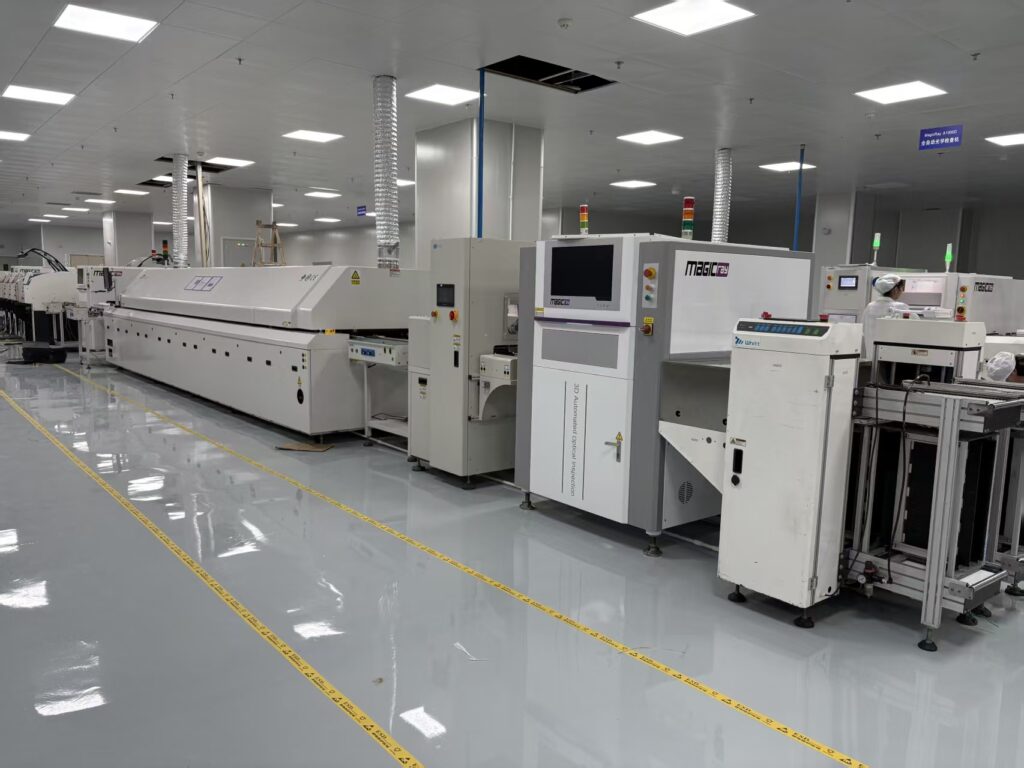
What Contributes to SMT Manufacturing Costs?
Before reducing costs, it’s important to understand where expenses originate.
Typical SMT manufacturing costs include:
- Equipment investment
- Electronic components
- PCB materials
- Labor
- Energy consumption
- Machine maintenance
- Production downtime
- Quality inspection
- Rework and scrap
- Factory overhead
Among these, production inefficiencies and quality-related losses often represent the greatest opportunities for cost savings.
Improve First-Pass Yield (FPY)
One of the fastest ways to reduce manufacturing costs is by increasing First-Pass Yield (FPY).
Every defective PCB requires:
- Additional labor
- Extra inspection
- Rework materials
- Production time
- Machine capacity
Improving FPY allows manufacturers to produce more sellable products without increasing production resources.
Methods to improve FPY include:
- Stable solder paste printing
- Accurate component placement
- Optimized reflow profiles
- Effective SPI inspection
- Reliable AOI inspection
Optimize Solder Paste Printing
Industry experience shows that many SMT defects originate during solder paste printing.
Poor printing quality can cause:
- Insufficient solder
- Solder bridges
- Component shifting
- Open circuits
- Rework
Manufacturers can improve printing consistency by:
- Cleaning stencils regularly
- Monitoring solder paste condition
- Optimizing print parameters
- Using high-quality automatic solder paste printers
- Implementing SPI inspection
Better printing quality reduces downstream manufacturing costs.
Reduce Equipment Downtime
Unexpected machine downtime directly increases production costs.
Effective preventive maintenance helps avoid:
- Production interruptions
- Emergency repairs
- Delivery delays
- Overtime labor
Recommended practices include:
- Preventive maintenance schedules
- Spare parts inventory management
- Equipment health monitoring
- Lubrication and calibration
- Regular machine inspections
Keeping equipment operating reliably improves overall productivity.
Increase SMT Line Efficiency
Improving SMT line efficiency enables manufacturers to produce more boards using the same equipment and workforce.
Strategies include:
- Optimize feeder layouts
- Reduce changeover time
- Improve production scheduling
- Balance production capacity
- Eliminate bottlenecks
- Standardize operating procedures
Higher equipment utilization lowers the manufacturing cost per PCB.
Use Automated Inspection Systems
Inspection systems should be viewed as investments rather than expenses.
SPI (Solder Paste Inspection)
SPI detects printing defects before components are mounted.
AOI (Automated Optical Inspection)
AOI identifies assembly defects such as:
- Missing components
- Wrong polarity
- Component rotation
- Solder bridges
- Lifted leads
Early defect detection minimizes expensive downstream repairs and improves production yield.
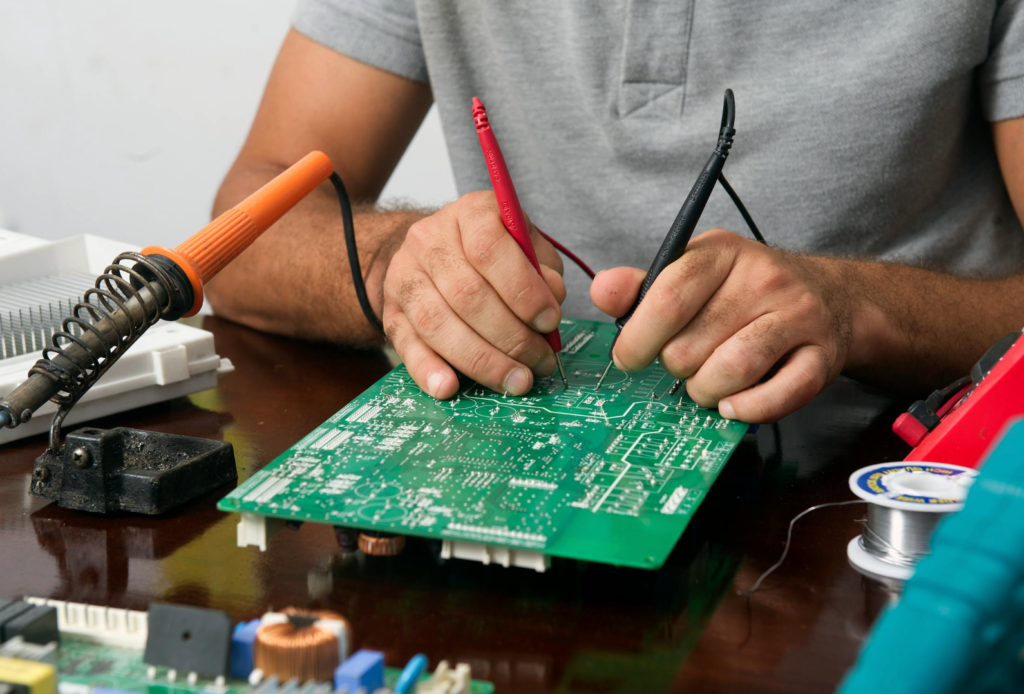
Reduce Material Waste
Material waste significantly increases manufacturing costs.
Manufacturers should focus on reducing:
- Solder paste waste
- Component loss
- PCB damage
- Packaging waste
- Incorrect material usage
Inventory management systems, barcode tracking, and proper material storage help reduce unnecessary losses.
Improve Production Planning
Poor scheduling often results in:
- Idle machines
- Frequent line changeovers
- Material shortages
- Delayed deliveries
Effective production planning includes:
- Batch optimization
- Production forecasting
- Material preparation
- Capacity balancing
- Equipment utilization planning
Well-organized production schedules improve efficiency while reducing operating costs.
-768x768.png)
Invest in Employee Training
Even highly automated factories depend on skilled operators.
Training improves:
- Machine operation
- Troubleshooting
- Setup accuracy
- Maintenance quality
- Inspection consistency
Well-trained employees make fewer mistakes, reducing both defects and production delays.
Consider Refurbished SMT Equipment
Not every manufacturer requires brand-new equipment.
Professionally refurbished SMT machines offer several advantages:
- Lower investment costs
- Faster return on investment
- Proven reliability
- Immediate availability
For many manufacturers, refurbished equipment provides an effective balance between performance and affordability.
Reduce Energy Consumption
Electricity represents a significant operating expense, particularly for high-volume production.
Manufacturers can reduce energy costs by:
- Optimizing reflow oven profiles
- Shutting down idle equipment
- Using energy-efficient machinery
- Scheduling production efficiently
- Performing regular equipment maintenance
Even modest energy savings can generate substantial long-term cost reductions.
Adopt Smart Manufacturing Technologies
Modern SMT factories increasingly use digital technologies to improve efficiency.
Examples include:
- MES (Manufacturing Execution Systems)
- Real-time production monitoring
- Equipment data analytics
- Predictive maintenance
- Automated material tracking
- AI-assisted process optimization
Data-driven manufacturing enables continuous improvement while reducing operating costs.
Work with an Experienced SMT Equipment Supplier
Selecting the right supplier affects much more than equipment pricing.
A professional supplier helps manufacturers reduce costs through:
- Optimized equipment selection
- Production line design
- Technical training
- Process optimization
- Reliable after-sales support
- Preventive maintenance programs
- Spare parts availability
Long-term technical support minimizes production risks and maximizes equipment performance.
Why Choose Fuliu Electronics?
Established in 2014, Fuliu Electronics is dedicated to providing customers with high-quality PCBA intelligent manufacturing solutions and comprehensive technical services.
With extensive experience in the SMT industry, Fuliu Electronics supplies complete SMT production line solutions featuring internationally recognized brands such as Fuji, Panasonic, ASM, Yamaha, JUKI, and Hanwha, together with ERSA reflow ovens, MagicRay SPI/AOI inspection systems, automatic solder paste printers, refurbished SMT equipment, SMT spare parts, equipment leasing, and maintenance services.
Serving customers across India, Vietnam, the Philippines, Indonesia, the Middle East, South Africa, and Europe, Fuliu Electronics helps manufacturers reduce production costs through customized equipment configurations, intelligent production line planning, advanced inspection technologies, and long-term technical support.
Best Practices for Reducing SMT Manufacturing Costs
Successful manufacturers focus on continuous improvement rather than one-time cost-cutting measures.
A practical cost reduction checklist includes:
- Improve First-Pass Yield (FPY)
- Optimize solder paste printing
- Implement SPI and AOI inspection
- Reduce equipment downtime
- Improve production scheduling
- Train operators regularly
- Minimize material waste
- Monitor production KPIs
- Upgrade outdated equipment when appropriate
- Partner with experienced SMT solution providers
Consistently applying these practices leads to sustainable cost savings while maintaining high product quality.
Conclusion
Reducing SMT manufacturing costs is not about sacrificing quality—it is about improving efficiency across the entire production process. From solder paste printing and automated inspection to preventive maintenance, intelligent production planning, and employee training, every stage of the SMT line presents opportunities to eliminate waste and improve profitability.
Manufacturers that adopt a continuous improvement mindset, leverage modern automation technologies, and work with experienced equipment suppliers are better positioned to control costs while remaining competitive in an increasingly demanding electronics market.
Frequently Asked Questions
Major cost factors include electronic components, equipment investment, labor, machine downtime, rework, material waste, energy consumption, and production inefficiencies.
Improve first-pass yield, optimize solder paste printing, reduce machine downtime, minimize material waste, implement automated inspection, and improve production planning.
Yes. SPI detects solder paste defects before component placement, preventing expensive downstream failures and reducing rework.
Professionally refurbished equipment can significantly reduce capital investment while providing reliable production performance and faster ROI.
Preventive maintenance minimizes unexpected downtime, extends equipment lifespan, reduces repair costs, and improves production efficiency.
Higher equipment utilization, fewer defects, and shorter production cycles reduce the manufacturing cost per PCB while increasing overall profitability.