
Soldering is one of the most critical processes in PCB assembly manufacturing. The quality of solder joints directly affects product reliability, electrical performance, and long-term durability. Whether producing consumer electronics, automotive control modules, LED drivers, industrial equipment, or communication devices, manufacturers must choose the right soldering technology to ensure efficient and stable production.
Among all PCB assembly processes, reflow soldering and wave soldering are the two most widely used soldering methods. While both are designed to create reliable electrical and mechanical connections, they serve different purposes and are used in different stages of PCB assembly.
For factory investors, procurement managers, and manufacturing engineers, understanding the differences between reflow ovens and wave soldering machines is essential when planning a new SMT production line or upgrading an existing PCB assembly factory.
In this guide, we compare reflow soldering and wave soldering in terms of process, applications, quality, cost, and production efficiency to help you determine which solution is best for your manufacturing needs.
What Is Reflow Soldering?
Definition of Reflow Soldering
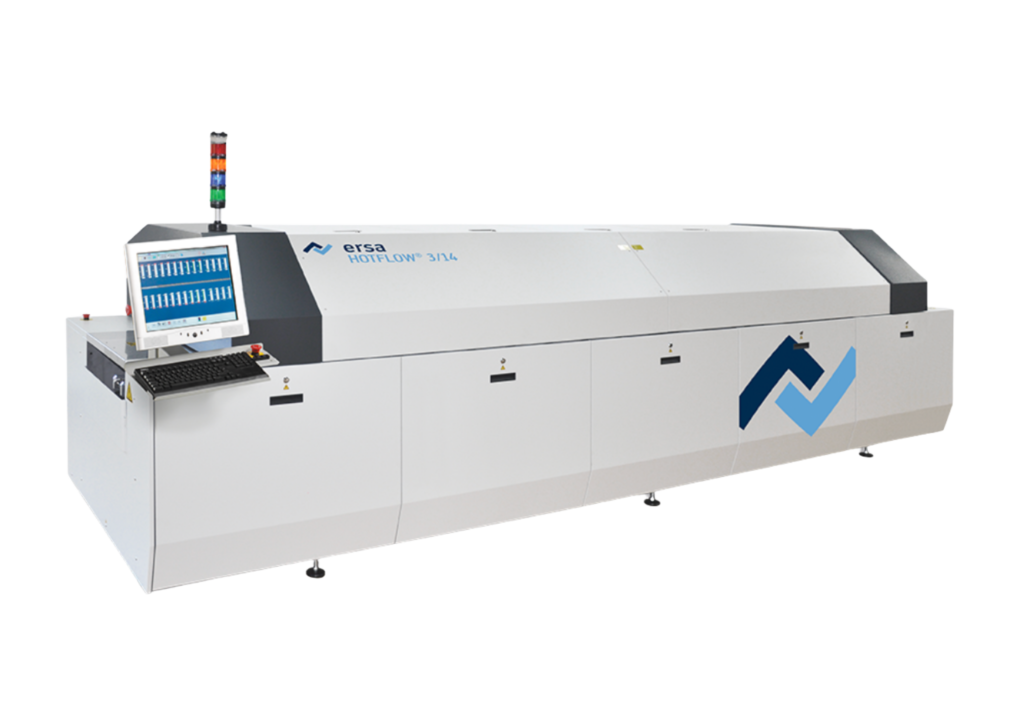
Reflow soldering is a PCB assembly process primarily used for Surface Mount Technology (SMT) components. In this process, solder paste is printed onto PCB pads, components are placed onto the board, and the entire assembly passes through a reflow oven where controlled heat melts the solder paste and creates permanent solder joints.
Today, reflow soldering is the standard process for manufacturing modern electronic products because it supports high-density PCB designs and fully automated production.
How Reflow Soldering Works
A typical SMT reflow process includes:
Preheating Zone
Gradually raises PCB temperature to prevent thermal shock.
Soaking Zone
Activates flux and stabilizes temperature across the board.
Reflow Zone
Temperature rises above solder melting point, forming solder joints.
Cooling Zone
Controlled cooling solidifies solder joints and improves reliability.
Advantages of Reflow Soldering
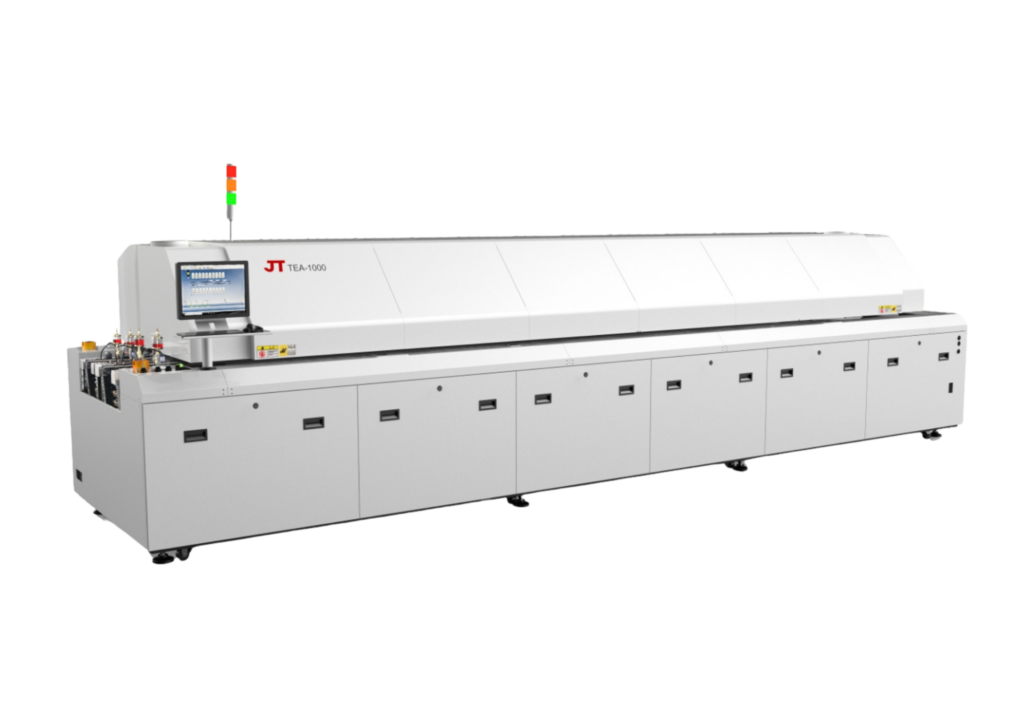
High Automation
Modern SMT production lines can run with minimal human intervention, reducing labor costs and improving consistency.
High Component Density
Reflow soldering supports extremely small components such as:
- 01005 chips
- BGA packages
- CSP packages
- QFN devices
This makes it ideal for compact electronic products.
Excellent Process Consistency
Precise temperature control ensures repeatable soldering quality across large production volumes.
High Production Speed
Reflow ovens can handle continuous production, making them suitable for high-volume manufacturing.
Common Applications of Reflow Ovens
Consumer Electronics
- Smartphones
- Tablets
- Smart watches
- IoT devices
Automotive Electronics
- ECU modules
- ADAS systems
- Sensors
Medical Electronics
- Monitoring equipment
- Diagnostic devices
Communication Equipment
- Routers
- Base station modules
- Network controllers
What Is Wave Soldering?
Definition of Wave Soldering
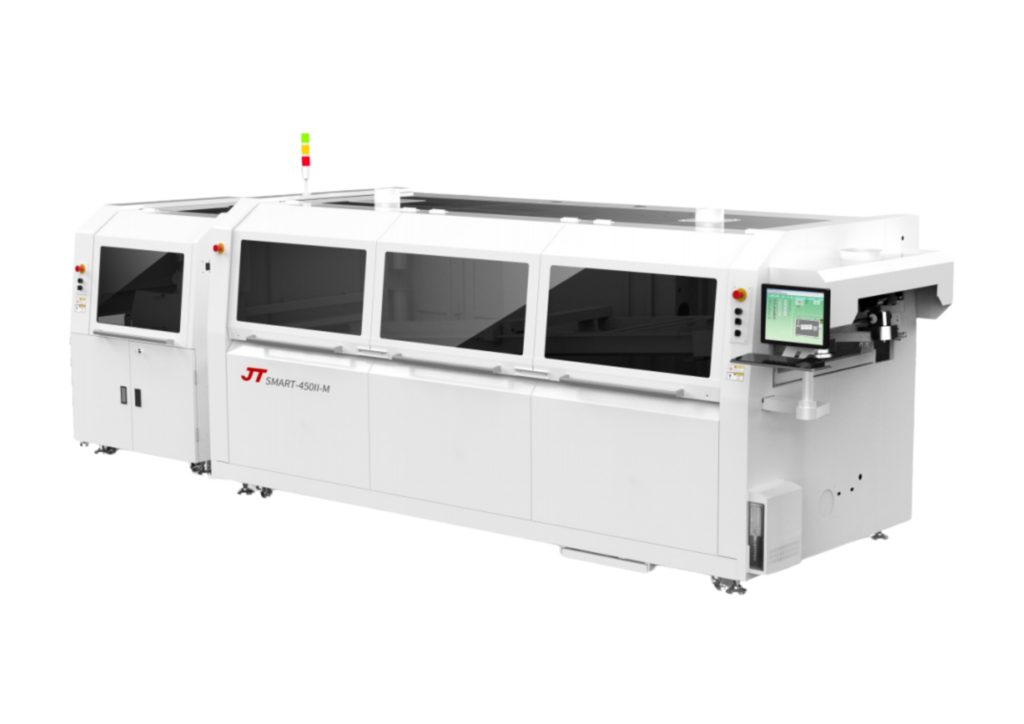
Wave soldering is primarily used for Through-Hole Technology (THT/DIP) components.
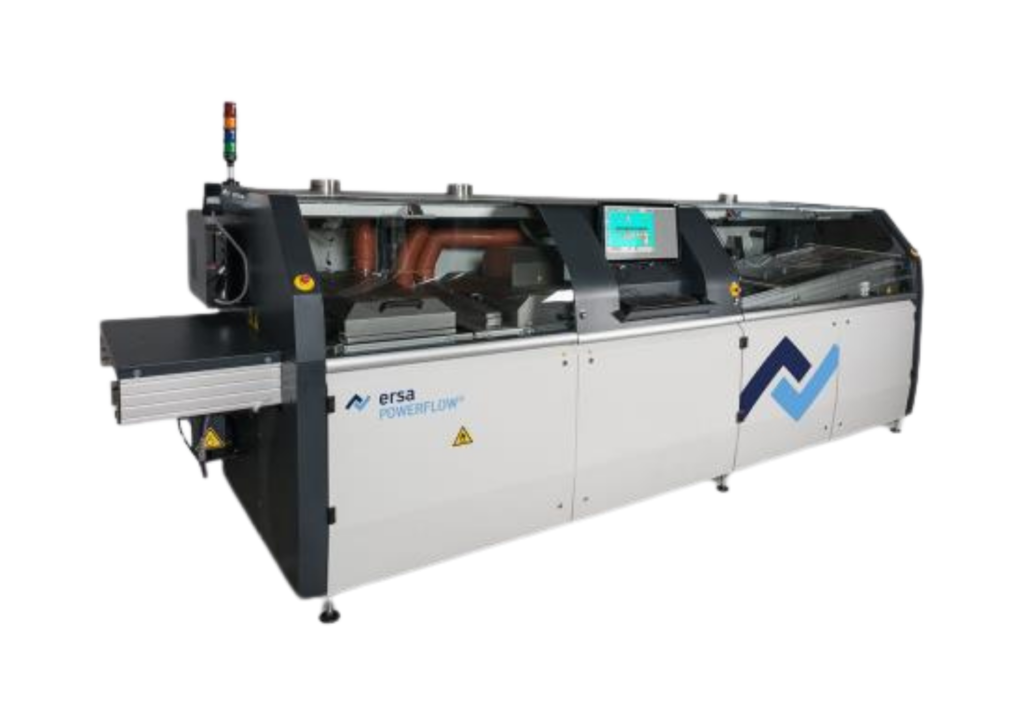
Instead of solder paste, molten solder is continuously pumped into a wave shape. The PCB passes over the solder wave, allowing exposed component leads to be soldered simultaneously.
Wave soldering remains a critical process in modern electronics manufacturing because many products still contain connectors, transformers, relays, and other through-hole components.
How Wave Soldering Works
Typical process flow:
Fluxing
Flux removes oxidation and improves solder wetting.
Preheating
Prepares PCB and components for soldering.
Solder Wave Contact
PCB contacts the molten solder wave, forming joints.
Cooling
Solder solidifies and creates permanent connections.
Advantages of Wave Soldering
Ideal for Through-Hole Components
Wave soldering efficiently handles:
- Connectors
- Transformers
- Power devices
- Relays
Strong Mechanical Connections
Through-hole solder joints typically provide greater mechanical strength.
Suitable for High-Power Applications
Widely used in industrial and power electronics where durability is critical.
Efficient DIP Production
Allows multiple through-hole components to be soldered simultaneously.
Lower Cost for THT Assembly
Compared with manual soldering, wave soldering significantly improves productivity.
Common Applications of Wave Soldering
Power Supplies
- Switching power supplies
- Industrial power modules
Industrial Control Systems
- PLC controllers
- Automation equipment
Automotive Electronics
- Power control boards
- Battery management systems
Large Connectors
- Communication interfaces
- Industrial connectors
Transformers and Relays
- High-current applications
- Power conversion systems
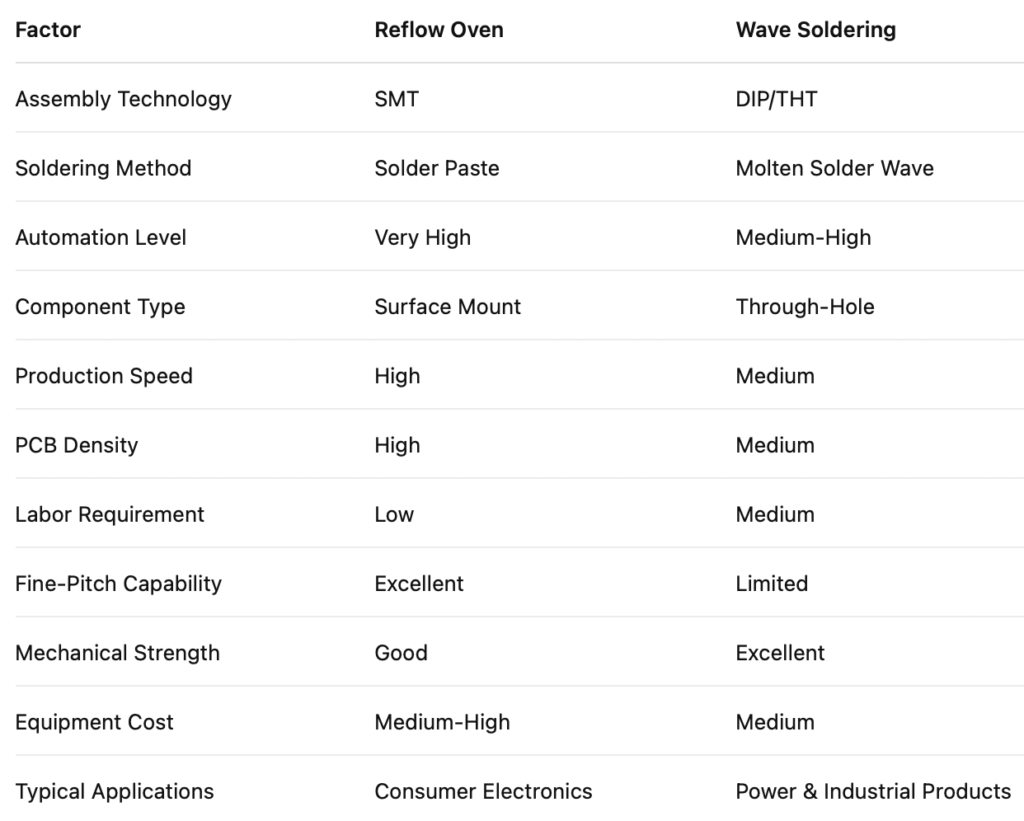
Which Process Produces Better Quality?
The answer depends on the application.
Reflow Soldering Advantages
Better Thermal Control
Modern reflow ovens provide precise temperature profiling.
Better Fine-Pitch Capability
Supports ultra-small and high-density components.
Better Repeatability
Ideal for mass production.
Wave Soldering Advantages
Stronger Mechanical Connections
Through-hole solder joints are physically stronger.
Better for Large Components
Suitable for heavy connectors and power devices.
Common Defects
Reflow Soldering Defects
Tombstoning
One end of a component lifts during soldering.
Voiding
Air pockets inside solder joints.
Solder Balls
Small solder particles around components.
Wave Soldering Defects
Bridging
Unwanted solder connections between pins.
Icicles
Sharp solder spikes extending from joints.
Incomplete Hole Filling
Insufficient solder penetration.
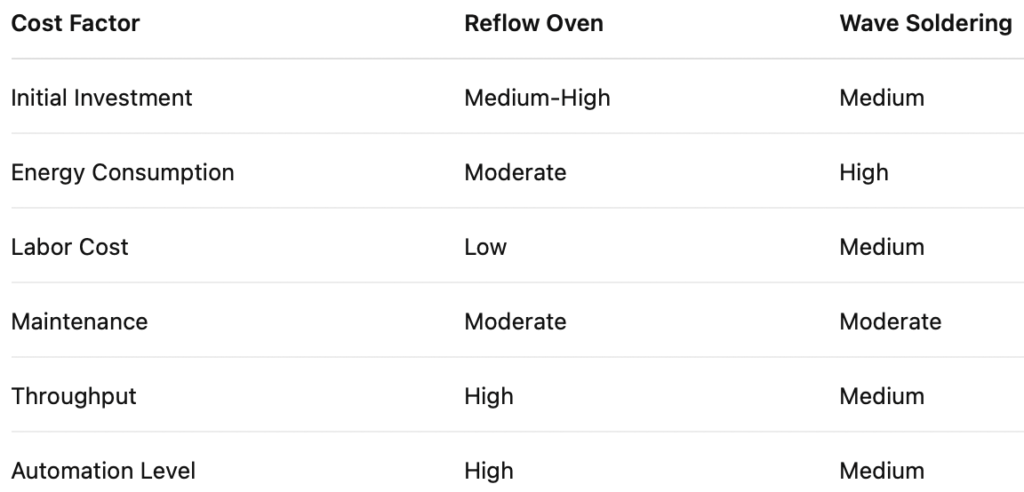
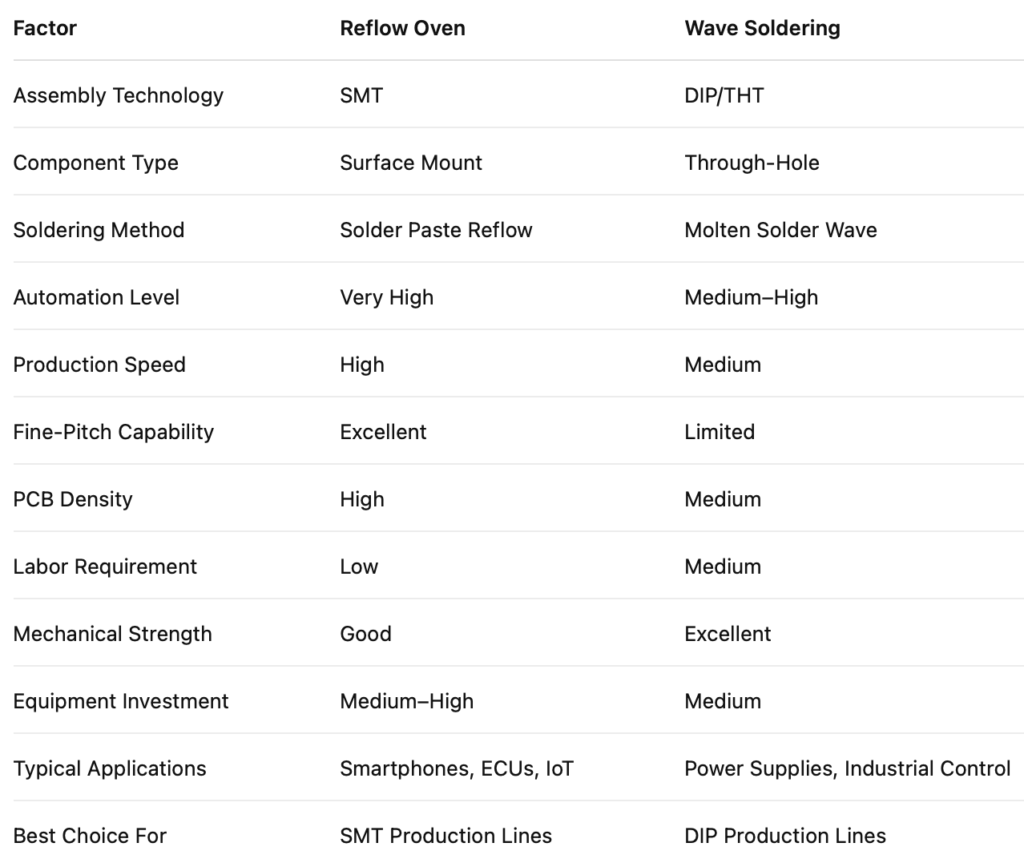
Cost Comparison: Reflow Oven vs Wave Soldering
For SMT-intensive products, reflow soldering typically delivers a better return on investment. For through-hole assemblies, wave soldering remains the most economical solution.
Can Reflow and Wave Soldering Be Used Together?
Absolutely.
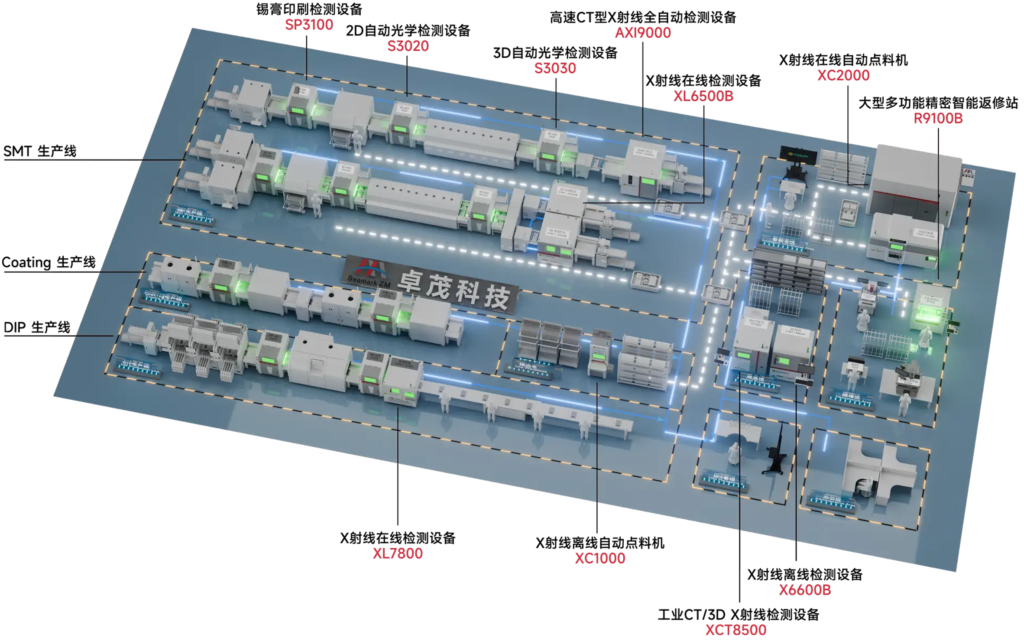
Most modern PCB assembly factories use both processes.
Typical hybrid production flow:
This hybrid approach combines the speed of SMT with the mechanical reliability of through-hole assembly.
How to Choose Between Reflow and Wave Soldering
Choose Reflow Soldering If:
- Your products use mostly SMT components
- You require high production volume
- PCB density is high
- Automation is a priority
Choose Wave Soldering If:
- Products contain many through-hole components
- Mechanical strength is critical
- You manufacture power electronics
- Connector reliability is essential
Choose Both If:
- Your PCB contains SMT and THT components
- You need maximum flexibility
- Product complexity is high
Common Mistakes When Choosing Soldering Equipment
Choosing Based Only on Price
Lower-cost equipment may increase long-term operating costs.
Ignoring Future Expansion
Plan equipment capacity based on future growth.
Underestimating Inspection Requirements
SPI and AOI systems significantly reduce defects.
Lack of Process Support
Equipment alone cannot guarantee quality without proper process optimization.
Industry-Specific Recommendations
Consumer Electronics
Recommended:
SMT + Reflow Oven
Automotive Electronics
Recommended:
Reflow Oven + SPI + AOI
Hybrid production where required.
LED Manufacturing
Recommended:
Cost-effective SMT line with reflow soldering.
Industrial Electronics
Recommended:
SMT + DIP mixed production.
Power Supply Manufacturing
Recommended:
Wave soldering for connectors and power devices.
Why Turnkey SMT and DIP Solutions Are Growing
More manufacturers are choosing turnkey production lines because they offer:
- Faster deployment
- Better equipment compatibility
- Reduced project risk
- Easier maintenance
- Simplified training
- Lower total ownership costs
Working with a single supplier also improves project management and technical support.
Frequently Asked Questions
Is reflow soldering better than wave soldering?
Neither is universally better. Reflow soldering is ideal for SMT assembly, while wave soldering is better for through-hole components.
Can wave soldering be used for SMT components?
Only in limited cases. Reflow soldering remains the preferred method for SMT assemblies.
Why do factories use both processes?
Many products contain both SMT and THT components, requiring a hybrid assembly process.
Which process is more expensive?
Reflow systems typically require higher initial investment but provide greater automation.
Which process creates stronger joints?
Wave soldering generally provides stronger mechanical connections.
Is nitrogen necessary for reflow ovens?
Not always, but nitrogen can improve solder quality for high-reliability applications.
What defects are common in wave soldering?
Bridging, icicles, and insufficient hole filling.
How do I choose the right process?
Evaluate component types, production volume, quality requirements, and budget.
Conclusion
Reflow soldering and wave soldering are both essential technologies in modern PCB assembly manufacturing.
Reflow soldering dominates SMT production because it offers high automation, excellent consistency, and support for miniature components. Wave soldering remains indispensable for through-hole assembly, providing strong mechanical connections and efficient DIP production.
For many manufacturers, the best solution is not choosing one over the other but integrating both into a complete SMT and DIP production line.
Carefully evaluating your products, production goals, and factory expansion plans will help ensure the right investment decision.
About FULIU Electronics
FULIU Electronics specializes in providing:
- Turnkey SMT and DIP production line solutions
- Reflow soldering systems
- Wave soldering machines
- AOI and SPI inspection solutions
- SMT factory planning and layout design
- Installation and operator training
- Global delivery and technical support
With extensive experience serving electronics manufacturers worldwide, FULIU Electronics helps customers build efficient, reliable, and cost-effective PCB assembly factories that support long-term business growth.