
In PCB assembly, through-hole components (THT) still play a critical role in many industries such as automotive electronics, industrial control systems, and power electronics.
While SMT handles surface-mount components efficiently, wave soldering machines remain essential for reliable soldering of through-hole components.
For overseas factory investors, electronics manufacturers, procurement managers, and engineers, selecting the right wave soldering machine is a key decision that directly affects product quality, production efficiency, and long-term operating costs.
In this guide, we will explain how wave soldering works, what factors influence machine selection, and how to choose the best solution based on your production needs.
What is a Wave Soldering Machine?
A wave soldering machine is an automated system used to solder through-hole electronic components onto printed circuit boards (PCB).
The process involves passing the PCB over a wave of molten solder, creating reliable electrical and mechanical connections.
Wave soldering is widely used for:
- through-hole components (THT)
- mixed technology PCBs (SMT + THT)
- connectors and large components
Why Wave Soldering is Still Important
Despite the growth of SMT technology, wave soldering remains essential because:
Reliable Soldering for THT Components
Through-hole components require strong mechanical connections, which wave soldering provides.
High Efficiency for Mass Production
Wave soldering can process large batches quickly, making it ideal for high-volume production.
Cost-Effective Process
Compared to manual soldering, wave soldering significantly reduces labor cost and improves consistency.
Essential for Mixed PCB Assembly
Many PCBs combine SMT and THT components, requiring both reflow and wave soldering processes.
How Wave Soldering Works
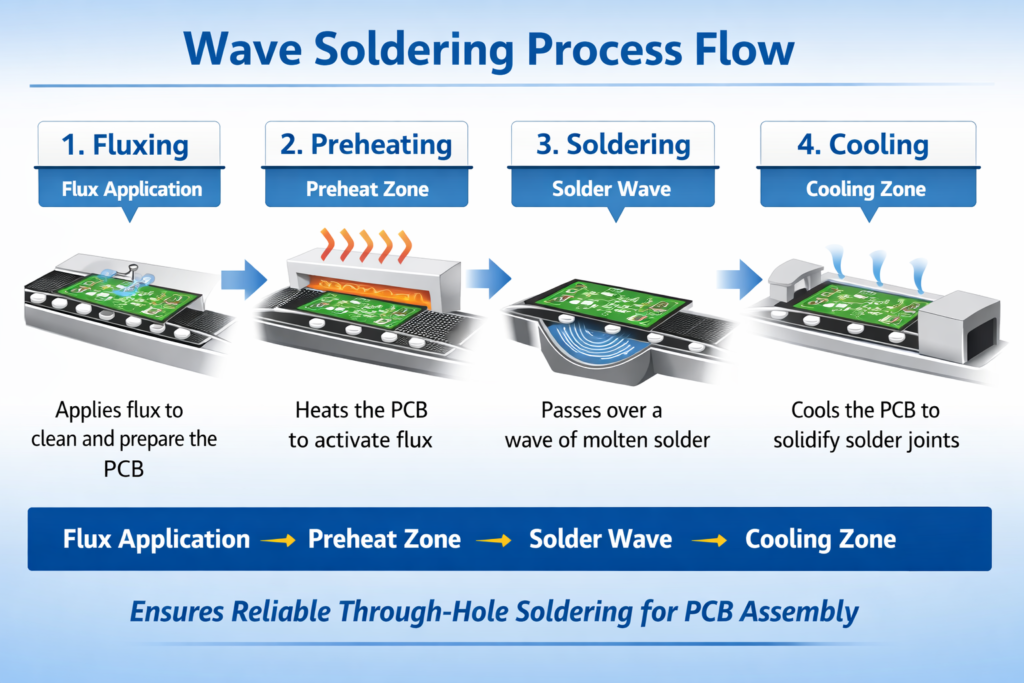
Step 1: Fluxing
Flux is applied to remove oxidation and improve solder adhesion.
Step 2: Preheating
The PCB is heated to activate flux and reduce thermal shock.
Step 3: Soldering (Wave Contact)
The PCB passes over a molten solder wave, forming solder joints.
Step 4: Cooling
The board cools down, solidifying the solder joints.
Key Components of a Wave Soldering Machine
- fluxing system
- preheating zone
- solder pot
- conveyor system
- cooling system
- control system
Advanced systems (such as those from leading manufacturers like JT / Jintuo) offer:
- precise temperature control
- energy-saving design
- stable wave formation
- automation integration
Types of Wave Soldering Machines
Single Wave Soldering
- simpler design
- suitable for basic applications
Dual Wave Soldering
- includes turbulent + laminar wave
- better for complex PCBs
- higher soldering quality
Selective Soldering (Alternative)
- used for high-precision or low-volume production
- higher cost but more flexible
How to Choose the Right Wave Soldering Machine
Production Volume
High-volume production requires:
- higher conveyor speed
- stable solder wave
- reliable automation
PCB Complexity
Complex boards require:
- dual wave system
- precise temperature control
- advanced fluxing system
Product Type
For example:
- automotive electronics → high reliability
- industrial boards → large components
- LED products → thermal control
Integration with SMT Line
Wave soldering must match:
- upstream SMT line speed
- PCB size compatibility
- conveyor system
Equipment Brand and Quality
Reliable manufacturers (such as JT/Jintuo) provide:
- stable performance
- long equipment lifespan
- strong technical support
Wave Soldering vs Reflow Soldering
Wave Soldering
- used for THT components
- molten solder wave process
Reflow Soldering
- used for SMT components
- controlled heating profile
Most modern factories use both processes in combination.
Recommended Wave Soldering & Reflow Solutions (JT Equipment)
High-Performance Wave Soldering Machines
For reliable through-hole soldering and mixed PCB assembly, we recommend advanced wave soldering solutions from JT (Jintuo), known for stability and energy efficiency.
JT Wave Soldering Machine (Dual Wave Type)
Key Features:
- Dual wave design (turbulent + laminar) for complex PCB soldering
- Precise temperature control for consistent solder quality
- Stable conveyor system for high-volume production
- Energy-saving heating system
Compatible with SMT production lines
Best For:
- Automotive electronics
- Industrial control boards
- Power electronics
- Mixed SMT + THT production
JT Lead-Free Wave Soldering Machine
Key Features:
- Designed for lead-free soldering processes
- High thermal efficiency and low oxidation rate
- Advanced fluxing system for better solder penetration
- Optimized for environmental compliance
Best For:
- Export-oriented factories
- High-quality PCB assembly
- ROHS-compliant production lines
Recommended Reflow Oven Solutions (JT)
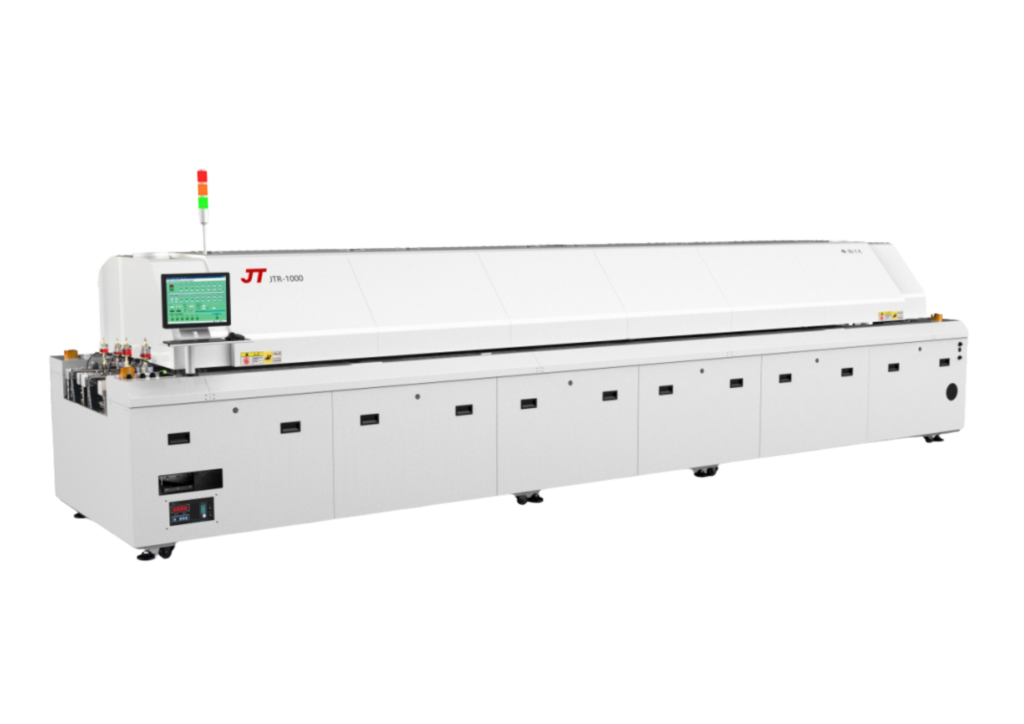
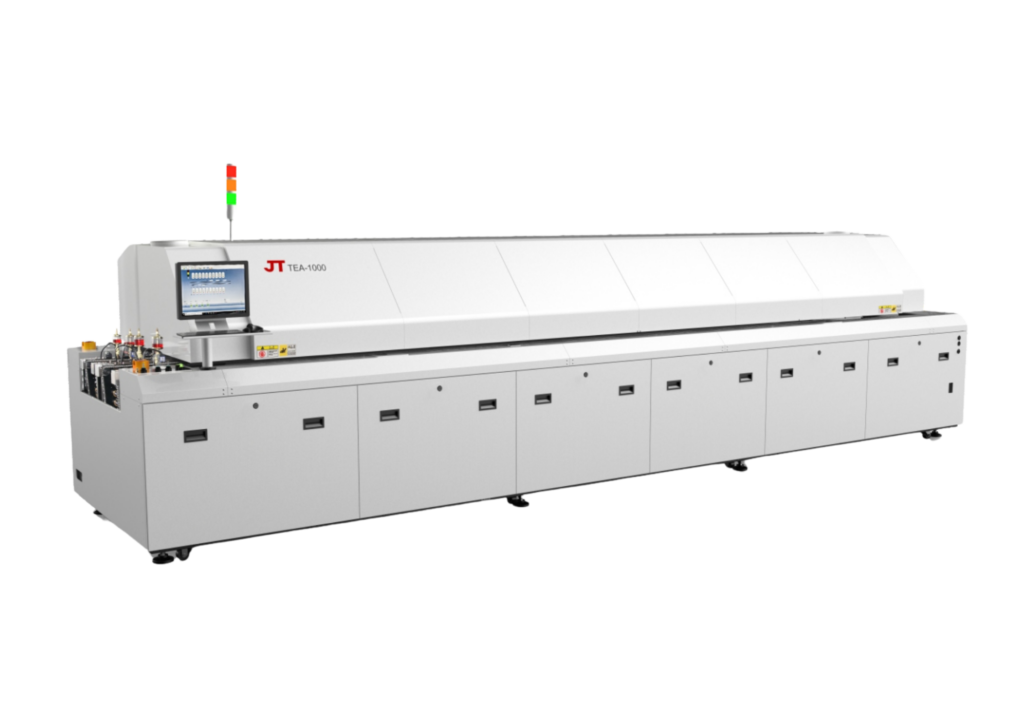
In mixed production lines, wave soldering is typically used together with reflow ovens for SMT components.
JT Multi-Zone Reflow Oven
Key Features:
* Multiple heating zones for precise temperature profiling
* Excellent temperature uniformity
* Low power consumption design
* Suitable for high-speed SMT lines
Best For:
* Consumer electronics
* LED production
* Automotive PCB assembly
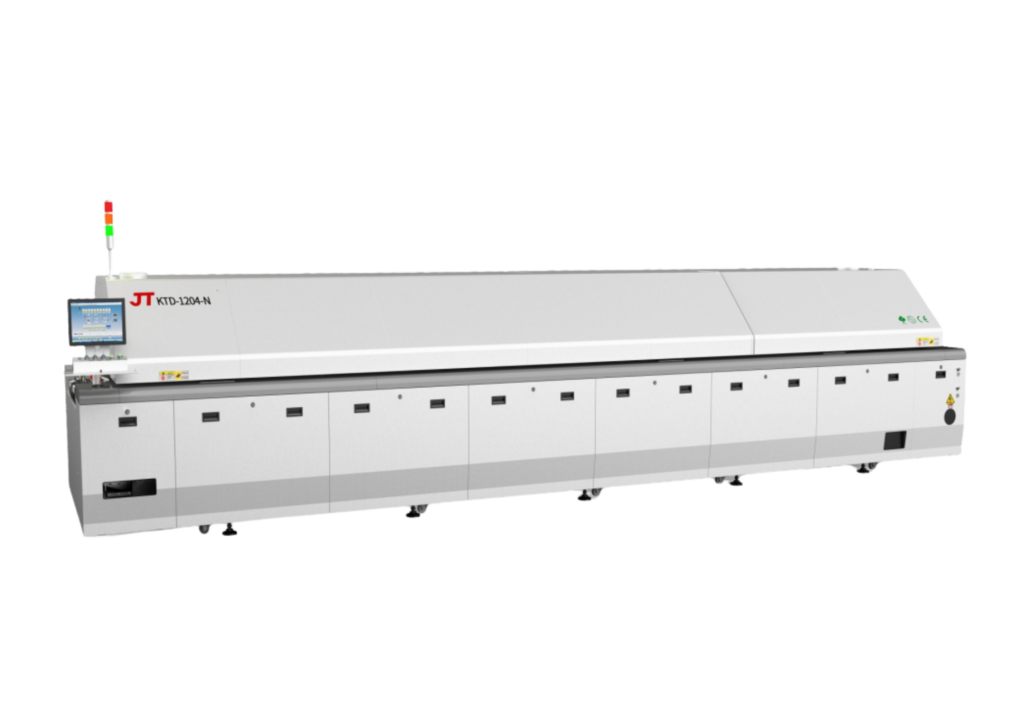
JT Nitrogen Reflow Oven (High-End Option)
Key Features:
* Nitrogen protection reduces oxidation
* Improves solder joint quality
* Ideal for fine-pitch and high-reliability products
Best For:
* Automotive electronics
* Medical devices
* High-end PCB assembly
Common Mistakes When Selecting Wave Soldering Equipment
Choosing Based on Price Only
Low-cost machines may lead to unstable solder quality.
Ignoring Production Requirements
Mismatch between machine capacity and production needs.
Poor Process Understanding
Incorrect setup leads to defects such as:
* solder bridges
* insufficient solder
* cold joints
Lack of Supplier Support
Without technical support, troubleshooting becomes difficult.
Practical Tips for Better Wave Soldering Performance
- optimize flux application
- control preheating temperature
- maintain stable solder wave height
- regularly clean solder pot
- train operators properly
Real-World Application Scenarios
Automotive Electronics
Requires high reliability and strict quality control.
Industrial Control Systems
Large components require strong solder joints.
Consumer Electronics
High-volume production demands efficient soldering.
LED Manufacturing
Thermal management is critical.
Why Choose Professional Wave Soldering Solutions
Working with an experienced SMT solution provider helps:
- ensure correct machine selection
- optimize production line layout
- reduce setup time
- improve production efficiency
Conclusion
Wave soldering machines remain a critical part of PCB assembly, especially for through-hole components and mixed production processes.
Choosing the right machine requires careful consideration of production needs, product type, and long-term operational goals.
A well-selected wave soldering solution can significantly improve product quality, reduce costs, and enhance overall manufacturing efficiency.
About FULIU Electronics
FULIU Electronics is a professional provider of SMT and PCBA production line solutions for global customers.
We specialize in:
- turnkey SMT production line solutions
- SMT equipment supply (including reflow ovens and wave soldering machines)
- factory layout planning
- installation and training support
- global delivery and after-sales service
With extensive experience in SMT manufacturing, we help customers select the most suitable equipment and build efficient, reliable production lines.
Contact us today to get a customized wave soldering solution for your factory.