
The global medical device industry is experiencing rapid growth, driven by increasing healthcare demand, aging populations, digital healthcare technologies, and advancements in diagnostic equipment. As medical devices become smarter and more connected, the complexity and reliability requirements of electronic assemblies continue to rise.
From patient monitoring systems and infusion pumps to CT scanners, MRI systems, ultrasound equipment, wearable healthcare devices, and surgical equipment, modern medical products rely heavily on high-quality printed circuit board assemblies (PCBAs).
Unlike consumer electronics, medical devices often operate in life-critical environments where equipment failure is unacceptable. As a result, manufacturers must implement highly reliable PCBA production lines that ensure precision, traceability, and regulatory compliance throughout the manufacturing process.
This guide explains how to build an efficient PCBA production line for medical devices, including SMT equipment selection, inspection systems, traceability requirements, and recommended ASMPT SIPLACE solutions.
Why Medical Devices Require Specialized PCBA Production Lines
High Reliability Requirements
Medical electronics must function accurately under demanding conditions, including:
- Continuous operation
- Critical patient-care environments
- Long product life cycles
- Strict reliability expectations
Even a minor assembly defect can lead to product failure, costly recalls, or patient safety risks. Therefore, medical PCB assembly requires significantly higher process control than consumer electronics manufacturing.
Regulatory Compliance
Medical electronics manufacturers must comply with internationally recognized quality standards such as:
- ISO 13485
- FDA Medical Device Regulations
- IPC-A-610 Class 3
- ISO 9001
These standards require manufacturers to establish robust quality control systems, documentation procedures, and full production traceability.
Full Production Traceability
Medical device manufacturers often require complete production records, including:
- PCB serial number tracking
- Component lot traceability
- Operator identification
- Process parameter recording
- Inspection records
- Quality data archiving
MES (Manufacturing Execution System) integration is increasingly becoming a standard requirement in modern medical electronics factories.
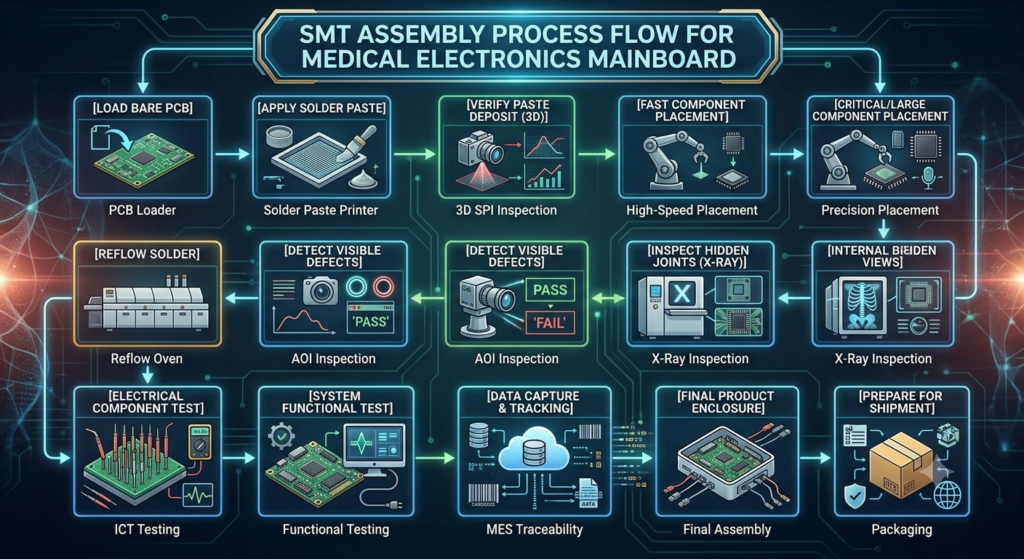
Typical Medical Device PCBA Production Process
A typical medical electronics SMT production workflow includes:
Recommended SMT Equipment for Medical Device Manufacturing
PCB Loader
Automatic PCB loaders improve production consistency while reducing manual handling risks.
Key benefits include:
- Automatic board loading
- ESD protection
- Reduced operator intervention
- Integration with traceability systems
For medical production environments, automated loading improves both efficiency and process control.
High-Precision Solder Paste Printer
Solder paste printing is one of the most critical processes in SMT manufacturing.
Medical device production typically requires:
- High printing accuracy
- Automatic stencil cleaning
- Closed-loop process control
- Real-time monitoring
Poor solder paste deposition can lead to defects that compromise product reliability.
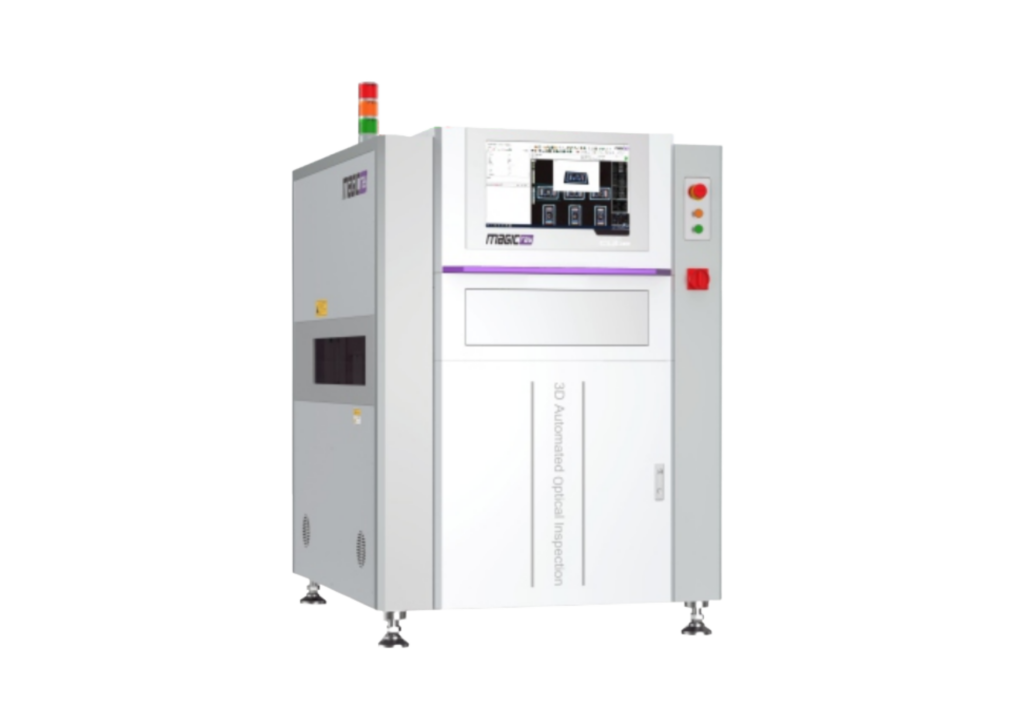
3D SPI Inspection System
SPI (Solder Paste Inspection) serves as the first quality gate in the SMT process.
Inspection Items
- Solder paste volume
- Paste height
- Paste area
- Offset printing
- Bridge risk detection
Benefits
- Early defect prevention
- Higher first-pass yield
- Reduced rework costs
- Improved printing consistency
Many medical manufacturers consider 3D SPI essential for maintaining Class 3 assembly quality.
High-Precision Pick and Place Machines
Medical PCB assemblies often contain highly complex components such as:
- BGA
- μBGA
- QFN
- CSP
- PoP packages
- Fine-pitch ICs
Accurate component placement directly affects solder joint reliability and long-term product performance.
ASMPT (Former Siemens SIPLACE) Solutions for Medical Electronics
ASMPT, formerly known as Siemens SIPLACE, is one of the most respected SMT equipment manufacturers worldwide.
Its solutions are widely used in medical electronics, automotive electronics, aerospace, and other high-reliability industries.
Why ASMPT Is Widely Used in Medical Electronics
High Placement Accuracy
ASMPT placement systems offer accuracy levels around:
±22 μm
This makes them ideal for:
- BGA packages
- QFN packages
- μBGA components
- PoP devices
- CT and MRI control boards
- High-density medical processors
Excellent Traceability Functions
Medical manufacturing requires extensive documentation and quality records.
ASMPT platforms support:
- MES integration
- Component traceability
- Barcode tracking
- Operator management
- Production reporting
- Quality analytics
These features help manufacturers comply with ISO 13485 and FDA requirements.
Long-Term Production Stability
Medical factories often run 24/7 production schedules.
ASMPT equipment provides:
- High uptime
- Stable accuracy
- Low maintenance requirements
- Long equipment lifespan
This significantly reduces production interruptions.
Recommended ASMPT Models
SIPLACE SX Series
Ideal for:
- High-volume medical products
- Monitoring equipment
- Medical consumables electronics
Advantages:
- High throughput
- Reliable operation
- Excellent productivity
SIPLACE TX Series
Ideal for:
- High-mix manufacturing
- Frequent product changes
- Flexible production environments
Advantages:
- Fast changeovers
- Flexible configuration
- High placement accuracy
SIPLACE X Series
Designed for:
- CT scanners
- MRI control boards
- Imaging systems
- High-end medical electronics
Advantages:
- Ultra-high precision
- Advanced software platform
- Full traceability support
Reflow Oven Requirements for Medical Electronic
Medical assemblies often require optimized thermal processing.
Key requirements include:
- Multi-zone temperature control
- Nitrogen reflow capability
- Precise thermal profiling
Benefits include:
- Reduced voiding
- Improved solder joint reliability
- Better long-term durability
- Consistent process quality
AOI Inspection System
AOI (Automatic Optical Inspection) verifies assembly quality after reflow soldering.
Common Defects Detected
- Missing components
- Wrong components
- Polarity errors
- Tombstoning
- Solder bridges
- Component shifts
Inline AOI systems are commonly used in medical production lines to provide 100% inspection coverage.
X-Ray Inspection System
Medical electronics frequently contain hidden solder joints that cannot be inspected visually.
Inspection Targets
- BGA solder joints
- Bottom-terminated components
- Voids
- Head-in-pillow defects
X-Ray inspection is especially important for:
- CT systems
- MRI controllers
- Life-support equipment
- Diagnostic systems
ICT and Functional Testing
ICT Testing
In-Circuit Testing verifies:
- Open circuits
- Short circuits
- Component values
- Electrical connectivity
Functional Testing
Functional testing confirms:
- Product performance
- Operating behavior
- Real-world functionality
These testing stages help ensure that every medical device meets operational requirements before shipment.
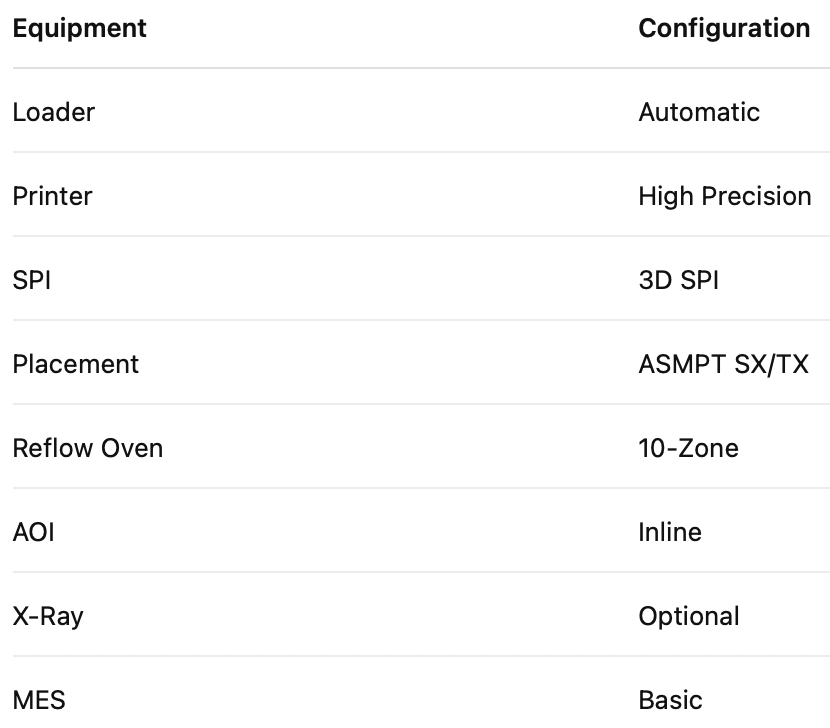
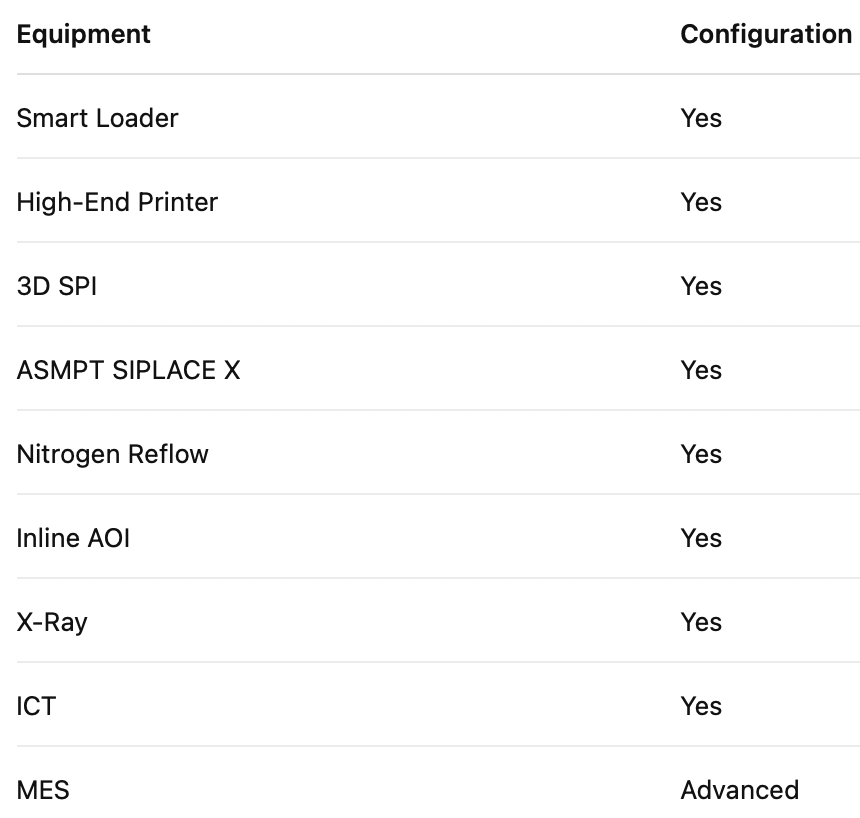
Recommended SMT Line Configurations for Medical Electronics
Standard Medical SMT Line
Suitable for:
- Monitoring devices
- Infusion pumps
- Portable healthcare products
Production Capacity:
30,000–60,000 CPH
Advanced Medical SMT Line
Suitable for:
- CT systems
- MRI controllers
- Diagnostic equipment
Production Capacity:
60,000–120,000 CPH
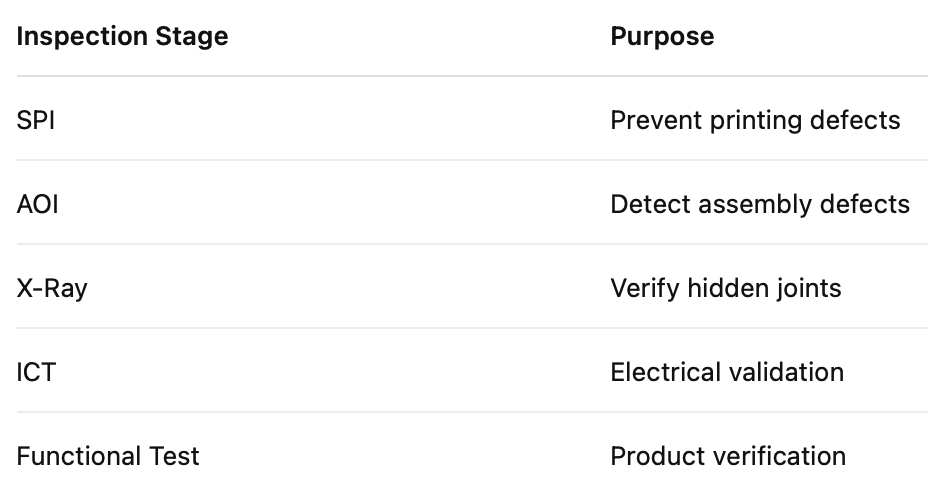
Quality Control Requirements in Medical Electronics Manufacturing
Medical manufacturers typically implement multiple quality checkpoints.
This layered approach minimizes defects and improves product reliability.
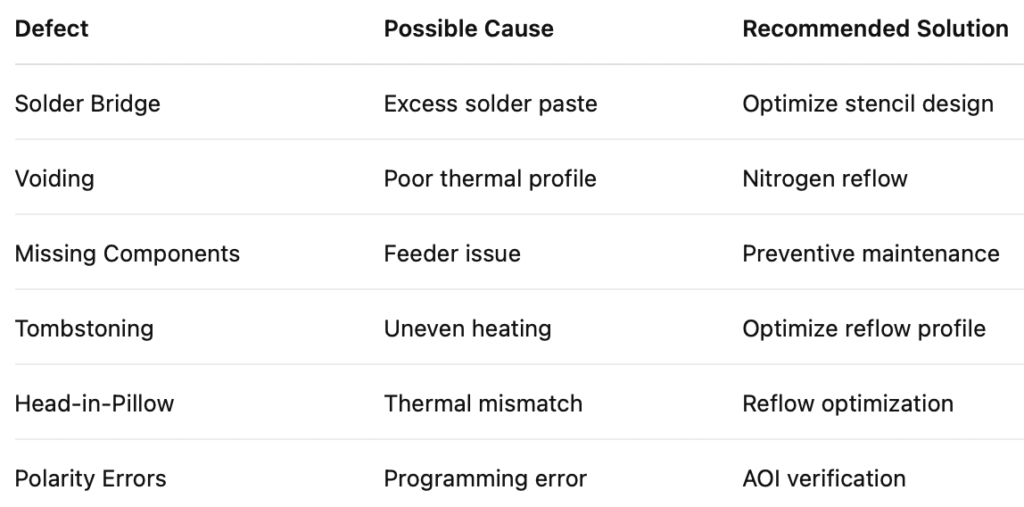
Common Medical PCBA Defects and Solutions
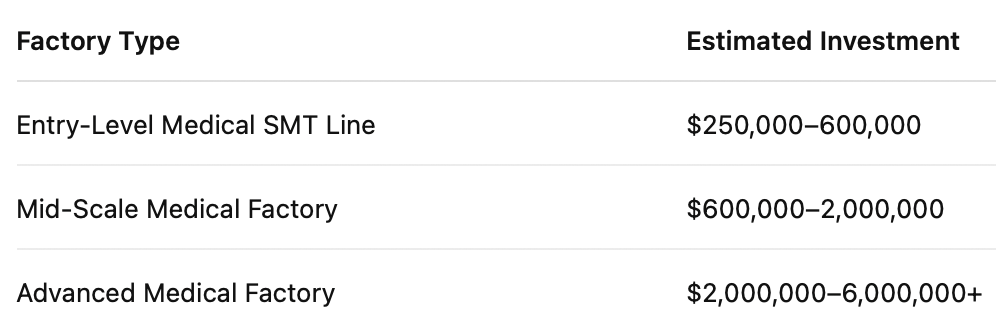
Medical Device PCBA Production Line Cost Analysis
Investment considerations include:
- SMT equipment
- AOI/SPI/X-Ray systems
- MES implementation
- Validation processes
- Cleanroom requirements
- ESD infrastructure
Smart Factory Trends in Medical Electronics Manufacturing
Modern medical manufacturers are increasingly adopting:
- Industry 4.0 technologies
- MES integration
- Digital traceability
- AI-assisted inspection
- Predictive maintenance
- Real-time quality monitoring
These technologies improve process control while supporting compliance and traceability requirements.
Why Turnkey SMT Solutions Are Ideal for Medical Device Manufacturers
Turnkey SMT solutions offer several advantages:
- Faster factory deployment
- Simplified validation
- Better equipment compatibility
- Single-source responsibility
- Reduced project risk
- Easier maintenance and training
For medical manufacturers, turnkey projects can significantly shorten time-to-production while ensuring system compatibility.
Frequently Asked Questions
What is the best SMT line for medical devices?
A medical SMT line should include 3D SPI, high-precision placement machines, AOI, X-Ray inspection, ICT testing, and MES traceability.
Why is traceability important in medical PCB assembly?
Traceability helps manufacturers comply with ISO 13485 and FDA regulations while improving quality management and recall control.
Is X-Ray inspection necessary?
For BGA-rich assemblies and critical medical products, X-Ray inspection is highly recommended.
Why are ASMPT SIPLACE machines popular in medical manufacturing?
They provide exceptional placement accuracy, traceability functions, MES integration, and long-term production stability.
How much does a medical SMT line cost?
Depending on production scale and inspection requirements, investment typically ranges from $250,000 to over $6 million.
What placement accuracy is required?
Many medical applications require accuracy better than ±30 μm, especially for fine-pitch and BGA components.
Can medical SMT lines integrate with MES systems?
Yes. MES integration is increasingly becoming a standard requirement for medical electronics manufacturing.
What quality standard is commonly used?
IPC-A-610 Class 3 is widely adopted for high-reliability medical electronics assemblies.
Conclusion
Medical device manufacturing demands significantly higher quality standards than conventional electronics production. To achieve the reliability, traceability, and compliance required by modern healthcare products, manufacturers must invest in advanced PCBA production lines that combine precision equipment, intelligent inspection systems, and comprehensive quality management.
Solutions built around ASMPT SIPLACE placement platforms, 3D SPI inspection, AOI, X-Ray systems, ICT testing, and MES integration provide the foundation for high-performance medical electronics manufacturing.
Whether you are producing patient monitoring devices, diagnostic equipment, CT systems, MRI controllers, or wearable healthcare products, selecting the right SMT production line is essential for ensuring product quality, regulatory compliance, and long-term return on investment.
About FULIU Electronics
FULIU Electronics specializes in:
- Turnkey SMT production line solutions
- Medical device PCBA production lines
- ASMPT SMT equipment integration
- AOI, SPI, and X-Ray inspection systems
- MES and traceability integration
- Factory layout planning
- Installation and training
- Global delivery and technical support
With extensive experience in medical electronics manufacturing projects, FULIU Electronics helps customers build reliable, compliant, and high-efficiency PCB assembly factories worldwide.