
Building an SMT (Surface Mount Technology) production line is one of the most important investments for electronics manufacturers. Whether you are establishing a new PCB assembly factory, expanding production capacity, or upgrading existing equipment, understanding SMT line costs is essential for making informed decisions.
Many investors underestimate the total investment required for an SMT production line. While equipment cost is often the primary concern, factors such as factory infrastructure, installation, training, maintenance, and automation requirements can significantly impact the overall budget.
Industries including consumer electronics, automotive electronics, LED lighting, industrial control systems, medical devices, and telecommunications all rely on SMT manufacturing. However, the cost of an SMT production line can vary dramatically depending on production volume, product complexity, and automation level.
In this guide, we will break down the cost of an SMT production line, explain the factors affecting investment, and help you determine the most suitable configuration for your manufacturing goals.
What Is an SMT Production Line?
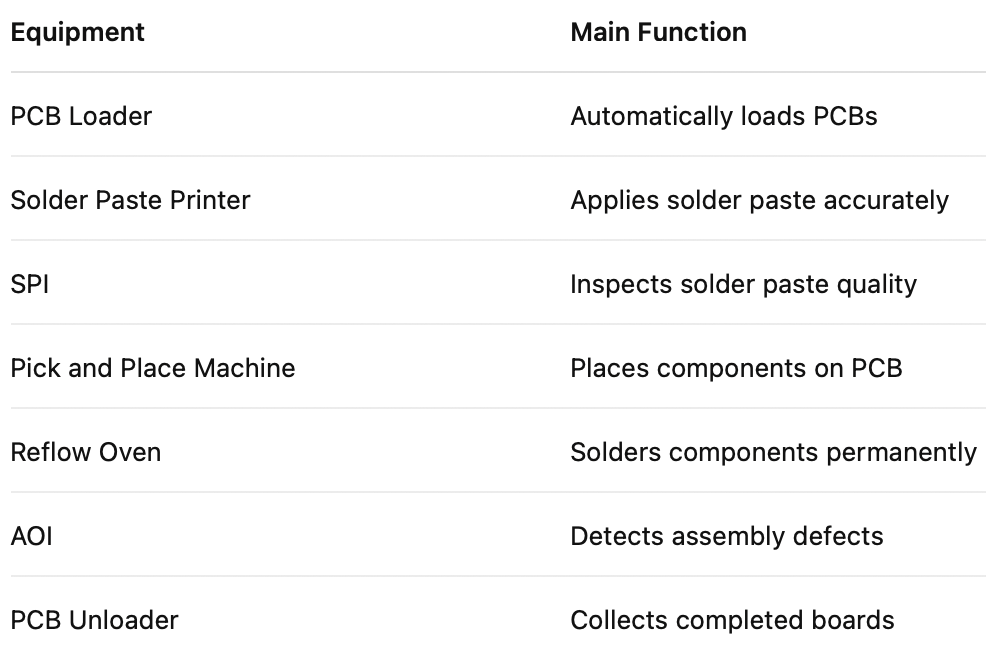
An SMT production line is a highly automated manufacturing system used to assemble electronic components onto printed circuit boards (PCBs).
A typical SMT process includes:
PCB Loader
↓
Solder Paste Printer
↓
SPI (Solder Paste Inspection)
↓
Pick and Place Machine
↓
Reflow Oven
↓
AOI (Automatic Optical Inspection)
↓
PCB Unloader
Each machine performs a critical function in ensuring product quality, production efficiency, and manufacturing consistency.
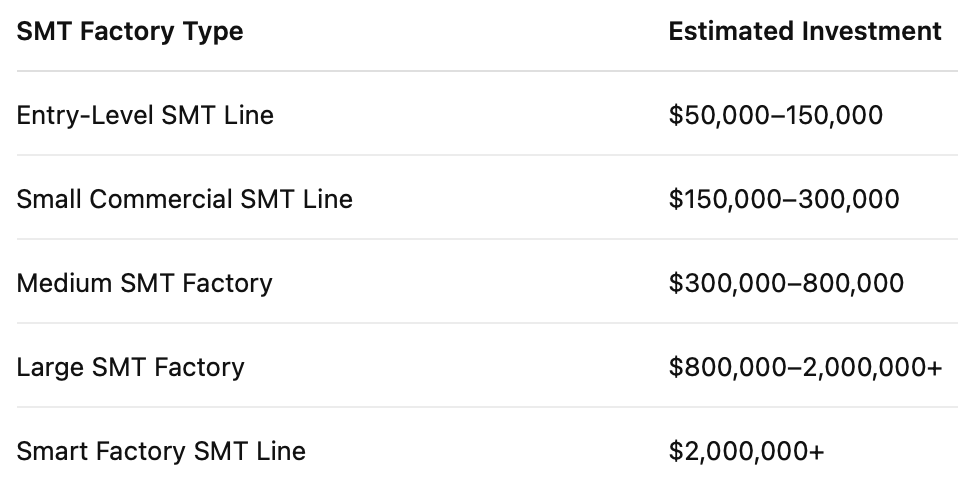
How Much Does an SMT Line Cost in 2026?
The cost of a complete SMT production line depends largely on production requirements and equipment configuration.
Actual investment varies based on:
- Production capacity
- Product complexity
- Automation level
- Equipment brand
- New vs used equipment
- Inspection requirements
Actual investment varies based on:
- Production capacity
- Product complexity
- Automation level
- Equipment brand
- Inspection requirements
Solder Paste Printer
Typical Price Range: $5,000–60,000
The printer is responsible for applying solder paste to PCB pads.
Semi-Automatic Printer
- Lower investment
- Suitable for small production volumes
Fully Automatic Printer
- Higher accuracy
- Better repeatability
- Higher throughput
SPI Inspection System
Typical Price Range: $15,000–80,000
SPI systems inspect solder paste volume, height, and position before component placement.
Benefits include:
- Early defect detection
- Reduced rework costs
- Improved production yield
Many manufacturers recover SPI investment through reduced defect rates within the first year.
Pick and Place Machine
Typical Price Range: $20,000–500,000+
This is usually the most expensive machine in an SMT production line.
Entry-Level Mounter
Suitable for:
- Small factories
- Prototype production
High-Speed Chip Shooter
Suitable for:
- Large-volume manufacturing
- Consumer electronics
Multifunction Placement Machine
Suitable for:
- ICs
- Connectors
- BGA packages
Smart High-End Mounter
Suitable for:
- Automotive electronics
- Industry 4.0 factories
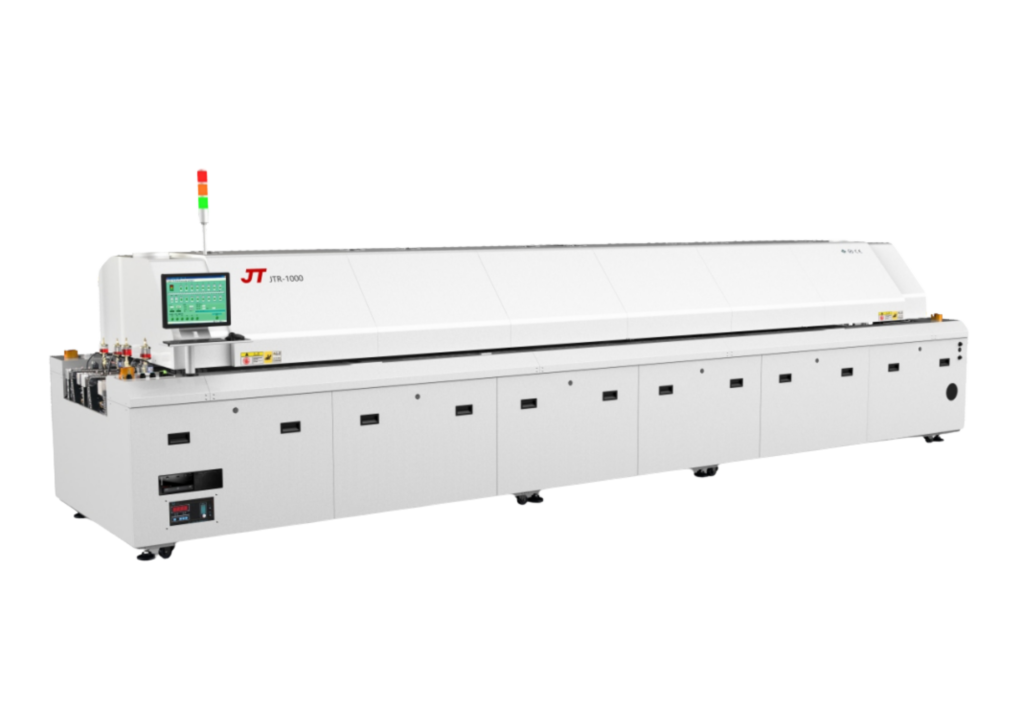
Reflow Oven
Typical Price Range: $10,000–100,000+
Reflow ovens create reliable solder joints through controlled heating and cooling.
Factors affecting cost:
- Number of heating zones
- Nitrogen capability
- Energy efficiency
- Conveyor system design
AOI Inspection System
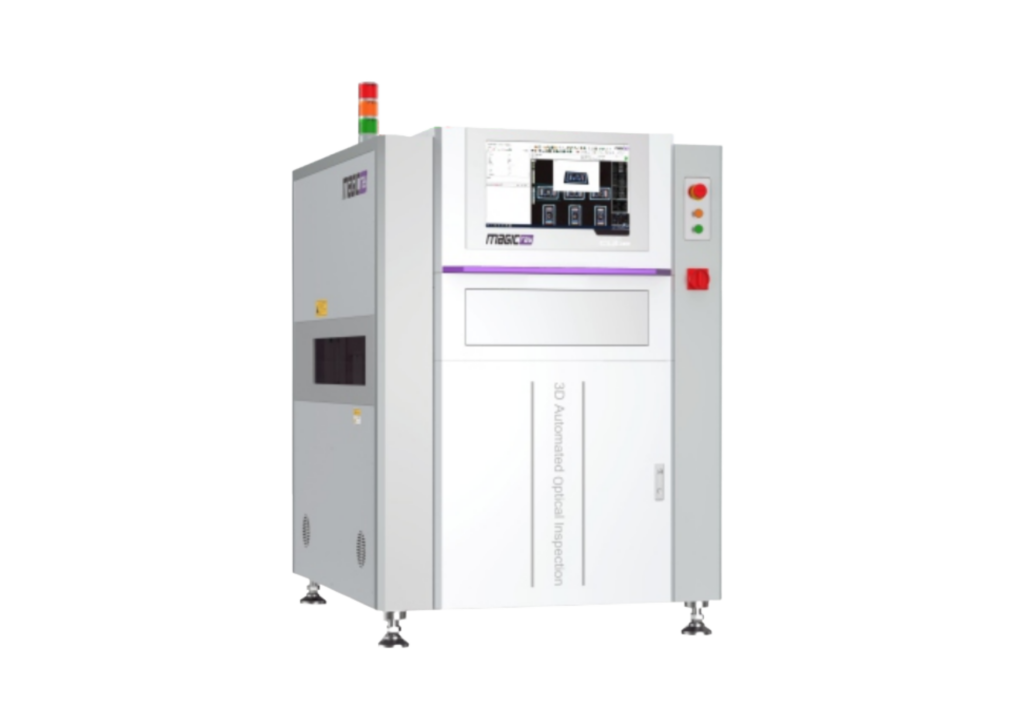
Typical Price Range: $10,000–120,000+
AOI systems inspect finished assemblies for defects such as:
- Missing components
- Misalignment
- Polarity errors
- Solder bridges
Offline AOI
Lower investment
Suitable for:
- Small factories
- Sampling inspection
Inline AOI
Higher investment
Suitable for:
- High-volume manufacturing
- Automotive electronics
New vs Used SMT Equipment Cost
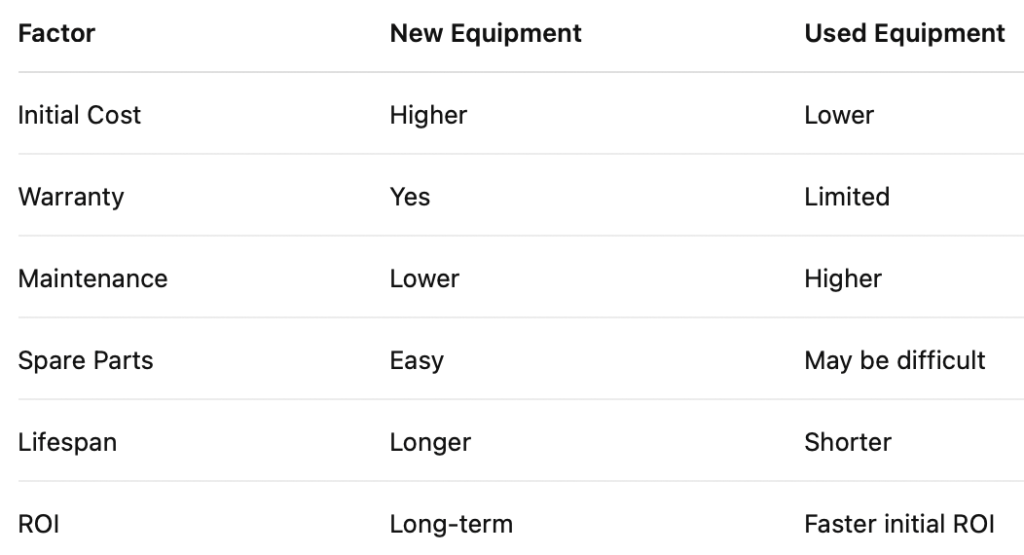
Many investors must decide between purchasing new or used SMT equipment.
When to Choose New Equipment
- Automotive electronics
- Medical devices
- High-volume production
- Long-term expansion plans
When to Choose Used Equipment
- Startup factories
- Budget-sensitive projects
- Prototype manufacturing
SMT Line Cost by Production Scale
Small SMT Factory
Capacity:
10,000–30,000 CPH
Investment:
$50,000–150,000
Suitable for:
- Startups
- R&D centers
- Prototype production
Medium SMT Factory
Capacity:
30,000–80,000 CPH
Investment:
$150,000–500,000
Suitable for:
- Consumer electronics
- LED manufacturing
- Small EMS providers
Large SMT Factory
Capacity:
100,000+ CPH
Investment:
$500,000–2,000,000+
Suitable for:
- Automotive electronics
- Large EMS companies
- Contract manufacturers
Hidden Costs Many Investors Ignore
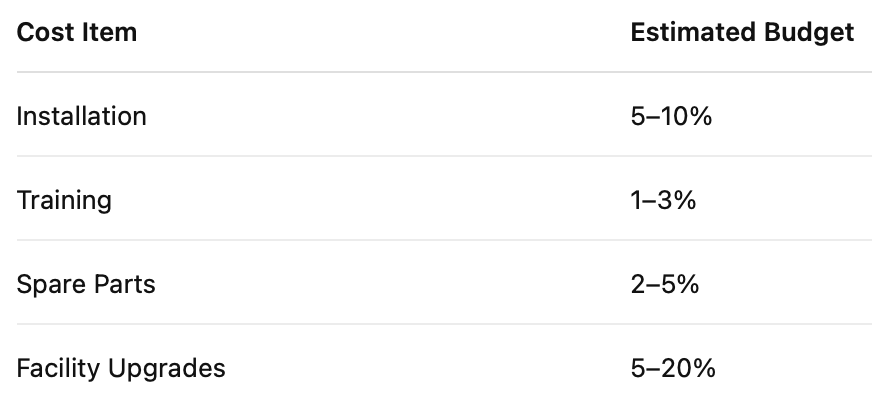
Equipment cost is only part of the total investment.
Other hidden costs include:
- Factory renovation
- ESD flooring
- Air compressors
- Nitrogen generators
- HVAC systems
- Power upgrades
- Maintenance contracts
Ignoring these expenses can cause significant budget overruns.
Factors That Affect SMT Line Cost
Production Volume
Higher throughput requires:
- Faster placement machines
- Additional inspection systems
- More automation
Product Complexity
Products using:
- 01005 components
- BGA packages
- QFN packages
require higher-precision equipment.
Automation Level
Smart factories typically invest more in:
- MES systems
- Traceability
- Data collection
- Production monitoring
Inspection Requirements
Industries such as automotive electronics often require:
- SPI
- AOI
- X-ray inspection
which increases investment but improves quality.
Cost-Saving Strategies for SMT Factory Investors
Start with Core Equipment
Invest first in:
- Printer
- Placement machine
- Reflow oven
Add inspection systems as production grows.
Choose Scalable Configurations
Select equipment that allows future expansion.
Mix New and Used Equipment
A practical strategy is:
New printer
New placement machine
Used peripheral equipment
Optimize Factory Layout
Efficient layouts reduce labor and material handling costs.
Invest in Inspection Systems Early
Preventing defects is usually cheaper than repairing them.
Work with a Reliable Turnkey Supplier
Turnkey providers reduce project risks and simplify implementation.
SMT Line ROI Analysis
The return on investment depends on several factors.
Labor Savings
Automation reduces operator requirements.
Increased Capacity
Higher throughput increases production output.
Better Yield
Inspection systems reduce defects and rework.
Faster Delivery
Shorter lead times improve customer satisfaction.
Example ROI Scenario
A medium-sized SMT line costing $350,000 may save:
- Labor costs
- Rework expenses
- Production downtime
allowing payback within 2–4 years depending on utilization.
Common Budgeting Mistakes
Buying Oversized Equipment
Many factories purchase more capacity than needed.
Ignoring Future Expansion
Equipment should support future growth.
Choosing Lowest-Price Suppliers
Low initial prices often result in higher maintenance costs.
Underestimating Maintenance
Spare parts and service support are critical.
Skipping SPI or AOI
Inspection systems often save more money than they cost.
Industry-Specific SMT Investment Recommendations
Consumer Electronics
Recommended:
High-speed SMT lines
Inline AOI
Automotive Electronics
Recommended:
- High-precision placement
- SPI
- AOI
- Traceability systems
LED Manufacturing
Recommended:
- Cost-effective medium-speed lines
- Standard AOI
Industrial Electronics
Recommended:
Flexible mixed-model production lines
Multifunction placement machines
Why Turnkey SMT Solutions Can Reduce Total Cost
Turnkey SMT solutions provide:
- Single supplier responsibility
- Faster project implementation
- Better equipment compatibility
- Easier maintenance
- Lower project risk
Instead of coordinating multiple vendors, manufacturers can work with one experienced supplier throughout the project lifecycle.
This often results in lower total ownership costs and faster ROI.
Frequently Asked Questions
How much does a complete SMT line cost?
Most SMT lines range from $50,000 to over $2 million depending on capacity and automation level.
What is the most expensive SMT machine?
The pick and place machine is typically the highest-cost equipment.
Is used SMT equipment worth buying?
Yes, for startups and budget-conscious projects, provided the equipment is properly inspected.
How many operators are needed?
A standard SMT line typically requires 2–6 operators depending on automation.
How much factory space is required?
Most complete SMT lines require 100–500 square meters or more.
Can I expand my SMT line later?
Yes. Many SMT lines are designed with future expansion in mind.
Is SPI necessary?
For high-quality manufacturing, SPI is strongly recommended.
How long does it take to recover the investment?
Most factories achieve ROI within 2–5 years.
Conclusion
The cost of an SMT production line can vary significantly, ranging from tens of thousands to several million dollars. Equipment configuration, production volume, automation level, and inspection requirements all influence the final investment.
Successful SMT factory planning requires more than simply purchasing equipment. Investors must consider hidden costs, future expansion, maintenance requirements, and long-term ROI.
For most manufacturers, working with an experienced turnkey SMT solution provider is the most effective way to reduce risks and maximize investment returns.
Why Choose FULIU Electronics?
FULIU Electronics is a professional provider of turnkey SMT production line solutions for manufacturers worldwide.
Our services include:
- Turnkey SMT production line solutions
- New and used SMT equipment supply
- SMT factory planning
- Production line layout design
- SPI and AOI inspection solutions
- Reflow soldering systems
- Installation and training support
- Global delivery and after-sales service
With extensive experience in PCB assembly factory setup projects, we help customers build efficient, reliable, and profitable SMT manufacturing operations tailored to their production goals and budget.