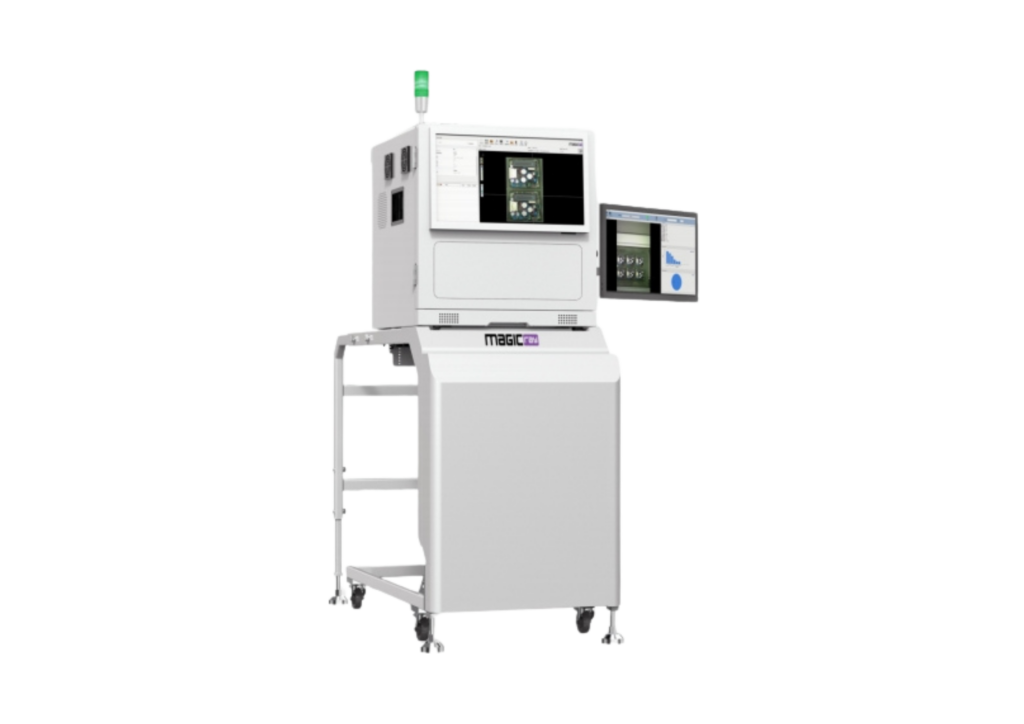
A must-have inspection technology for any modern SMT production line in 2026. In modern PCB assembly, product quality is more critical than ever. As electronic devices become smaller and more complex, even a minor defect can lead to product failure, customer complaints, or costly recalls.
This is why Automatic Optical Inspection (AOI) has become an essential part of SMT production lines.
For overseas factory investors, electronics manufacturers, procurement managers, and engineers, understanding the importance of AOI is crucial when building or upgrading an SMT production line.
In this guide, we will explain what AOI is, how it works, and why it plays a key role in ensuring PCB assembly quality and production efficiency.
What is AOI in PCB Assembly?
AOI (Automatic Optical Inspection) is a quality control technology that uses high-resolution cameras and image processing software to inspect PCB assemblies for defects.
It is commonly used in SMT production lines to detect issues such as:
missing components
misaligned components
wrong components
solder bridges
insufficient or excessive solder
polarity errors
AOI helps ensure that every PCB meets quality standards before moving to the next stage.
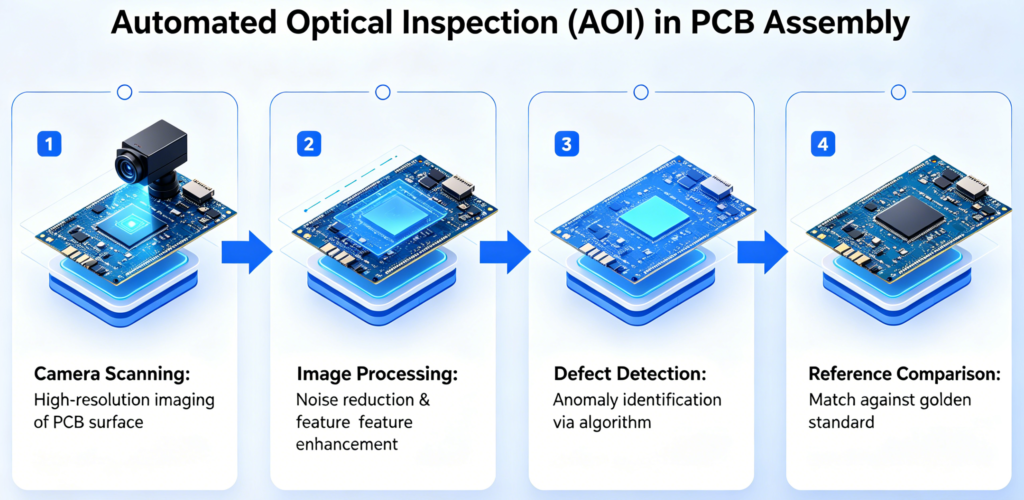
AOI-inspection-principle-diagram-scaled
Why AOI is Important in PCB Assembly
Early Detection of Defects
AOI can identify defects immediately after soldering or even earlier in the process.
Early detection prevents defective boards from continuing down the production line.
Reduces Production Costs
Detecting defects early reduces:
rework costs
scrap rate
labor cost
Fixing errors later in production is significantly more expensive.
Improves Product Quality
AOI ensures consistent inspection standards, eliminating human error.
This leads to higher product reliability and customer satisfaction.
Supports High-Speed Production
Manual inspection cannot keep up with modern SMT production speeds.
AOI systems can inspect thousands of components per second.
Enhances Process Control
AOI data can be used to:
analyze defect trends
optimize process parameters
improve overall production efficiency
How AOI Works in SMT Production
Step 1: Image Capture
High-resolution cameras capture images of the PCB.
Step 2: Image Comparison
The system compares captured images with a reference (golden board or CAD data).
Step 3: Defect Detection
Software analyzes differences and identifies potential defects.
Step 4: Classification and Reporting
Defects are categorized and reported to operators.
Step 5: Feedback Loop
Data can be fed back to upstream processes (e.g., printer or pick and place machine).
Types of AOI Systems
2D AOI
uses 2D images
lower cost
suitable for simple PCB assemblies
3D AOI
measures height and volume
more accurate
better for complex PCBs and fine-pitch components
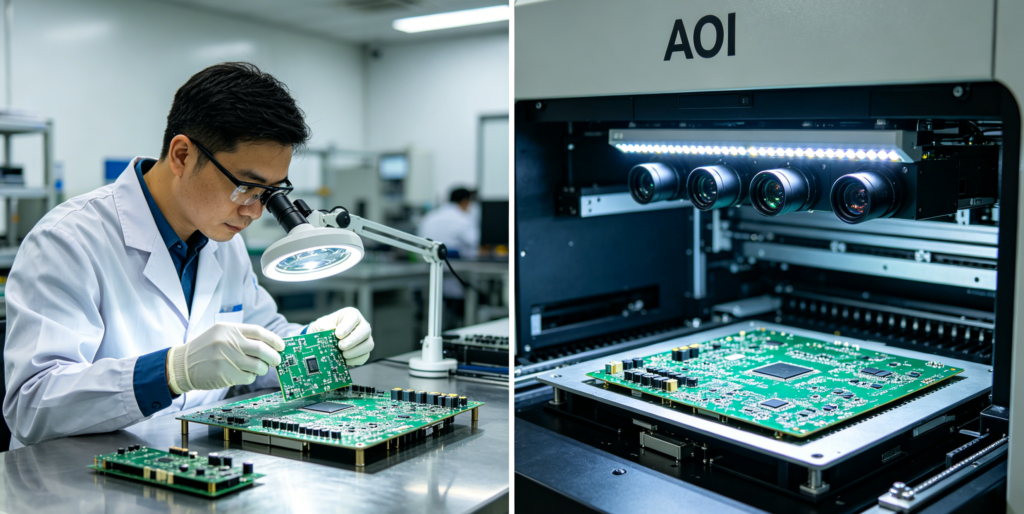
human-vs-machine-vision-inspection-scaled
AOI vs SPI vs Manual Inspection
AOI
detects component placement and soldering defects
used after placement or reflow
SPI (Solder Paste Inspection)
checks solder paste before placement
prevents defects early
Manual Inspection
flexible but inconsistent
depends on operator experience
Best practice: combine AOI + SPI for full quality control.
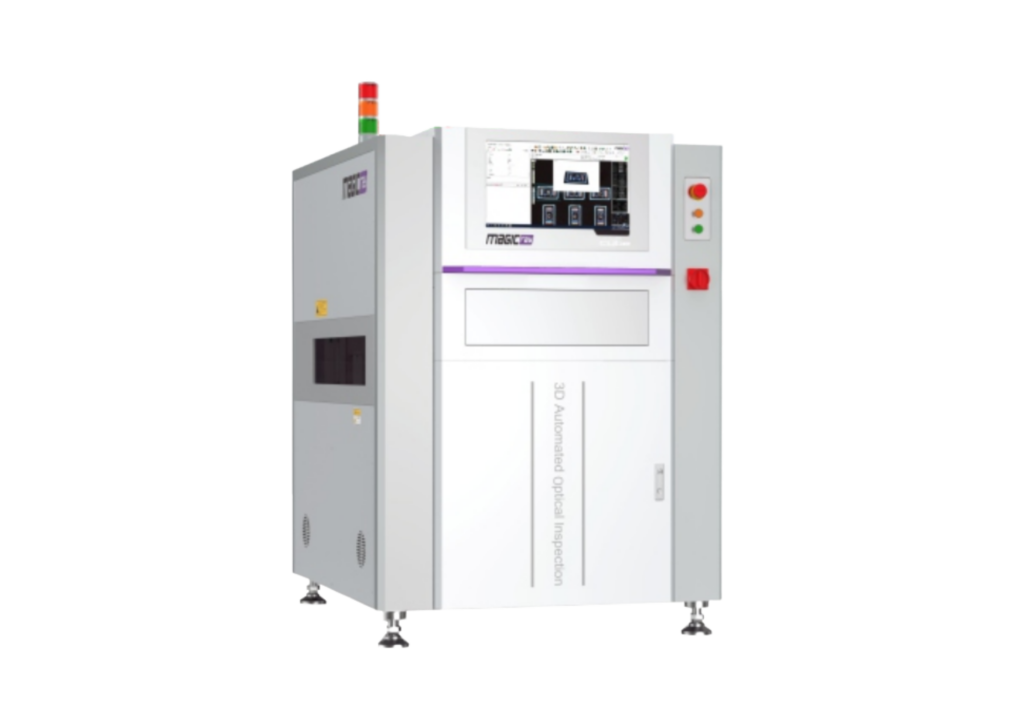
MagicRay-AOI-Inspection-Cube-Series
Where to Place AOI in the SMT Line
Pre-Reflow AOI
checks component placement before soldering
helps correct errors early
Post-Reflow AOI
inspects final soldering quality
most commonly used
Inline vs Offline AOI
Inline AOI:
integrated into production line
real-time inspection
Offline AOI:
used for sampling or troubleshooting
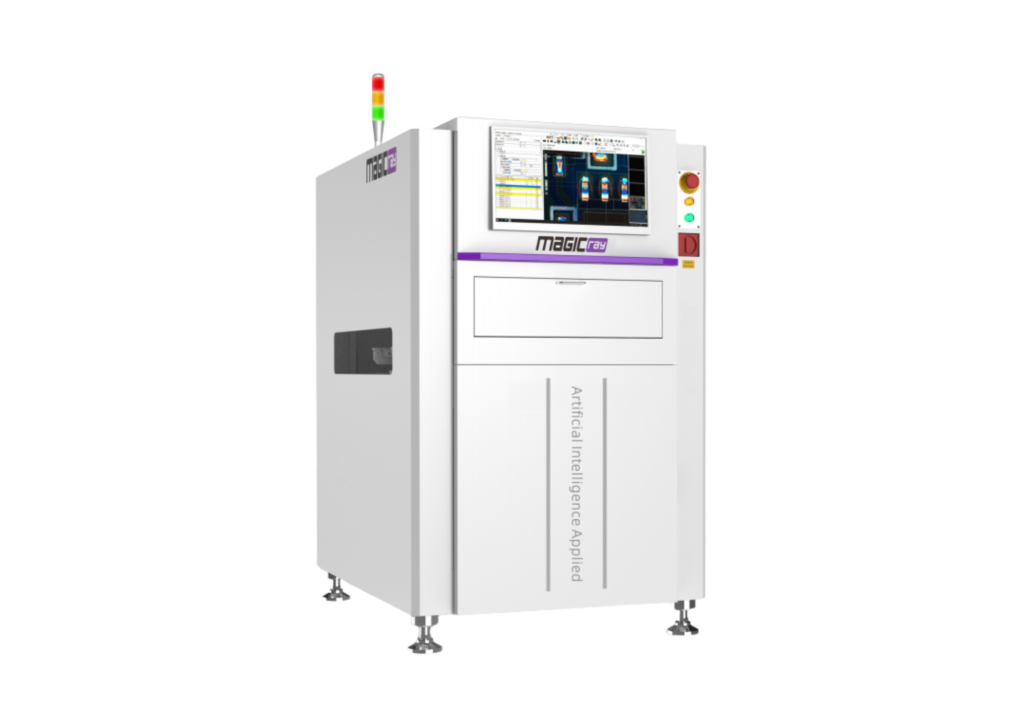
MagicRay-AOI-Inspection-A1000-Series
Cost Considerations of AOI Systems
AOI machine cost typically ranges:
$20,000 – $100,000+
Factors affecting cost:
2D vs 3D system
inspection speed
resolution
software capabilities
brand and support
Although AOI adds upfront cost, it significantly reduces long-term production losses.
AOI is no longer optional — it is essential for competitive PCB manufacturing.
Conclusion
Automatic Optical Inspection (AOI) plays a critical role in modern PCB assembly. It helps manufacturers detect defects early, improve product quality, and optimize production processes.
For companies planning to build or upgrade an SMT production line, investing in AOI is a smart decision that ensures long-term success and reliability.
About FULIU Electronics
FULIU Electronics is a professional provider of SMT and PCBA production line solutions for global customers.
We offer:
turnkey SMT production line solutions
SMT equipment supply
factory layout planning
installation and training support
global delivery and after-sales service
With extensive experience in SMT manufacturing, we help customers build efficient, high-quality production lines tailored to their needs.
Contact us today to get a customized SMT solution for your factory.