A must-know quality control process for any PCB assembly factory in 2026. In modern electronics manufacturing, ensuring product quality from the very beginning is critical. Even a small error in PCB assembly can lead to costly defects, production delays, and customer dissatisfaction.
For overseas factory investors, electronics manufacturers, procurement managers, and engineers, understanding FAI is essential when setting up or optimizing an SMT production line.
In this guide, we will explain what First Article Inspection is, how it works in PCB assembly, why it matters, and how to implement it effectively in your SMT production process.
What is First Article Inspection (FAI)?
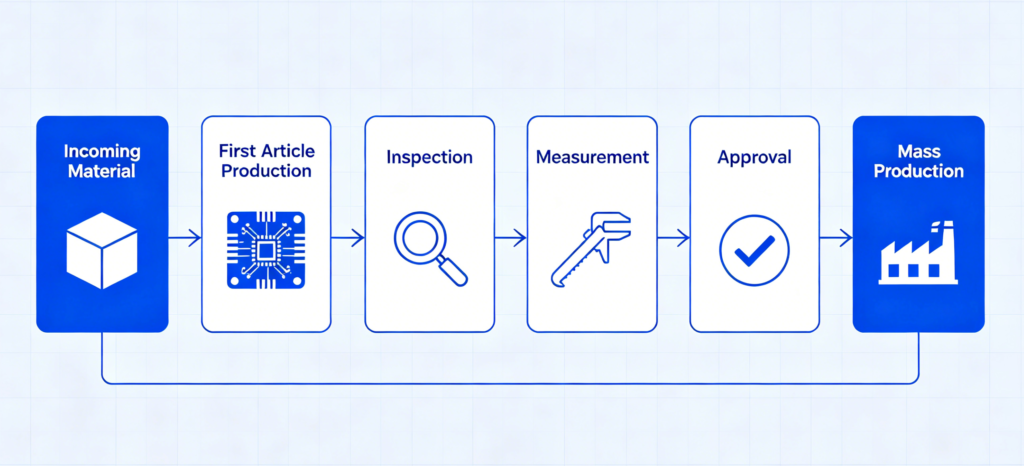
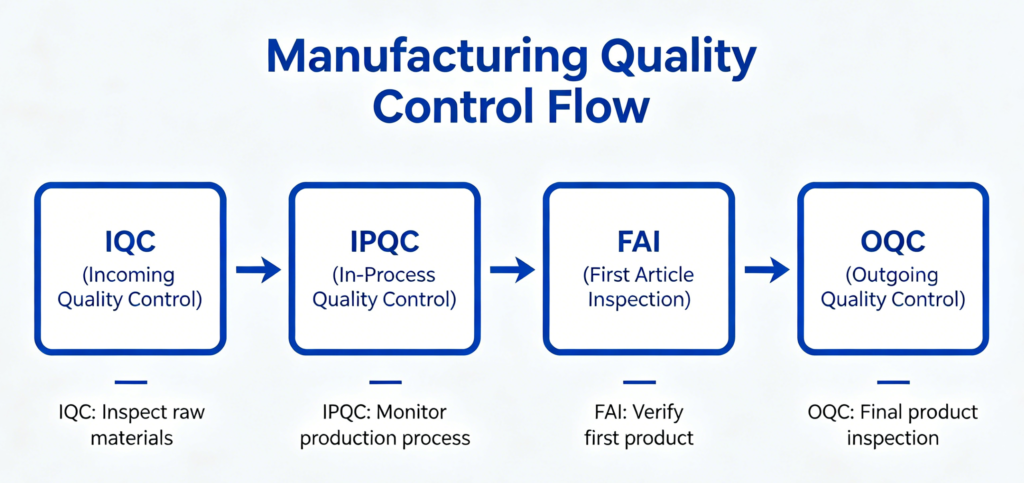
First Article Inspection (FAI) is a quality control process used to verify that the first produced PCB assembly meets all design specifications and requirements before full-scale production begins.
It involves a detailed inspection of the first completed board (or first batch) to ensure:
correct component placement
proper soldering quality
accurate dimensions and alignment
compliance with design and customer requirements
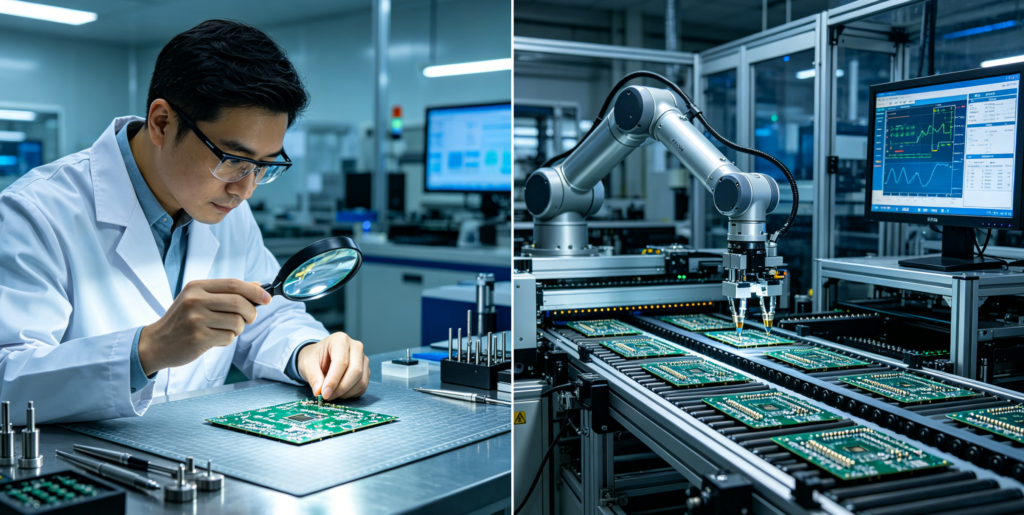
FAI acts as a checkpoint to prevent defects from being repeated in mass production.
First-Article-Inspection-process-flow-scaled
Why is FAI Important in SMT Production?
Prevents Mass Production Defects
Detecting issues early avoids producing large quantities of defective boards.
Reduces Rework and Scrap Cost
Fixing problems at the beginning is far cheaper than correcting them later.
Ensures Product Quality and Consistency
FAI confirms that the SMT process is stable and capable.
Meets Customer and Industry Requirements
Many industries such as automotive and medical electronics require strict FAI procedures.
Improves Production Efficiency
Early validation reduces production interruptions and troubleshooting later.
quality-control-process-manufacturing-diagram
When is First Article Inspection Performed?
FAI is typically conducted:
before mass production begins
after a new product introduction (NPI)
after design changes
after process adjustments
after equipment changes
This ensures every production setup is verified before scaling up.
first-article-inspection-engineer
How Does FAI Work in SMT Production?
Step 1: Produce First PCB Assembly
The SMT line produces the first board using standard process settings.
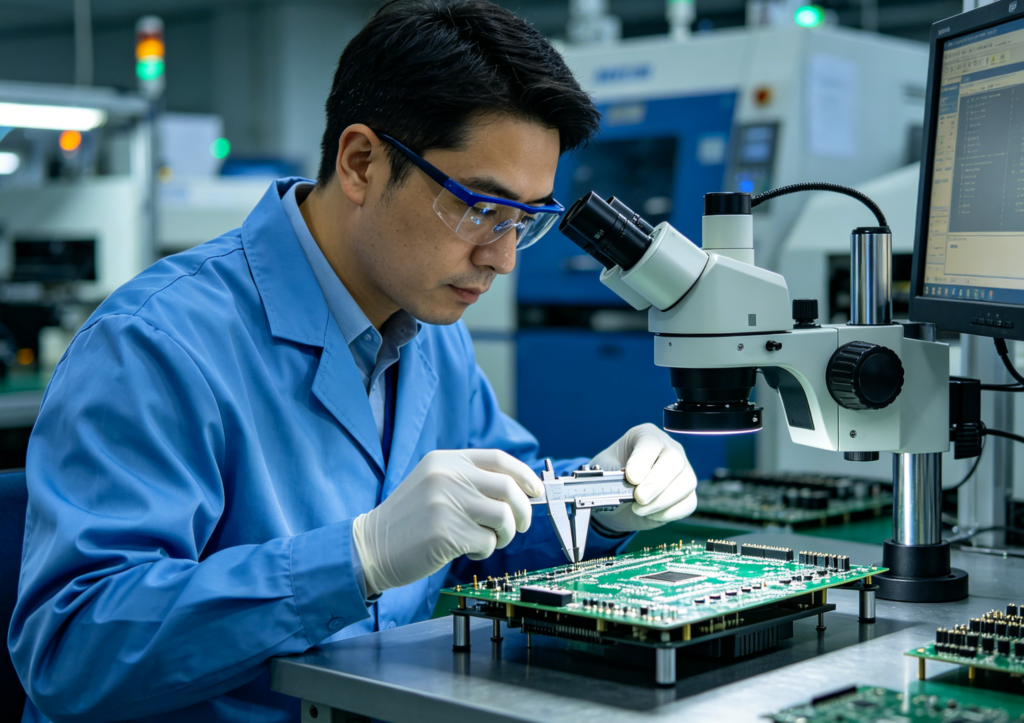
Step 2: Visual and Automated Inspection
Inspection is performed using:
AOI (Automatic Optical Inspection)
manual visual inspection
microscope inspection
Step 3: Verify Against Design Data
The PCB is checked against:
Gerber files
BOM (Bill of Materials)
assembly drawings
Step 4: Check Critical Parameters
Key checks include:
component placement accuracy
polarity correctness
solder joint quality
missing or incorrect components
Step 5: Record Inspection Results
All inspection data is documented for traceability and quality control.
Step 6: Approve or Adjust Process
If the board passes inspection → production continues
If issues are found → process adjustments are made
first-sample-vs-batch-production-scaled
Equipment Used in FAI
AOI (Automatic Optical Inspection)
Detects visual defects such as misalignment, missing components, and solder issues.
SPI (Solder Paste Inspection)
Checks solder paste quality before component placement.
X-ray Inspection (Optional)
Used for complex PCBs such as BGA components.
Manual Inspection Tools
Includes microscopes and measurement tools for detailed analysis.
FAI vs AOI vs SPI: What’s the Difference?
FAI
process control method
performed at the start of production
ensures overall correctness
AOI
automated inspection tool
used during or after production
detects visual defects
SPI
inspection before placement
checks solder paste quality
FAI is a process, while AOI and SPI are inspection tools used within that process.
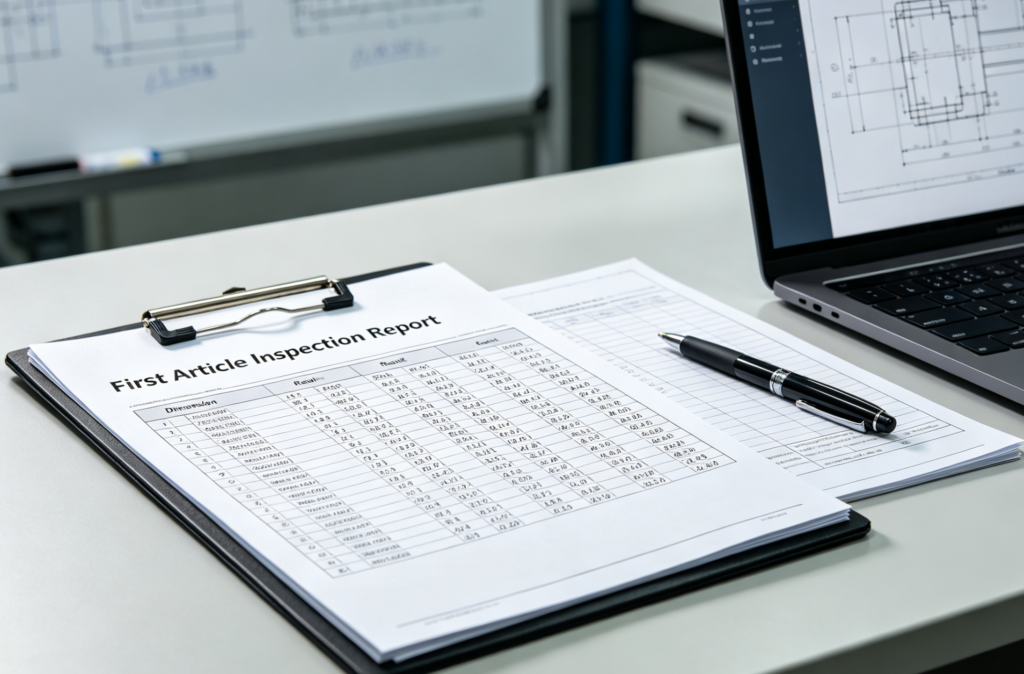
FAI-report-template
Cost Considerations of FAI
FAI itself is not expensive, but involves:
inspection time
labor cost
equipment usage
potential production delay
However, compared to the cost of mass defects, FAI provides significant cost savings.
Common Mistakes in FAI Implementation
Skipping FAI to Save Time
This often leads to major production issues later.
Incomplete Inspection
Missing key checks reduces effectiveness.
Poor Documentation
Lack of records affects traceability and quality control.
Ignoring Small Defects
Minor issues can escalate during mass production.
Practical Tips for Effective FAI
always perform FAI for new products
use AOI and SPI together for better accuracy
train operators on inspection standards
document all results clearly
standardize FAI procedures
integrate FAI into your quality system
Real-World Application Scenarios
Automotive Electronics
Strict FAI requirements ensure safety and reliability.
Medical Devices
FAI helps meet regulatory standards and quality control.
Consumer Electronics
FAI ensures high-volume production consistency.
EMS Factories
FAI is essential when handling multiple customer projects.
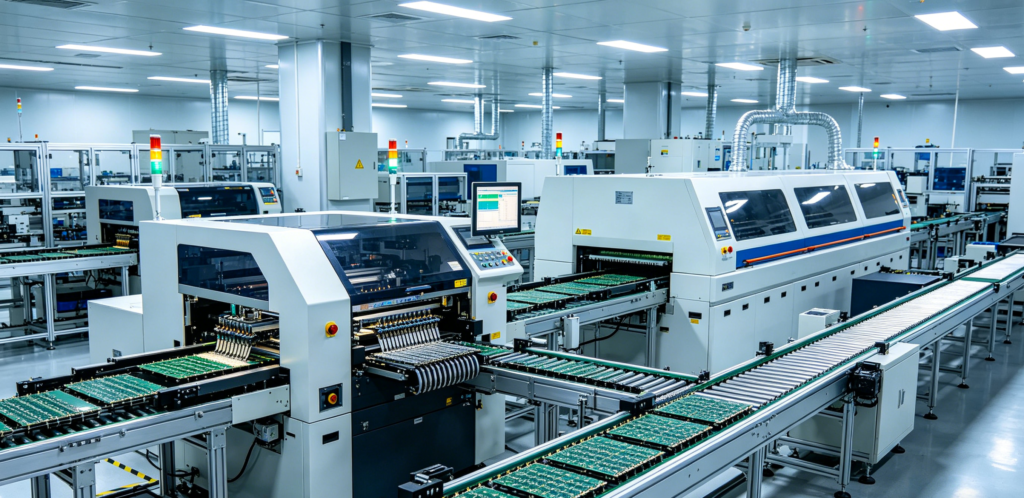
PCB-assembly-line-factory-scaled
How to Implement FAI in Your SMT Line
Step 1: Define Inspection Standards
Based on IPC standards or customer requirements.
Step 2: Configure Inspection Equipment
Set up AOI and SPI parameters.
Step 3: Train Operators
Ensure team understands inspection criteria.
Step 4: Establish Documentation Process
Record all inspection data.
Step 5: Continuous Improvement
Use FAI data to improve production processes.
Conclusion
First Article Inspection (FAI) is a critical step in ensuring high-quality PCB assembly. By verifying the first product before mass production, manufacturers can reduce defects, save costs, and improve overall efficiency.
For companies planning to build or upgrade an SMT production line, implementing a proper FAI process is essential for long-term success.
About FULIU Electronics
FULIU Electronics is a trusted provider of SMT and PCBA production line solutions for global customers.
We offer:
turnkey SMT production line solutions
SMT equipment supply
factory layout planning
installation and training support
global delivery and after-sales service
With extensive experience in SMT manufacturing, we help customers build reliable, efficient, and high-quality production lines.
Contact us today to get a customized SMT solution for your factory.