
SMT production line is the core of modern electronics manufacturing. Almost all electronic products today — from smartphones and automotive electronics to industrial control boards — rely on SMT technology for efficient and reliable PCB assembly.
If you are planning to build a PCB assembly factory or optimize your manufacturing process, understanding how an SMT production line works is essential.In this guide, we explain the complete SMT production process step by step, including key equipment, workflow, and benefits of SMT manufacturing.
What is SMT (Surface Mount Technology)?
SMT (Surface Mount Technology) is a method of mounting electronic components directly onto the surface of a printed circuit board (PCB).
Compared with traditional through-hole technology (THT), SMT offers:
higher production efficiency
smaller product size
improved electrical performance
lower manufacturing cost
suitability for automated production
SMT technology allows manufacturers to produce high-volume electronic products with consistent quality.
What is an SMT Production Line?
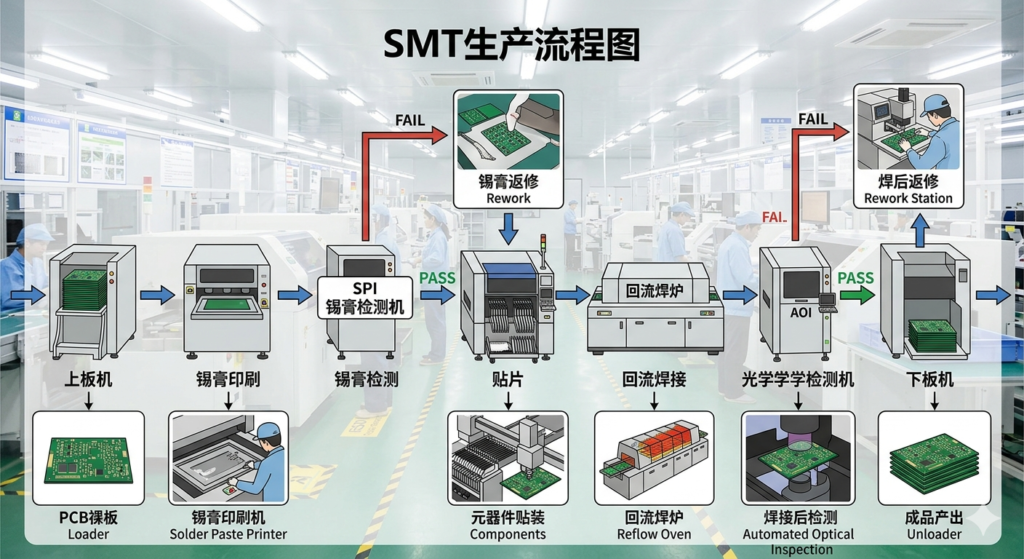
An SMT production line is a series of automated machines used to assemble electronic components onto PCB boards.
A standard SMT line includes:
component placement
PCB handling system
Each step plays a critical role in ensuring final product quality.
SMT Production Process Step by Step
Step 1: PCB Loading
Bare PCB boards are loaded onto the production line using an automatic PCB loader.
Purpose:
Ensure stable and continuous feeding of PCB boards into the SMT line.
Automation helps reduce manual labor and improves efficiency.
Step 2: Solder Paste Printing
Solder paste is applied onto PCB pads using a stencil printer.
The solder paste contains tiny solder particles and flux, which will later form solder joints between components and PCB.
Printing accuracy directly affects soldering quality.
Step 3: Solder Paste Inspection (SPI)
SPI equipment checks the solder paste quality after printing.
Inspection parameters include:
- paste volume
- paste height
- alignment accuracy
- printing consistency
SPI helps detect defects early and reduces production risk.
Step 4: Component Placement
Pick and place machines mount electronic components onto PCB boards at high speed.
Advanced placement machines can place thousands of components per hour with micron-level accuracy.
Typical components:
- resistors
- capacitors
- IC chips
- connectors
- LEDs
Step 5: Reflow Soldering
After component placement, PCB boards enter the reflow oven.
The oven heats the solder paste according to a controlled temperature profile, creating reliable solder joints.
Typical temperature zones:
- preheating
- soaking
- reflow heating
- cooling
Stable temperature control ensures consistent product quality.
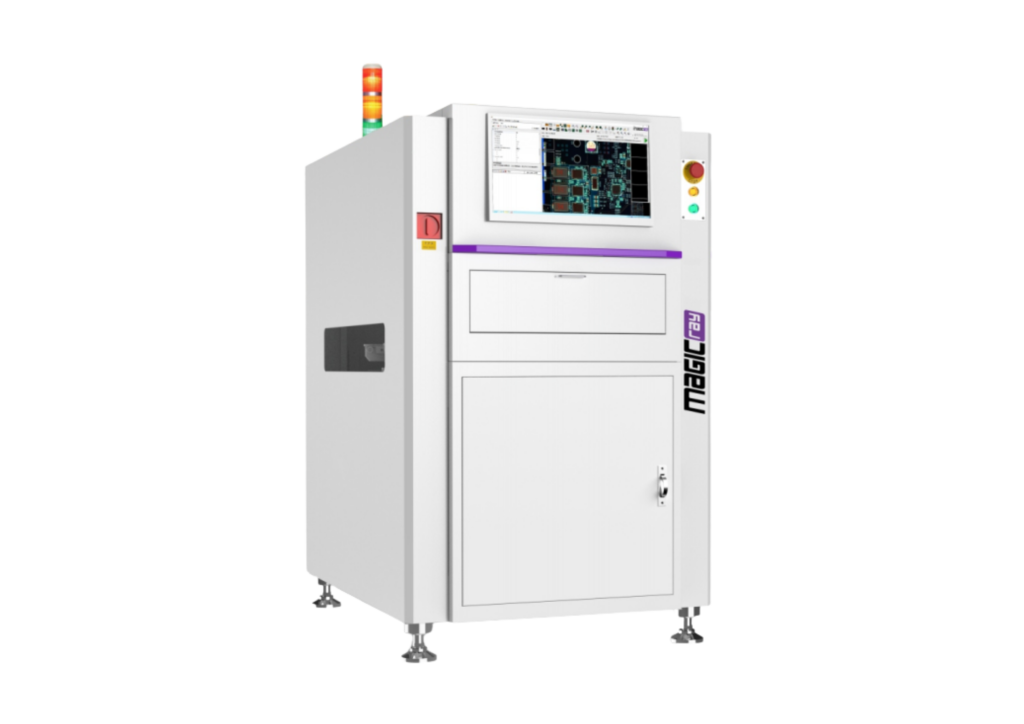
Step 6: AOI Inspection
Automatic Optical Inspection (AOI) machines inspect PCB boards after soldering.
AOI can detect:
- missing components
- wrong components
- polarity errors
- solder bridges
- tombstone defects
Inspection ensures only qualified boards move to the next process.
Step 7: PCB Unloading
Finished PCB boards are collected by an automatic unloader.
The boards are then ready for:
- functional testing
- conformal coating
- packaging
- shipment
SMT vs THT Production Process
Some PCB products require both SMT and THT processes.
THT process involves inserting component leads through holes in PCB boards.
Wave soldering machines are typically used for THT production.
Modern factories often use mixed production lines.

Applications of SMT Production Line
SMT technology is widely used in:
- consumer electronics
- automotive electronics
- LED lighting
- industrial control systems
- medical devices
- communication equipment
Almost every electronic product today depends on SMT manufacturing.
SMT production line plays a key role in modern electronics manufacturing. Understanding the SMT process helps manufacturers choose the right equipment and ensure stable production quality.
A well-designed SMT line can improve productivity, reduce manufacturing cost, and increase competitiveness in the global market.
About Fuliu Electronics
Fuliu Electronics provides complete SMT production line solutions for global customers.
Our services include:
- SMT equipment supply
- turnkey SMT production line solution
- factory layout planning
- installation and training support
- global shipping
Whether you are building a new PCB assembly factory or upgrading your equipment, our team can provide customized solutions based on your requirements.
Contact us today to get professional SMT solution support!